
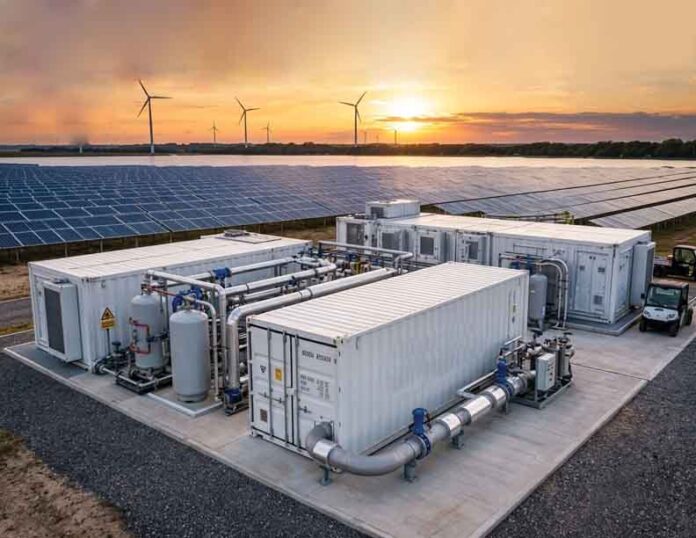
The demand for Battery Energy Storage Systems (BESS) is currently skyrocketing across the globe. According to ‘Markets and Markets’, which was recently recognized as one of America’s Best Management Consulting Firms by Forbes, “The global battery energy storage market size was estimated to be USD 50.81 billion in 2025 and is projected to reach USD 105.96 billion by 2030, at a CAGR of 15.8% during the forecast period.
The key growth drivers for the battery energy storage system market include the expanding adoption of lithium-ion batteries in renewable energy applications and the accelerated deployment of grid-scale storage within modernization projects. Nevertheless, the industry continues to face challenges such as installation complexities in island and remote locations, safety risks from overheating, and performance concerns related to the aging of lithium-ion batteries.”
Therefore, in the current scenario, while the demand for BESS is rising, certain challenges associated with it are also coming to the fore.
Why so much inclination towards BESS?
While the critical need for BESS is often highlighted primarily for managing the intermittent output of renewable energy sources or the fluctuating demands of rapidly growing data centers, some other developments are also unfolding that will make the presence of BESS indispensable.
Recently, the reasons behind the immense need for BESS in the near future were eloquently outlined in an NVIDIA Developers blog post. It says, “Unlike traditional data centers, AI factories are built to manufacture intelligence at scale. They run power-dense training and inference workloads, increasingly support agentic and reasoning models, and must deliver predictable performance even as compute demand shifts rapidly. In this environment, electrical infrastructure is no longer just a background utility. It is part of the production system.
That is one reason Battery Energy Storage Systems, or BESS, are quickly becoming essential infrastructure for AI factories. In NVIDIA DSX, the platform for AI factories, BESS is part of the broader AI factory power architecture rather than a standalone add-on. As accelerated computing campuses scale, operators are discovering that power is no longer just a capacity problem. It is a control, quality, and interconnection problem.
Properly designed BESS can help AI factories connect faster, operate more reliably, reduce stress on the grid and onsite generation, and manage the fast-changing load profiles created by large-scale AI workloads.”
A Brief Note on the Existing Challenges
Both technical and commercial challenges are currently being observed regarding BESS installations. The primary commercial challenges include high capital expenditure, uncertainty regarding revenue generation, and lifecycle costs. On the other hand, technical challenges span mainly around safety of the installation, cell quality of the batteries, issues related to cell balancing, errors in battery charge estimation, and water ingress & heat management etc.
A few steps being taken to mitigate the existing challenges
As far as Safety & Fire Mitigation is concerned: compliance with NFPA 855 standards ensures strict fire-rated room construction, adequate physical spacing,
and ventilation.
Introduction of localized inert gas or water mist fire suppression systems can reduce fire risks.
In the next section, I will highlight how the modern technologies are being used to mitigate perils and ensure better operation & management of BESS. However, digitalisation always adds a new risk, which is wellknown.
Artificial Intelligence (AI) in Managing BESS
One of the recent blogs from Vaishnavas Energy has nicely explained the contributions of AI in BESS. It states, “AI in Battery Energy Storage Systems refers to the use of machine learning algorithms and advanced data analytics to monitor, predict, and optimize battery performance in real-time.
Unlike conventional systems that rely on rule-based Battery Management Systems (BMS), AI-powered BESS continuously learns from:
- Charging and discharging patterns
- Load demand behaviour
- Temperature variations
- Cell voltage imbalance
- Internal resistance growth
By integrating AI into lithium battery storage solutions, Vaishnavas Energy enables intelligent decision-making that improves battery performance, lifespan, and safety.”
It also informs, “Traditional Battery Management Systems estimate battery performance using fixed algorithms. AI-enabled Smart BMS uses predictive models to provide accurate estimation of:
- State of Charge (SoC)
- State of Health (SoH)
- Remaining Useful Life (RUL)
With AI-based lithium battery monitoring from Vaishnavas Energy, businesses can predict battery degradation in advance and schedule maintenance before failures occur.
This results in:
- Reduced downtime
- Improved operational efficiency
- Lower maintenance costs
- Extended battery life.”
Stories of a few New Endeavours in this Field
Acquisition of a Company
Nextpower, a leading provider of solar and power technology solutions for utility-scale power plants, has entered into a definitive agreement to acquire Prevalon Energy, a U.S.-headquartered joint venture between Mitsubishi Power Americas and EES, for total consideration of up to $365 million, not including cash to be acquired, comprising cash
and stock.
The acquisition is expected to extend Nextpower’s technology platform across BESS and intelligent controls for critical power infrastructure. The company projects that the global demand for BESS outside China could represent an opportunity of up to $35 billion by 2030, with the U.S. comprising up to $15 billion.
Commenting on the acquisition plan, Dan Shugar, Founder and CEO of Nextpower, said, “Many of our customers have rapidly expanded their storage programs and asked us to extend Nextpower’s platform into power conversion and BESS to deliver fully integrated firm power solutions. Together with our recently announced and complementary power conversion acquisition, we expect that Prevalon’s BESS platform will open new market opportunities for Nextpower in AI data center power supply applications. Prevalon is already engaged with large hyperscalers with a lean, seasoned team that has a solid track
record delivering BESS for utilities and IPPs across a variety of use cases.”
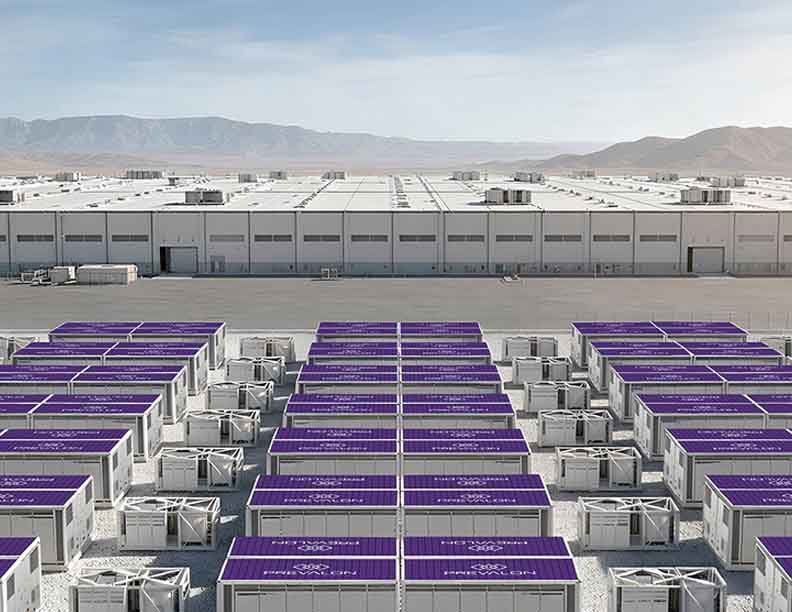
Prevalon’s BESS technology supports applications where power quality, rapid response, and deployment speed are critical, including AI data centers, private grids, grid-connected storage, and industrial power systems. Its Hybrid Power Stabilizer is designed to manage rapid load changes and support grid stability, while its HD5 DC block and newly released HD5 AC block products provide modular energy storage building blocks supported by insightOS controls, monitoring, diagnostics, and long-term service capabilities.
Expressing their view, Tom Cornell, President and CEO of Prevalon Energy, said, “Prevalon shares Nextpower’s relentless focus on innovation, quality, reliability, and customer success. Operating as part of Nextpower, we can leverage their global reach and deep client relationships. Our customers will benefit from doing business with a reliable, investment-grade partner with decades of experience in power generation and management.”
Production of LFP Batteries
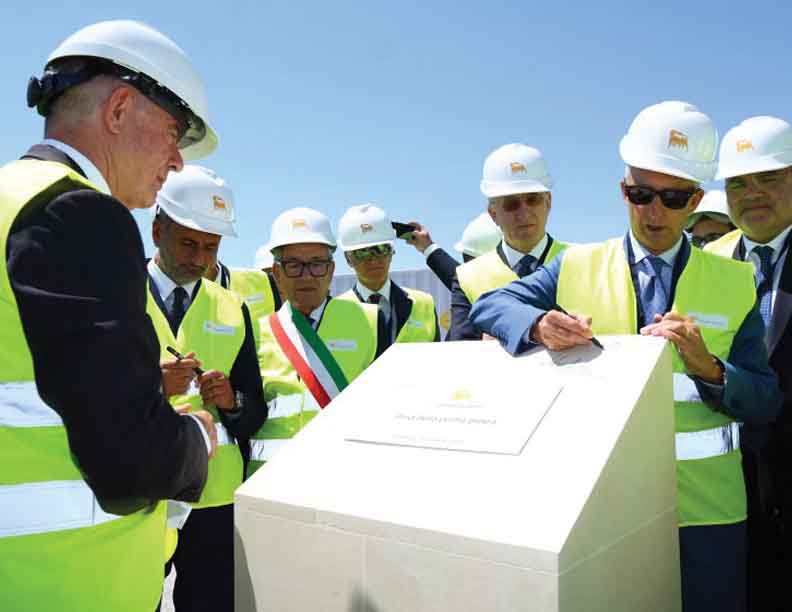
Eni Storage Systems, a company jointly owned by Eni Industrial Evolution and FIB (Seri Industrial Group), has started construction works at the Brindisi industrial site for the development of a new integrated Italian and European hub for the production of Lithium-Iron-Phosphate (LFP) batteries.
The batteries will primarily be used for Battery Energy Storage Systems (BESS) that support the deployment of renewables and enhance grid stability. These systems store energy generated from renewable sources when production exceeds demand and release it when needed, making them essential to overcoming the intermittency of renewables. European demand for such systems is expected to grow from 36 GWh in 2025 to around 138 GWh by 2030.
Eni Storage Systems’ development plan includes the construction of a gigafactory in Brindisi for the production of battery cells and modules, together with a Battery Energy Storage System (BESS) assembly plant. The latter will have an expanded capacity, enabling it to assemble battery modules also supplied by Seri Industrial’s gigafactory in Teverola, in the province of Caserta. To complete the project, in the second phase the Brindisi site will also host the production of Lithium-Iron-Phosphate (LFP) cathode active material and battery recycling activities, both built to serve the two gigafactories. The project envisages a total production capacity of 16 GWh per year by 2030 (half in Brindisi and half at the Teverola plant), equivalent to more than 10% of the European market for stationary energy storage systems.
By P. K. Chatterjee (PK)