
Economic Considerations – Cost versus Value Analysis
Balancing Performance and Cost
Deploying UPS systems involves technical and financial considerations that organizations must carefully evaluate.
Efficiency Considerations
Online UPS systems consume more power due to continuous conversion. Newer designs improve efficiency through:
- Modular operations
- Eco-mode operations
- Lithium-ion batteries offering 90–95% efficiency versus lead-acid’s 75–85%
System Integration Costs
Modern UPS units support smart communication protocols (SNMP, IEC 61850) and can integrate into building and energy management systems.
This integration adds value through:
- Real-time monitoring
- Predictive maintenance
- Energy optimization
- Remote management
Maintenance Costs
UPS systems require regular upkeep including:
- Battery replacements (every 3–6 years for lead-acid, 10 years for lithium-ion)
- Firmware updates
- Surge component checks
- Thermal management system maintenance
A well-maintained system ensures continued protection and reliability.
Future Trends – What’s Next for UPS Technology
Technological Innovations Shaping the Future
Medium-Voltage Power Supplies (SSTs): Recommended practices suggest monitoring advancements in medium-voltage power supplies (also known as Solid State Transformers or SSTs) and considering adoption to improve:
- Reliability through modularity
- Efficiency through fewer conversions
- Higher-voltage distribution
- Grid buffering capabilities
AI-Driven Predictive Maintenance: AI techniques (expert systems, fuzzy logic, neural networks) are increasingly applied to detect and diagnose faults in UPS systems, enabling predictive maintenance and preventing unexpected failures.
Enhanced Renewable Integration: The seamless integration of industrial UPS systems with renewable energy sources is transforming the market, making systems more efficient, sustainable, and adaptive.
Smart Monitoring and IoT: IoT-enabled UPS systems provide: –
- Real-time performance monitoring
- Remote diagnostics
- Automated alerts
- Energy usage optimization
Advanced Battery Technologies: Beyond lithium-ion, emerging technologies include:
- Solid-state batteries
- Graphene-enhanced batteries
- Hydrogen fuel cell integration for telecom towers
Policy and Market Trends
- Data Center Growth: As India’s cloud and IT sectors boom, data center UPS demand will continue accelerating with 8% CAGR projected through 2030.
- Green Battery Regulations: EU Battery Regulation mandating 90% recovery for cobalt, nickel, and copper by 2025 is influencing global recycling standards, affecting India’s battery waste management.
- Carbon Footside Disclosure: From 2025, carbon footprint disclosure requirements encourage low-impact methods, cutting emissions by 60% and enhancing waste battery recycling.
Strategic Recommendations for Stakeholders
For Policymakers and Government Officials
- Mandate UPS for Critical Infrastructure: Extend NBC 2016’s SPD mandate to include UPS requirements for hospitals, data centers, and telecom infrastructure.
- Support R&D: Fund research into indigenous battery technologies and energy-efficient UPS designs under Make in India initiatives.
- Streamline Certification: Reduce BIS certification timelines while maintaining safety standards to support domestic manufacturers.
- EPR Incentives: Provide incentives for lithium-ion battery recycling to manage the higher EPR costs (`2,400/kg).
For Manufacturers
- Comply with IS 16242:2025: Complete testing and certification before November 19, 2025, to avoid market access issues.
- Invest in Lithium-Ion: Despite higher initial costs, transition to lithium-ion technology to meet growing demand for efficient, long-life solutions.
- Integrate Smart Features: Add AI/IoT capabilities for predictive maintenance and remote monitoring.
- Focus on Sustainability: Develop eco-friendly designs and establish battery recycling programs to meet EPR requirements.
For Electrical Engineers and System Designers
- Select Right UPS Type: Choose online double-conversion for mission-critical applications, line-interactive for moderate reliability needs.
- Implement Redundancy: Use N+1 or 2N configurations for hospitals, data centers, and banking infrastructure.
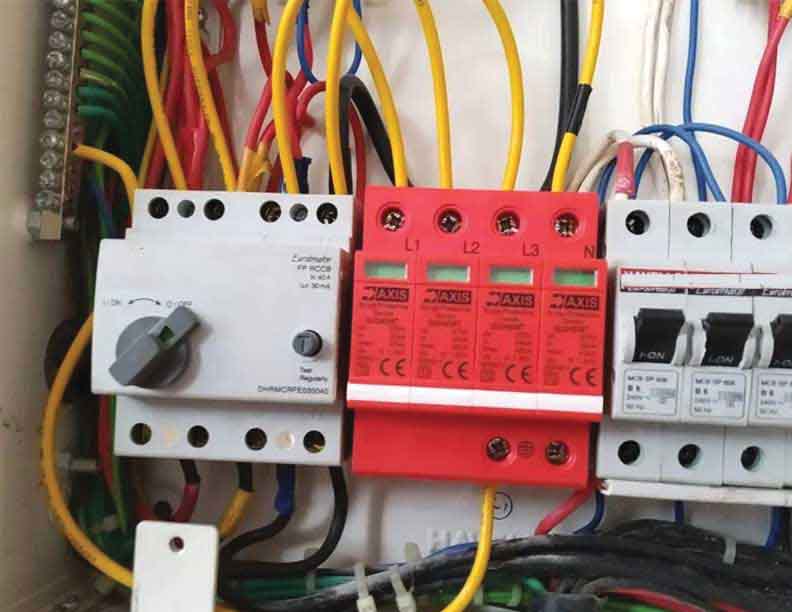
- Combine UPS with SPDs: Install Type 1, 2, and 3 SPDs in coordination with UPS for comprehensive protection.
- Plan for Maintenance: Establish regular battery testing, firmware update schedules, and thermal management checks.
For Utility Heads and Regulatory Commissioners
- UPS for SCADA: Mandate UPS backup for grid control systems, SCADA, and communication devices.
- Smart Substation Standards: Implement IEC 61850-compliant UPS requirements for digital substations.
- Hybrid Tower Programs: Support telecom towers transitioning to hybrid power (UPS + renewables + hydrogen).
For Business Development Professionals and Top Management
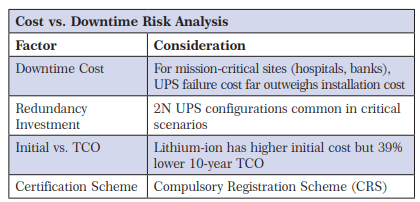
- Calculate TCO: Evaluate 10-year total cost of ownership, not just initial investment, especially for lithium-ion vs. lead-acid.
- Assess Downtime Risk: Quantify potential downtime costs to justify UPS investment hierarchy.
- Prioritize BIS Certification: Ensure all purchased UPS systems carry BIS Standard Mark for safety compliance.
- Plan for Scalability: Select modular UPS systems that can expand with growing power needs.
For Management Graduates and Students
- Understand Power Sector Economics: UPS represents a critical component in India’s power infrastructure investment landscape.
- Study Regulatory Frameworks: IS 16242:2025 compliance demonstrates how technical standards drive market behaviour.
- Analyze Market Trends: The 5.84% CAGR through 2034 indicates sustained growth opportunities.
Conclusion: UPS as Foundational Infrastructure for India’s Future
In a country where power quality and reliability are still evolving, UPS and SPDs serve as crucial technological buffers, bridging the gap between unstable supply and the demands of a digital, automated future. Whether it’s a hospital, factory, telecom tower, or classroom, choosing the right backup and protection systems ensures not just continuity, but also safety, productivity, and peace of mind.
“Power without pause is no longer a luxury, it’s the backbone of India’s digital and industrial future.”
As India embraces smart infrastructure, electrification, and digital expansion, robust power protection will no longer be optional – it will be foundational. The convergence of government initiatives (Make in India, Digital India), technological advancements (lithium-ion, AI/IoT), regulatory frameworks (IS 16242:2025), and market growth (USD 686.6 million by 2034) positions UPS systems as critical infrastructure for India’s economic future.
For policymakers, manufacturers, engineers, regulators, and business professionals, understanding UPS technology is no longer a specialized concern – it’s a strategic imperative. The institutions and organizations that invest wisely in power protection today will be the ones maintaining operational continuity, protecting critical assets, and leading India’s digital transformation tomorrow.
The question is not whether UPS systems are necessary – the question is which configuration, battery technology, and compliance strategy will deliver the optimal balance of reliability, efficiency, and cost for your specific application. The answer depends on understanding the technical fundamentals, regulatory requirements, and market trends covered in this comprehensive analysis.
Concluded …

Karn Pallav is a qualified Mechanical Engineer and MBA (Power) graduate from NPTI Faridabad. He is currently working as an Associate Director in one of the Big 4 Consulting Firms. Currently he is posted at Kathmandu, Nepal as an Embedded Economic & Financial Regulatory Advisor to the Electricity Regulatory Commission of Nepal. He has around two decades of management experience in the entire value chain of the Power Sector. He has written five books, namely: 1) The Power of Positive Thinking, 2) Customer Engagement Strategies in Retail Electricity Market, 3) 5 Rules for Life, 4) Whispers of the Heart, and 5) Whispers of the Himalayas.