


Enhancing Productivity Through Digital Technologies
The foundation of effective strategy development lies in clear understanding of the external environment, in cognizance with current conditions and future developments. This analysis...

A JOURNEY WITH A PROGRESSIVE OUTLOOK
As I was recently going through the report “Countries without Electricity 2026” published by World Population Review, I was highly shocked to note: “In...

Beckoning of the Wireless Era
By 2050, global energy consumption is projected to skyrocket by 50% . To meet this massive demand, industries are racing to cut the cord...

Balancing Digital Growth with Sustainability
A data center is a physical facility designed to house computing infrastructure such as servers, storage systems, and networking equipment, enabling the processing, storage,...
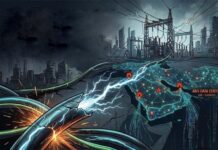
VOLT SHOCk How the Real Weapon of Mass Disruption is Already in the Grid
The story begins not in a laboratory but in nature. The ancient Greeks observed static electricity as early as 600 BCE when Thales of...

Forget LPG Booking Start Electric Cooking
The word ‘energy’ has a very wide gamut, it includes hydrocarbons as well as electricity. ‘Hydrocarbons’ are organic compounds consisting of hydrogen and carbon,...

Monetisation Models for India’s CCUS Value Chain
India’s net-zero ambition by 2070 demands deep decarbonisation of its emission-intensive sectors, which includes steel, cement, and power. Carbon Capture, Utilisation, and Storage (CCUS)...
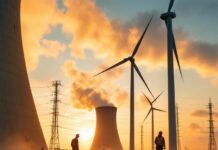
An Overview of the Indian Power Sector
I don’t think there can be any disagreement that India’s power sector is progressing at a rapid pace under the supervision of our current...
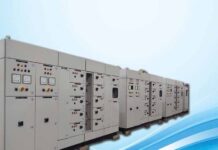
Control Panels in the Indian Power Sector
India’s power sector stands as one of the world’s most complex and rapidly evolving energy ecosystems. With a peak demand exceeding 250 GW and...

The Fifth Industrial Revolution
The notion of Industry 5.0 is progressively evolving in response to rapid technological advancements. Emerging digital technologies, most notably machine learning, artificial intelligence, industrial...

The Transitioning Outlook on Electrical Earthing
Certainly, at our time the need for electrical earthing is increasing due to a combination of factors including a higher density of sensitive electronics,...

Electricity Scarcity Pricing Part 1
Electricity Scarcity pricing presents important challenges for the Market design. Simple in concept, but more complicated in practice, inadequate scarcity pricing is implicated in...

Moving towards Sustainability
India is a diverse country in terms of people, landscape, and culture. This has had a profound effect on its politics, growth, and consumption...

Balancing Innovation with Sustainability
The interplay between traditional energy sources and emerging renewable technologies such as solar, wind, and hydroelectric power reveals both opportunities and challenges inherent in...

A Complete Solution for Power Quality and Reactive Power
The Power Quality and Reactive Power scenario in the country is constantly changing for the better for last more than a decade, thanks mainly...

A Sectoral Review of Electricity Generation in India
In the pre-independence era, the power supply in India was primarily controlled by the private sector and limited to urban areas. The development of...

Gujarat Gains from ABT
Availability based tariff was introduced in India first time in western region from July 2002. Prime objective is to enforce self-discipline by fiscal tool...

Ensuring Accelerated Growth of the Indian Power Sector
Our installed power generation capacity as on 31.10.2024 was 454.5 GW comprising 243.1 GW thermal, 8.2 GW Nuclear, 203.2 Renewables including large hydro of...

EMPOWERING THE POWER SECTOR COMPANIES
A Navratna company is basically a public sector company, which has been playing a significant role in growing the national economy. After four new...

ENTERPRISE RISK MANAGEMENT in Indian Power Companies Part 2
Regulatory requirements in risk management
In India, there is no legal mandate yet to incorporate enterprise risk management in non-financial companies. However, there are provisions...