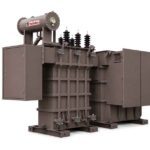


Diesel Generator (DG) sets remain indispensable to India’s electricity grid, ensuring uninterrupted power supply during outages and system contingencies. However, their emissions have emerged as a growing concern under India’s tightening air quality framework. The adoption of Retrofit Emission Control Devices (RECDs) allows industries and utilities to maintain grid reliability while meeting environmental compliance.
India’s power transmission system demands high reliability. Diesel Generator (DG) sets serve as essential auxiliary power sources that safeguard substations, grid control centres, and communication facilities during interruptions or maintenance shutdowns. Yet, their operation produces particulate matter and gaseous emissions, adding to localised pollution. With the Central Pollution Control Board (CPCB) mandating installation of Retrofit Emission Control Devices (RECDs) on existing DG sets, it is now possible to sustain reliability while reducing emissions by over 70%.
Role of DG Sets in Grid Reliability
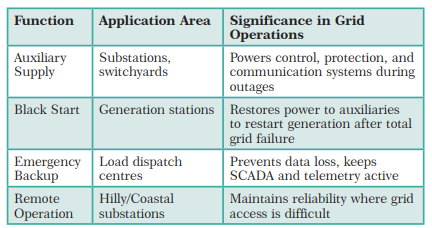
DG sets ensure continuous operation of grid components under various conditions. Their functions are summarised below:
Environmental and Regulatory Perspective
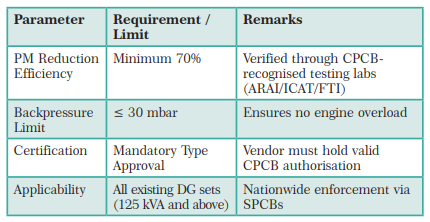
Diesel exhaust contains fine soot particles, NOx, CO, and unburned hydrocarbons. These emissions contribute to smog and respiratory hazards. To counteract this, the CPCB (August 2021) notification introduced mandatory RECD installation norms.
Retrofit Emission Control Device (RECD): Structure and Components
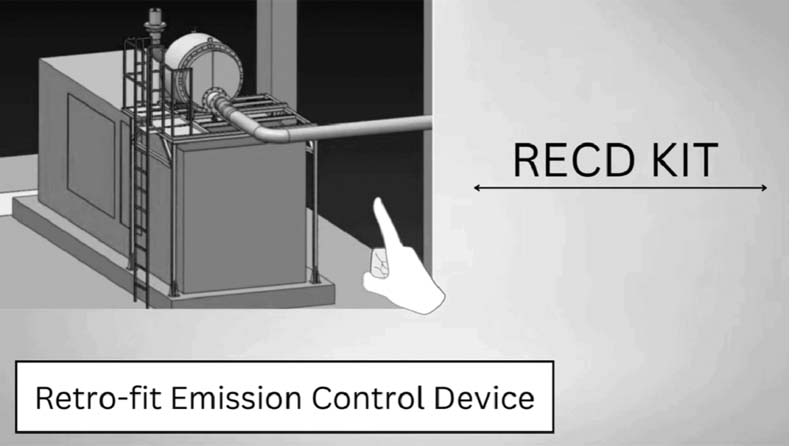
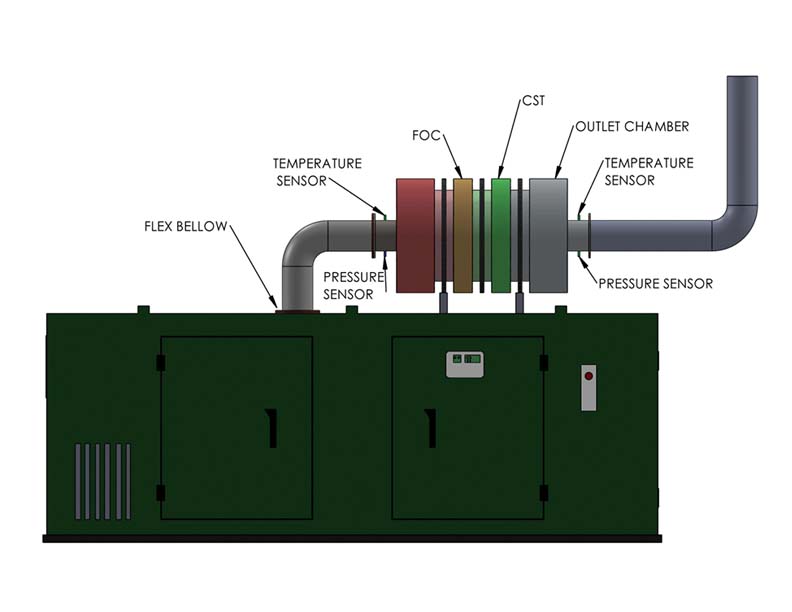
An RECD is installed in the exhaust path of a diesel generator to treat emissions before release into the atmosphere.
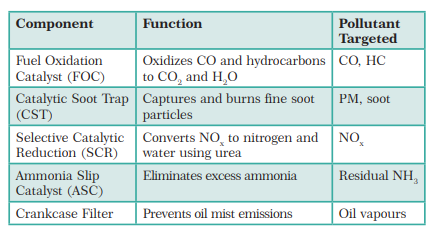
Each unit is designed to meet specific emission profiles without altering the DG’s base performance characteristics.
Working Principle
Exhaust gases from the DG engine are passed through multiple filtration and catalytic stages within the RECD:
- Filtration: Diesel Particulate Filters (DPF) trap soot and carbon deposits.
- Oxidation: The FOC converts CO and unburned hydrocarbons to less harmful gases.
- Reduction: In the SCR chamber, injected urea reacts with NO2 to produce nitrogen and water.
- Regeneration: Periodically, trapped soot is burnt off to prevent clogging and maintain flow efficiency.
This sequence ensures compliance with emission standards while keeping generator performance stable.
Energy Efficiency and Operational Benefits
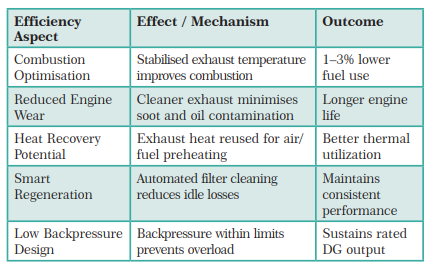
Contrary to the perception that RECDs add only compliance value, they also deliver measurable operational and efficiency improvements.
Advances in RECD Technology
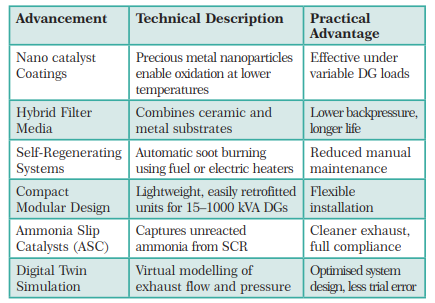
Recent developments have improved RECD reliability, compactness, and adaptability.
Implementation Challenges
While technologically proven, certain challenges affect rapid deployment:
- High Initial Cost: Particularly for high-capacity DG sets.
- Maintenance Awareness: Filter cleaning and regeneration cycles require training.
- Vendor Authenticity: Users must verify CPCB certification to ensure compliance.
Capacity building and fiscal incentives could accelerate adoption across public utilities and industries.
Conclusion
In India’s evolving power landscape, Diesel Generator sets will continue to serve as the foundation of reliability for grid operation and emergency support. However, environmental performance can no longer be an afterthought.
By integrating Retrofit Emission Control Devices (RECDs), existing DG sets can operate within emission norms, improve fuel efficiency, and align with national sustainability goals. With continuous innovation in catalyst design, filtration materials, and heat recovery systems, RECDs are reshaping how DGs contribute to the energy ecosystem – ensuring that reliability is now coupled with responsibility.

Er. Anmol Maharana is the Deputy Manager (Electrical) at Odisha Power Transmission Corporation Ltd. (OPTCL).

Dr. Sarat Kumar Sahoo is a Professor at the Department of Electrical Engineering in Parala Maharaja Engineering College, Berhampur, Odisha.