

As someone who has experienced India’s power sector transformation over two decades, I have witnessed how technological solutions emerge precisely when challenges seem insurmountable. Today, Thermal Energy Storage (TES) systems represent such a solution, a technology that could fundamentally reshape how we think about grid stability, renewable integration, and energy economics.
Understanding Thermal Energy Storage
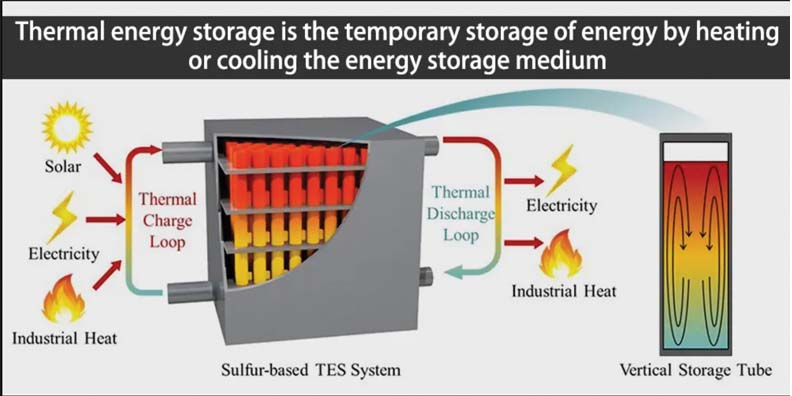
Thermal Energy Storage systems capture thermal energy for later use, functioning as a bridge between energy supply and demand. Unlike electrochemical batteries that store electricity directly, TES systems store energy as heat or cold, offering a fundamentally different value proposition for the power sector.
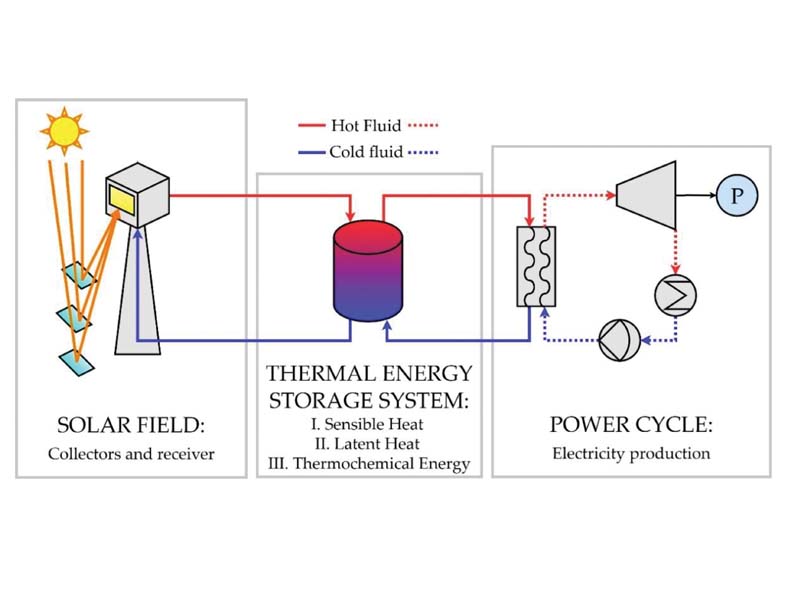
The Three Technology Pillars
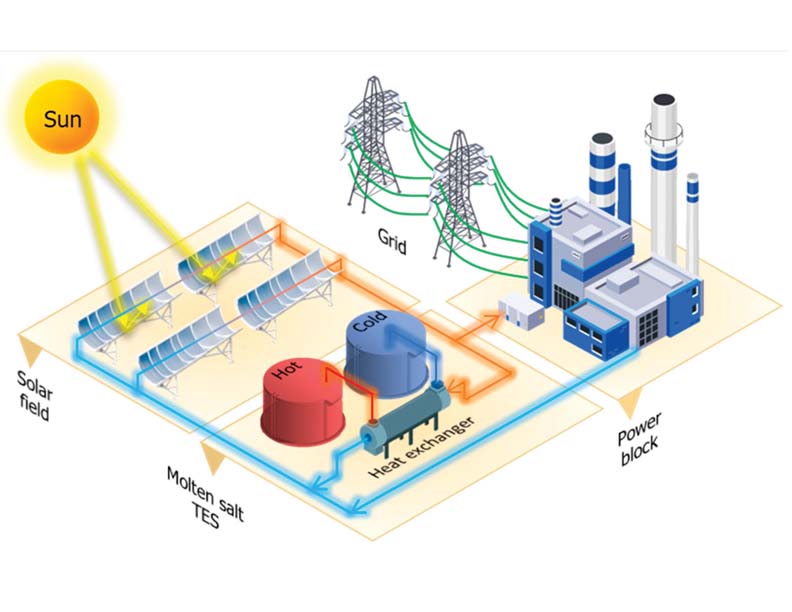
- Sensible Heat Storage remains the most widely deployed TES technology, leveraging materials like water, molten salts, or concrete. Molten salt systems in Concentrated Solar Power (CSP) plants exemplify this approach, with salt mixtures (typically 60% sodium nitrate and 40% potassium nitrate) storing heat at temperatures exceeding 565°C.
- Latent Heat Storage exploits Phase Change Materials (PCMs) that absorb or release substantial energy during phase transitions. PCMs offer higher energy density than sensible heat storage, making them attractive for space-constrained applications.
- Thermochemical Storage represents the technology frontier, utilizing reversible chemical reactions. Though still largely developmental for utility applications, it promises the highest energy densities and potentially unlimited storage durations.
The Indian Context
India’s power sector operates within unique constraints that make TES particularly relevant. Peak demand increasingly occurs during evening hours when solar generation diminishes, creating the notorious “duck curve” challenge. Simultaneously, our coal-based thermal fleet, constituting approximately 50% of installed capacity, faces mounting pressure from environmental regulations and economic competition from renewables.
The Load Curve Conundrum
India’s electricity demand exhibits pronounced daily variations. Peak demand typically occurs between 18:00 and 23:00 hours, precisely when solar generation becomes unavailable. According to Central Electricity Authority reports, during summer 2024, several states experienced demand-supply gaps exceeding 10% during peak evening hours, despite surplus generation capacity during midday.
Economic Imperatives
Our average power purchase cost varies from `3.5 to `7 per kWh across states. Time-of-day pricing is gradually being introduced, with peak hour tariffs sometimes exceeding off-peak rates by 200-300%. This pricing differential creates compelling arbitrage opportunities for energy storage systems.
Moreover, stranded asset risk for thermal power plants looms large. Plants designed for baseload operation are increasingly required to cycle, leading to efficiency penalties, increased maintenance costs, and reduced equipment life. TES systems integrated with existing thermal plants could extend their economic viability while facilitating renewable integration.
TES Applications: A Spectrum of Opportunities
Concentrated Solar Power with Storage
CSP plants equipped with TES represent the most mature application. Unlike photovoltaic systems, CSP plants with molten salt storage provide dispatchable renewable energy, functioning almost as conventional thermal plants. Global installed capacity exceeds 6 GW, with plants typically achieving 6-15 hours of storage duration.
India’s CSP journey has been modest, with limited capacity in Rajasthan and Gujarat. However, the National Solar Energy Federation of India (NSEFI) has advocated for renewed focus on CSP-TES systems, particularly for industrial applications requiring both heat and power.
Retrofit Solutions for Coal Plants
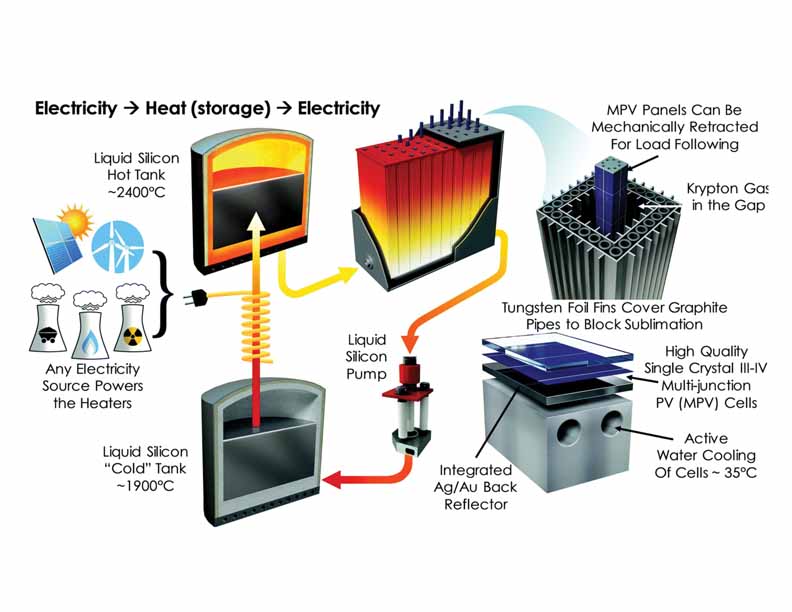
Perhaps the most transformative potential lies in retrofitting existing coal-based thermal power plants. The Carnot battery concept, using low-cost renewable electricity to heat storage media and then using that heat to generate electricity through existing steam turbines, offers a pathway to repurpose thermal assets.
This approach addresses multiple challenges: it provides grid-scale storage, extends the economic life of existing infrastructure, maintains employment in thermal power regions, and potentially improves overall system efficiency. For India, with approximately 210 GW of coal-based capacity, even converting a fraction of these plants could provide tens of gigawatts of dispatchable storage capacity.
Industrial Cogeneration and Renewable Firming
Indian industries in textiles, chemicals, food processing, and paper consume substantial thermal energy. TES systems can optimize cogeneration plants, allowing them to produce electricity when grid prices are high while meeting thermal loads from storage. This operational flexibility dramatically improves plant economics.
As renewable penetration increases, grid operators require firming services—the ability to guarantee power delivery despite weather variability. TES-equipped CSP plants can provide this firming, offering renewable generators a competitive advantage in markets that value reliability.
Technical and Economic Performance
Efficiency Considerations
Round-trip efficiency is critical for any storage technology. Sensible heat storage systems typically achieve 50-90% efficiency, depending on storage duration and operating temperatures. For CSP-TES plants, overall solar-to-electricity efficiency ranges from 15-25%, which is competitive with photovoltaics when storage value is included.
For Carnot battery applications using existing thermal plant infrastructure, round-trip efficiencies of 50-60% are achievable. While lower than electrochemical batteries, the dramatically lower capital costs and ability to utilize existing assets can make these systems economically superior for long-duration storage.
Economic Viability
For CSP-TES plants, current Levelized Cost of Storage (LCOS) estimates range from `8-15 per kWh for 6-12 hour storage durations. Critically, TES systems exhibit favourable scaling economics. Storage costs increase linearly with capacity, while power output costs remain constant, making TES particularly economical for long-duration storage (8+ hours) where batteries struggle economically.
Techno-economic analysis for Indian conditions suggests that for storage durations exceeding 10 hours, molten salt TES systems could achieve cost parity with battery storage within 3-5 years.
Lifespan and Degradation
TES systems offer superior longevity compared to electrochemical batteries. Molten salt systems can operate for 30+ years with minimal degradation, matching conventional power plant design life. Storage media do not experience capacity fade, and charge-discharge cycles are virtually unlimited. This longevity fundamentally impacts project economics.
Implementation Challenges
Material Science and Supply Chain
Molten salt storage requires specialized materials capable of withstanding high temperatures and corrosive environments. India’s domestic manufacturing capability for these specialized materials is limited, creating supply chain dependencies. Establishing quality standards and reliable supply chains for solar-grade salts requires attention.
Technical Workforce Development
Deploying and maintaining TES systems requires specialized skills distinct from conventional power plant operations. Expertise in high-temperature thermal systems, fluid mechanics, and heat transfer is essential. The National Power Training Institute (NPTI) and Sector Skill Councils must incorporate TES technologies into training modules to prepare the workforce.
Regulatory and Policy Framework
India’s evolving energy storage policy has primarily focused on electrochemical batteries. The contours for TES systems remain undefined in several critical aspects:
- Grid connectivity norms developed for battery storage may not appropriately address TES characteristics. Standard operating procedures need adaptation.
- Tariff mechanisms must recognize the unique value proposition of TES, not merely energy arbitrage but also firm capacity, voltage support, and grid stability services.
- Land and environmental clearances for CSP-TES plants involve processes developed for conventional solar or thermal plants, potentially creating unnecessary delays. Streamlined clearance mechanisms would facilitate deployment.
Project Financing
Financial institutions’ limited familiarity with TES technologies creates hurdles. Risk perception remains high, and standardized financial models are not yet established. IREDA and Power Finance Corporation could play catalytic roles by developing dedicated financing windows for TES projects.
Policy Recommendations: Charting the Path Forward
Near-Term Actions (2025-2027)
- Establish a National TES Mission under the Ministry of Power or MNRE, tasked with technology assessment, pilot project identification, standards development, and workforce training.
- Launch Demonstration Projects across different TES applications, a CSP plant with 12+ hour storage, a coal plant Carnot battery retrofit, and industrial cogeneration with TES. These would generate operational data and build stakeholder confidence.
- Develop Technical Standards specific to TES systems. The Bureau of Indian Standards should lead this effort, drawing upon international standards while adapting to Indian conditions.
- Incorporate TES in Renewable Tenders by specifying firm power requirements. Technology-neutral specifications would allow TES solutions to compete with batteries on merit.
Medium-Term Initiatives (2027-2030)
- Create Dedicated Manufacturing Zones for TES components, offering fiscal incentives similar to solar panel manufacturing. Production-linked incentive schemes could stimulate domestic manufacturing.
- Mandate Storage Integration for new thermal power projects above a certain capacity threshold, with flexibility to choose between TES, battery storage, or hybrid solutions.
- Establish Centers of Excellence at premier institutions for TES research, testing, and certification. These centers would undertake applied research and train professionals.
- Reform Electricity Market Design to properly value flexibility, including separate markets for ancillary services. TES systems’ ability to provide multiple services simultaneously should be recognized and remunerated appropriately.
The Global Landscape and Investment Opportunity
International experience offers valuable lessons. Spain’s Gemasolar plant has demonstrated 24/7 solar power generation using 15 hours of molten salt storage. China’s aggressive CSP deployment exceeds 500 MW. The European Union’s Green Deal explicitly includes thermal storage, while the US Inflation Reduction Act includes tax credits for thermal storage.
India should actively engage in international technology cooperation while leveraging our unique strengths—engineering talent, cost-effective manufacturing, and large domestic market, to become technology leaders rather than mere adopters.
For investors, TES represents an emerging sector with substantial growth potential. India’s energy storage market is projected to exceed 160 GWh by 2030. Investment opportunities span component manufacturing, project development, engineering services, and operations. TES projects’ long operational life and stable cash flows make them attractive for infrastructure investors seeking predictable, long-term returns.
Integration with Broader Energy Strategy
TES must integrate with India’s comprehensive energy strategy:
- Hydrogen Economy: CSP-TES plants could provide stable power for electrolyzers, supporting green hydrogen production.
- EV Charging Infrastructure: TES-equipped renewable plants could supply reliable charging infrastructure as EV adoption accelerates.
- Industrial Decarbonization: CSP systems with TES can directly supply high-temperature heat for industrial processes, facilitating decarbonization while potentially generating electricity.
- Agricultural Applications: Cold storage for agricultural products could utilize TES coupled with renewable energy, reducing post-harvest losses while lowering operating costs.
Conclusion
Thermal Energy Storage systems are not a distant futuristic technology but a practical solution available today. The question is not whether TES will play a role in India’s energy future, but how large that role will be and how quickly we can scale deployment.
Our power sector stands at an inflection point. The next decade will determine whether we successfully navigate the renewable transition while maintaining grid stability and energy security. TES offers a pathway to achieve both renewable integration and system reliability.
As I have observed throughout my career documenting India’s power sector evolution, technological transitions require more than engineering solutions, they demand vision, policy support, patient capital, and coordinated action among diverse stakeholders. The countries that recognized these requirements early in solar PV and wind power are today’s market leaders. The same opportunity exists with thermal energy storage.
India has demonstrated remarkable capability in scaling clean energy technologies. From a few megawatts of renewable capacity two decades ago to becoming the world’s fourth-largest renewable energy market, our journey has been extraordinary. Bringing the same ambition, innovation, and execution excellence to thermal energy storage could unlock the next phase of our energy transformation. The thermal opportunity is here. It is time to seize it.
Karn Pallav is a qualified Mechanical Engineer and MBA (Power) graduate from NPTI Faridabad. He is currently working as Head (Regulatory Affairs) in a leading power discom at New Delhi. He has around two decades of management experience in the entire value chain of the Power Sector. He has vast experience in power utilities dealing with competition issues, tariff determination, licensing, and other techno-commercial matters. Being an engineer and Power Manager, he is also interested in technical issues related to Conventional and Renewable Generation, Open Access, parallel license regime, smart grid, AMI, smart meters, cyber-security issues, and E-mobility. He has also written six books, namely – 1) The Power of Positive Thinking, 2) Customer Engagement Strategies in Retail Electricity Market, 3) 5 Rules for Life, 4) Whispers of the Heart, 5) Whispers of the Himalayas and 6) Guardians of the Future: Human Values and Ethical AI.