
TL;DR: Upsizing or undersizing a UPS can be expensive: too small and it trips under load; too large and you burn capex and space. Get four things right: load, runtime, topology, and battery tech, and the rest falls into place.
What Load Capacity does your Server Rack Actually Need?
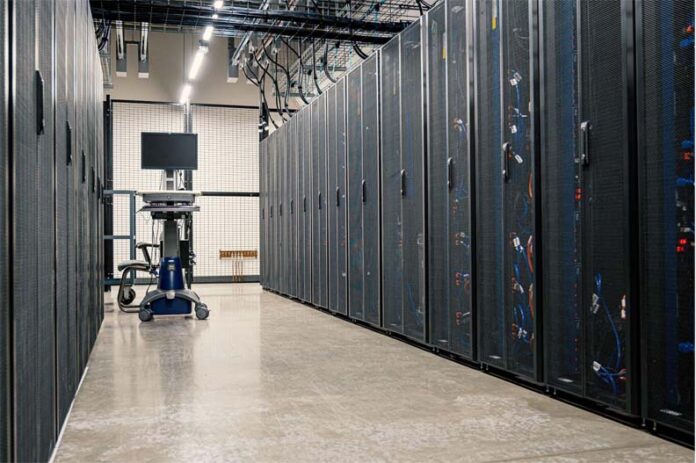
Load capacity is often the most misunderstood and most consequential element of UPS sizing. Most IT managers either underestimate the total draw or entirely forget to account for non-server equipment.
The starting point here is to calculate the total VA (volt-ampere) rating of each device in the rack.
- Standard network/enterprise servers typically draw between 300W and 800W each (And higher for High-Performance/GPU Cluster Servers, which are important for AI Data Centres), though this can vary by type and configuration.
- A mid-range NAS device with four to eight drives draws 50-150W at full load.
- Network switches range from 20W for an unmanaged 8-port unit to over 400W for a managed 48-port PoE (Power Over Ethernet) switch.
- Add a KVM switch, a patch panel with active components, and any out-of-band management devices, and a single rack can easily reach 2,000-5,000 VA under realistic operating conditions.
Did You Know? VA and watts are not the same. Most IT equipment operates at a power factor of 0.7 to 0.9 (Calculated from 0 to 1), meaning a 2,000 VA UPS delivers approximately 1,400W to 1,800W of real power. Always check the wattage rating of your UPS, not just its VA rating, before sizing.
The practical rule: calculate total wattage from device nameplates or measured draw, convert to VA using the formula VA = Watts ÷ Power Factor, then add 20–25% headroom for startup surges and future expansion. So, ideally, a rack drawing 3,200W at 0.8 power factor requires a minimum of 4,000VA of UPS capacity, and 5,000VA if planning for growth within 18 months.
According to BIS-certified product specifications for APC by Schneider Electric’s SRV-UXI series with external battery, the SRV5KL-IN delivers 5,000 VA at up to 94% efficiency in double-conversion mode, making it a practical fit for mid-density mixed racks that combine servers, NAS, and managed switching infrastructure.
How Do You Choose the Right UPS Topology for Mixed IT Loads?
When choosing the right UPS for data centre, the topology determines how well the unit protects sensitive equipment, and not all topologies are equal when servers, storage, and networking equipment share the same circuit.
- Offline/Standby UPS refers to a design in which the battery activates only on power failure, with a transfer time of 4–15ms. This is adequate for home devices and basic desktop equipment, but is insufficient for servers and NAS storage, where a 15ms gap can cause file system corruption or RAID array errors. This is not recommended for most businesses that store critical information or require their infrastructure to be up and running.
- Line-interactive UPS refers to a topology that adds Automatic voltage regulation (AVR) without switching to battery, handling brownouts and surges without transfer delay. This topology is appropriate for smaller server closets where power quality is inconsistent, but outages are infrequent.
- Online double-conversion UPS refers to a design where all connected equipment runs continuously on inverter power, with zero transfer time and complete isolation from grid disturbances. This is the recommended topology for any rack containing servers with active NAS replication or managed switches handling live network traffic.
Note: For a rack combining a server, NAS, and switches, online double-conversion is the only topology that eliminates transfer-time risk. Line-interactive is acceptable only where the NAS operates in a non-critical, read-heavy capacity.
What Runtime Do You Actually Need, and What Drives It?
Runtime is the duration a UPS can sustain the connected load on battery power alone. For most SMB server racks, the target is not hours of runtime; it is enough time to execute a graceful shutdown or for a generator to come online.
The standard benchmark is 10–20 minutes at full load, which is sufficient for software such as Schneider Electric India’s PowerChute to initiate an orderly shutdown of servers and NAS volumes before battery depletion. The APC SRV-KRIL series with APC battery packs delivers 19 minutes at 100% load for a 3kVA configuration and 47 minutes at 50% load, covering both the shutdown window and the generator transfer window for most commercial deployments.
Did You Know? Runtime degrades with battery age. A VRLA battery that delivers 15 minutes at full load when new may deliver only 8–10 minutes after three years of cycling. Lithium-ion batteries, by contrast, maintain more consistent runtime throughout their usable life, which is typically 2–3 times longer than that of VRLA under equivalent conditions. Also, because lithium-ion batteries charge faster, they are recommended for areas with limited or scarce electricity availability.
For racks where extended runtime is genuinely required, especially at disaster recovery sites, healthcare IT, or edge deployments without generator backup, external battery packs can be added. The SRVL series supports up to three external lithium-ion battery packs, delivering more than six hours of runtime at partial load.
How Does Battery Technology Affect Serviceability & Total Cost?
Battery technology is where the UPS comparison decision is most often made on the wrong criteria. Upfront cost comparison between VRLA (valve-regulated lead-acid) and lithium-ion consistently favours VRLA as it is cheaper. Still, the total cost of ownership over five years frequently reverses that advantage.
VRLA batteries typically require replacement every three to four years. Each replacement cycle involves procurement, scheduling, labour, and disposal costs, all of which accumulate invisibly in operational budgets.
Lithium-ion batteries, such as those used in Schneider Electric’s SRVL series, last two to three times longer than VRLA equivalents, significantly reducing replacement frequency and offering additional benefits. The SRVL series also offers a 65% reduction in total cost of ownership over the battery lifecycle by minimising replacement and labour costs, according to Schneider Electric India’s published product data.
On serviceability, lithium-ion UPS units carry an integrated Battery Management System (BMS) that monitors cell health, temperature, and charge state in real time, reducing the risk of unexpected battery failure. For a server rack with NAS storage, where unplanned downtime directly translates to data access loss, this predictive capability is operationally significant.
For Indian deployments specifically, the wide input voltage range of 160V–285V in models like the SRVL series addresses the realities of voltage fluctuations in Tier 2 and Tier 3 cities, where grid instability remains a practical concern for SMB IT infrastructure.
How to Compare UPS Options Across Load, Runtime, Battery, and Cost?
When comparing UPS options for a server rack with NAS and network switches, evaluate across five criteria simultaneously:
- Load capacity: VA and watt rating must exceed total rack draw by at least 20–25%
- Runtime: Target 10–20 minutes at full load for graceful shutdown; extend via battery packs if generator backup is unavailable
- Topology: Online double conversion for any rack with active servers or NAS replication; line-interactive only for less-critical mixed loads
- Battery technology: Lithium-ion delivers lower TCO, faster charging, longer life, consistent runtime, and integrated BMS monitoring; VRLA is acceptable only where upfront budget is the binding constraint
- Serviceability: Prioritise hot-swappable batteries, remote monitoring via network management card, and monitoring software integration for unattended graceful shutdown
For a typical SMB server rack running one to two servers, a 4–8 bay NAS, and a 24-port managed switch, a 5kVA, online double conversion, external battery or a 3kVA, lithium-ion, extended runtime option represents the two most practical options, depending on whether the priority is load headroom or battery lifecycle cost.
The Decision that Protects Everything Else
A server rack without properly sized UPS protection is not just a power risk; it is simultaneously a data integrity, network availability, and business continuity risk. The right UPS sizing decision accounts for every device in the rack, not just the server, and evaluates battery technology and lifecycle cost as seriously as the upfront price tag.
For organisations in India managing distributed server rooms, edge deployments, or SMB data infrastructure, the combination of an online double-conversion topology, lithium-ion battery technology, and integrated monitoring via software such as EcoStruxure IT by Schneider Electric India, along with its PowerChute Software, represents the most resilient and cost-effective path forward, sized correctly from the start.
Frequently Asked Questions
1. What is the minimum VA rating I need for a UPS to power a server, NAS, and network switch?
The minimum VA rating for a UPS protecting a server, NAS, and network switch depends on the combined wattage of all three devices.
If the UPS is undersized for the connected load, it may lead to frequent overloading and overheating, potentially causing UPS failure and inadequate power backup during outages. On the other hand, oversizing the UPS for a small load can lead to inefficiency and higher operating costs.
A typical small business setup, one tower server drawing 400W, a 4-bay NAS drawing 80W, and a 24-port managed switch drawing 60W, totals approximately 540W. Converting at a 0.8 power factor yields a minimum VA requirement of 675 VA.
However, this is the minimum, not the recommendation. Always add 20–25% headroom for startup surges and future device additions, which brings the practical minimum to approximately 850 VA–1,000 VA for this configuration. For racks with two servers or PoE switches that draw more than 150W, a 2,000VA to 3,000VA online double-conversion UPS is more appropriate.
2. What is the difference between a line-interactive and an online double-conversion UPS for a server rack, and which should I choose?
A line-interactive UPS is a topology that uses automatic voltage regulation (AVR) to correct minor voltage fluctuations without switching to the battery, with a transfer time of 2-4ms during a full outage.
An online double-conversion UPS is a topology in which all connected equipment runs continuously on inverter power, completely isolated from grid disturbances, with zero transfer time.
For a server rack that includes NAS storage with active data writes or RAID array operations, the 2-4ms transfer time of a line-interactive unit carries a measurable risk of file system corruption and RAID rebuild errors during switchover. Online double conversion eliminates this risk entirely and thus should be preferred for critical infrastructure.
3. How long will a UPS keep my server and NAS running during a power cut, and is that enough time to shut down safely?
Runtime depends on three variables: the VA/watt rating of the UPS, the actual load during the outage, and the battery capacity.
For most SMB server racks, the target is not extended runtime but a safe shutdown window, typically 10-15 minutes at full load, which is sufficient for the monitoring software to initiate a proper shutdown of servers and NAS before battery depletion.
For environments without generator backup, branch offices, retail back-office setups, or edge deployments, extended runtime via external battery packs is recommended. The SRVL lithium-ion series supports up to three external battery packs, delivering more than six hours of runtime at partial load.
The practical rule: if a generator or redundant power source is available within 10 minutes, a standard runtime configuration is sufficient. If not, plan for extended battery packs from the outset.
By Electrical India Team