
The foundation of effective strategy development lies in clear understanding of the external environment, in cognizance with current conditions and future developments. This analysis should factor issues such as competitive dynamics, technological advancements, and evolving societal trends. Organizations must also critically evaluate their internal capabilities. A well-defined future vision is a balance of internal strengths with external opportunities and challenges, necessitating a thorough and systematic analysis of both domains.
The current period is characterized by multiple complex and interrelated challenges like the replacement and modernization of aging infrastructure, redevelopment of rural areas, transition towards renewable energy systems, the shift to a circular economy, and the growing need for affordable and sustainable housing.
These challenges collectively place significant demands on the consultancy, planning and design, construction, and engineering sectors. The scale and complexity of these issues have exposed inherent limitations within individual organizations and traditional operating models.
Addressing these constraints requires a collaborative, integrated approach across the value chain. Effective solutions can only be achieved through close cooperation with chain partners, leveraging shared expertise, resources, and innovation capabilities across all stages of project development and delivery.
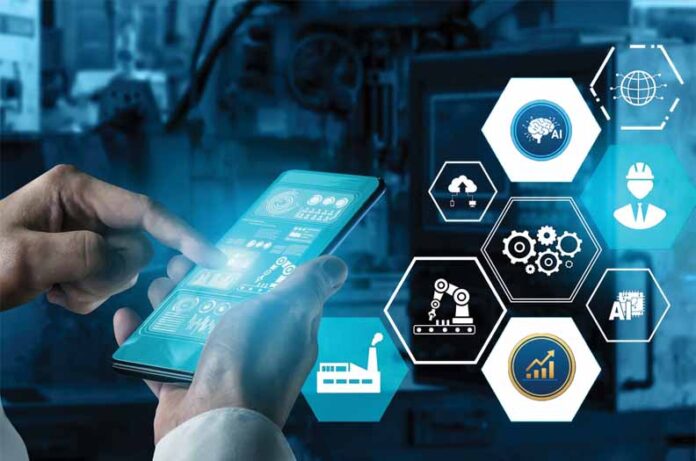
The role of engineers and consultants across the value chain is undergoing significant transformation. Driven by rapid advancements in Artificial Intelligence – particularly in text generation, programming code, and image creation – professional activities are increasingly being executed through digital platforms.
Core functions such as management, calculation, modelling, design, and advisory services are becoming progressively digitized. This shift enables greater efficiency, accuracy, and scalability in project execution.
In response to these technological developments, organizations are actively automating and reengineering their internal processes. Where appropriate, services are being digitalized to enhance delivery, improve client outcomes, and maintain competitiveness in a rapidly evolving industry landscape.
Digital technologies present the sector with three key opportunities to accelerate and enhance sustainability outcomes.
- Enhancement of Operational Efficiency: Repetitive and time-consuming tasks can be streamlined, while AI-driven tools facilitate the generation of initial designs giving multiple options. This allows professionals to focus more on innovative activities, reducing project timelines and increasing overall efficiency.
- Enhanced System Integration and Flexibility: Digital tools support greater system integration and adaptability, both of which are critical for advancing sustainability. The use of advanced models, sensors, and Digital Twins enables a deeper understanding of complex systems and their interactions.
- Improved Information Sharing and Collaboration: Emerging virtual environments and participation tools, combined with the increasing convergence of digital and physical worlds, enable more inclusive, data-driven, and customized engagement. This fosters broader stakeholder support, more effective collaboration, and ultimately leads to improved project outcomes.
Advancements in digital technologies have significantly transformed traditional design processes, enabling faster and more accurate outcomes. A key driver of this digital transformation is the contrasting trend between rising labour costs and the decreasing cost of technology.
Together, these factors play a critical role in accelerating the digitalization of engineering practices, leading to improved productivity, enhanced design capabilities, and greater competitiveness in the industry.
Risks of Manual Methods
Despite the availability of advanced digital tools, many engineering practices continue to rely on manual methods or fragmented systems involving spreadsheets, hand calculations, and annotated drawings. While this approach may appear manageable for smaller projects, it often results in inefficiencies, inconsistencies,
and increased administrative burden across the
design process.
A common challenge in general engineering practice is the repetition of routine calculations and generation of reports and documents. Engineers frequently perform similar tasks across projects, such as tracing load paths, equipment sizing, making specifications, and documenting the process from the beginning each time. Although these tasks are familiar, they consume substantial time and limit the opportunity for engineers to focus on more complex and value-added activities.
In addition to being time-intensive, manual calculation processes are inherently susceptible to human error. Minor inaccuracies – such as incorrect data entry, or reliance on outdated assumptions can propagate through the design workflow and remain undetected until later stages. These errors can lead to several adverse outcomes, including:
- Incorrect sizing of structures and equipment
- Inconsistencies between design calculations and drawings
- Increased Requests for Information (RFIs) from regulatory authorities
- Delays during construction or the need for rework
- Reduced confidence in the accuracy and reliability of project documentation
Overall, continued reliance on manual and semi-manual processes presents notable risks to efficiency, accuracy, and project outcomes within general engineering practice.
Although manual methods are familiar and widely practised, they carry hidden costs that accumulate over time. Repetition of routine tasks not only increases the design effort required for each project but also limits productivity and the effective use of engineering expertise. This inefficiency becomes more pronounced as project volumes grow.
Automation reduces the likelihood of human error. Repetitive manual tasks are particularly susceptible to mistakes due to fatigue and oversight. By streamlining these processes, automated systems minimize variability and significantly improve overall accuracy and reliability. As a result, automation is better aligned with the demands of modern residential engineering practice, supporting safer, more efficient, and higher-quality design outcomes.
Challenges in the Integration of Automation and AI
- Competency Gap: The growing integration of automation and Artificial Intelligence (AI) in engineering has created a demand for specialized skill sets beyond traditional expertise. Engineers are increasingly required to manage and maintain advanced digital systems. However, a gap persists between existing workforce capabilities and these emerging requirements, posing a challenge for organizations. Without adequate skills, the full benefits of automation such as enhanced efficiency and accuracy may not be realized.
- Issues in Achieving Seamless System Interoperability: Engineering organizations typically operate using a diverse array of software tools, platforms, and legacy systems to support their workflows. Ensuring seamless communication and data exchange between these systems remains a significant challenge, particularly as firms introduce new technologies into established environments. The integration of modern automation and AI-driven solutions with existing legacy infrastructure is especially complex.
- Conformance to Regulations: The development of automation and artificial intelligence necessitates the parallel advancement of regulatory frameworks that govern their use. Compliance with safety, environmental, and ethical standards is inherently complex, particularly in sectors characterized by rigorous regulatory requirements.
- Stakeholder Trust and Public Opinion: The acceptance of AI-driven systems depends significantly on public trust, particularly in safety-critical sectors. Failures in such systems can undermine confidence, and restoring public trust once lost can be both challenging and time-consuming.
- Data Security and Privacy: The application of artificial intelligence typically requires the collection, storage, and analysis of large volumes of data. Ensuring that such data is managed securely and in compliance with established privacy regulations is a significant and ongoing challenge.
- Workforce Transition Challenges: A major concern associated with automation is its impact on employment. As machines increasingly perform tasks traditionally carried out by humans, there is a growing risk of job displacement, particularly within certain sectors of the engineering industry.
- High Capital Expenditure (Capex): The adoption of automation and artificial intelligence (AI) systems necessitates significant upfront capital investment. This includes expenditures related to advanced technological infrastructure, workforce training, and possible loss of productivity due to downtime during the transition period. Such financial commitments can pose substantial commitment, particularly for Small and Medium-sized Enterprises (SMEs), which may find it difficult to justify the cost-benefit trade-off or secure the necessary resources for implementation.
- Technical Complexity and Upkeep: The incorporation of automation technologies, while reducing reliance on human intervention, inherently introduces increased system complexity. These automated systems demand consistent monitoring and regular maintenance to ensure optimal performance, and any technical failures or system malfunctions can result in significant operational disruptions. Furthermore, the integration of artificial intelligence necessitates continuous updates, calibration, and refinement to maintain accuracy, adaptability, and relevance in dynamic operating environments.
- IT Security Threats: As engineering operations increasingly rely on automation and Artificial Intelligence (AI), they become vulnerable to cybersecurity threats. The growing dependence on interconnected systems, particularly those enabled by the Internet of Things (IoT), expands the potential attack surface for malicious actors. Consequently, a security breach within such environments can have severe and far-reaching implications, including unauthorized data access, deliberate equipment manipulation or sabotage, and, in extreme cases, complete operational shutdowns.
- Moral Implications: The increasing adoption of Artificial Intelligence (AI) in engineering also gives rise to significant ethical considerations, particularly in relation to decision-making processes. In scenarios where AI systems are entrusted with safety-critical functions, the absence of clearly defined guidelines and accountability frameworks presents a substantial concern. Establishing responsibility for decisions made by autonomous or semi-autonomous systems remains a complex challenge. Consequently, ensuring that AI operates within well-defined ethical boundaries, while maintaining transparency, fairness, and reliability, represents a critical and ongoing issue in the deployment of such technologies.
- AI at Tata Consulting Engineers (TCE): Engineers and consultants at TCE possess both the requisite technical expertise and domain-specific knowledge to effectively address the challenges facing the sector. Such knowledge, experience, and professional judgment are indispensable, as are a well-established integrated approach and institutional expertise derived from operating across the entire value chain. TCE has developed several design suites over the past decade catering different disciplines for various basic engineering design calculations. TCE has also developed templates for reports and specifications. This reduces considerable time and effort and ensures correctness of results. The recent development of AI based tool for electrical single line diagrams is a game changer in many ways creating path to many more AI based tools to come in future.
This strength enables us to view emerging participants, including those from the information technology sector, not as competitors, but as valuable collaborators in advancing digital and data-driven approaches.
As engineering operations increasingly rely on automation and Artificial Intelligence (AI), they become vulnerable to cybersecurity threats…
Conclusion
The integration of automation and artificial intelligence (AI) in engineering represents an inevitable evolution rather than a temporary trend. As these technologies continue to advance, they are expected to significantly transform engineering practices. Although their adoption presents certain challenges, the potential benefits such as improved efficiency, accuracy, and innovation largely outweigh the associated drawbacks.
For engineering firms, success in this evolving landscape will depend on adaptability. Organizations that effectively embrace automation and AI, invest in relevant capabilities, and proactively address associated challenges will be better positioned to remain competitive. As the progression toward automation is unavoidable, the engineering sector must be prepared to take a leading role in this transformation.

Sandhya Mukherjee; a graduate in Electronics and Power from Visvesvaraya National Institute of Technology, Nagpur; has been in Power Sector with experience of design engineering, consulting, quality management and operations of thermal power station. Presently, she is working in Technology Vertical of Tata Consulting Engineers Ltd., in the role of Assistant General Manager.