
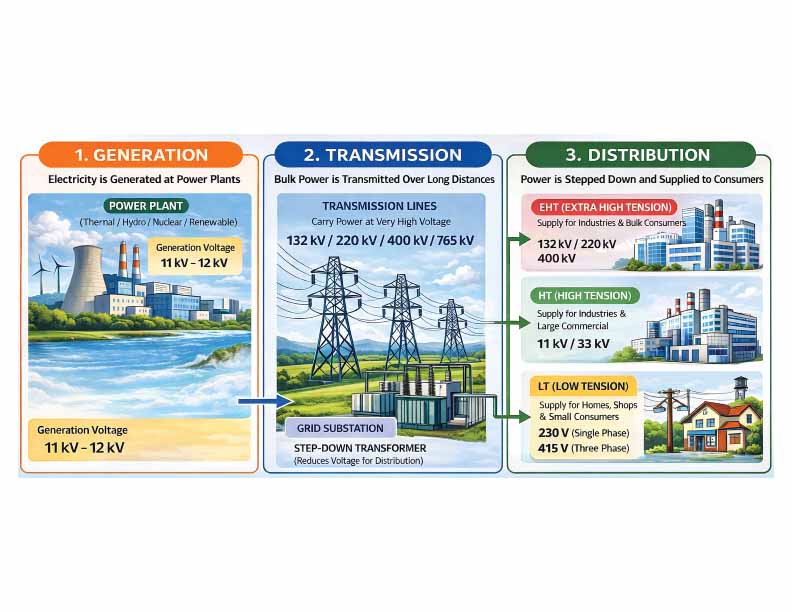
Electricity is generated at voltage levels of around 11 kV to 12 kV and is transmitted over long distances at higher voltage levels such as 132 kV, 220 kV and 400 kV to minimize transmission losses. At the distribution stage, electricity is supplied to consumers at both Low Tension (LT) and High Tension (HT) voltage levels.
Although HT consumers represent only about 5–10% of the total consumer base, they account for nearly 80–90% of the total connected load and energy demand of a distribution utility. Therefore, the performance of HT metering infrastructure has a significant impact on utility operations, including supply reliability, quick consumer service, revenue assurance, theft prevention, infrastructure cost optimization and safe operation.
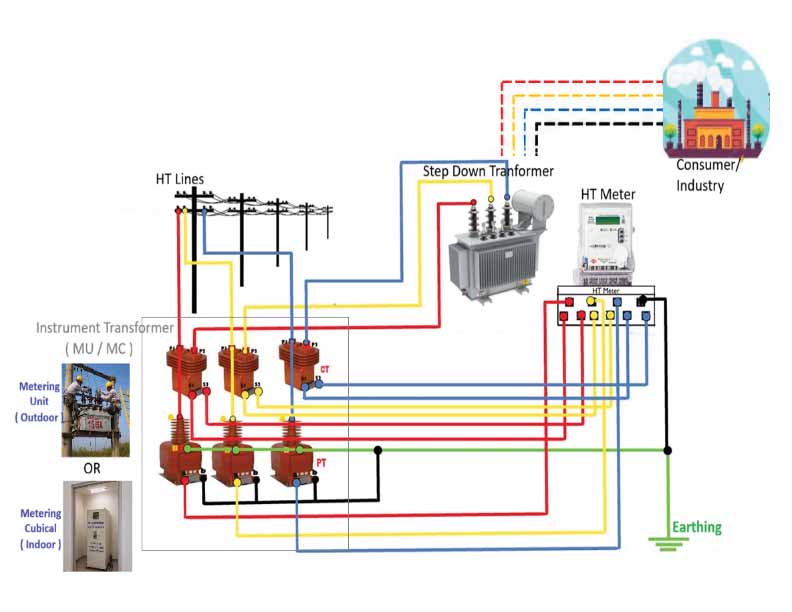
In view of the above, HT consumer metering requires special attention with respect to accuracy, accessibility, tamper-proof design, ease of replacement and maintenance. Unlike LT consumers, HT metering is not a direct connection between the supply and the energy meter. The HT supply is first routed through an Instrument Transformer, commonly installed as either a Metering Unit (MU) or a Metering Cubicle (MC) and thereafter connected to the energy meter.
Thus, HT consumer metering comprises both the instrument transformer and the energy meter in accordance with CEA regulations.
HT Metering System Evolution
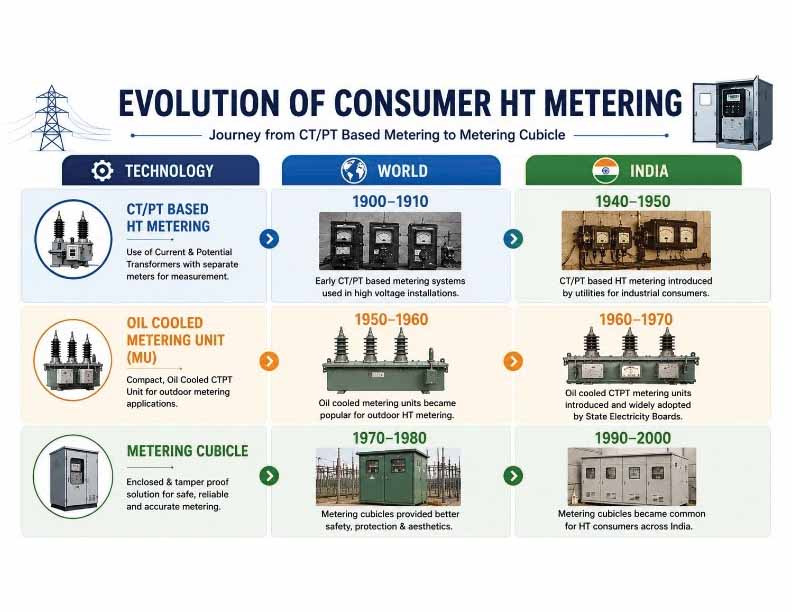
HT metering started in the United States and Europe during the early 1900s with CT/PT based measurement systems. Over time, the technology spread across the world and evolved from electromechanical meters coil base measurement to oil-cooled Metering Units, Metering Cubicles. India adopted HT metering in the 1940s–1950s.
Initially the purpose of metering was accurate measurement of energy – as metering started to offer the exact measure of electricity given by boards to very large industries or utilities. As the HT supply is used by medium industry, commercial purpose e.g., mall, cinema hall, shops etc., the pilferage-proof metering is required as theft of electricity becomes more common to reduce the cost in competitive market. Keeping that in view metering cubicles have come into picture.
Existing HT Metering System
HT metering connections involve a relatively complex metering infrastructure, and in most distribution utilities, the associated infrastructure cost is borne by the consumer. Unlike LT consumers, there is no direct connection between the energy meter and the HT supply. The HT supply is first routed through instrument transformers, which may be installed either in a Metering Unit (MU) or a Metering Cubicle (MC), depending on site conditions and utility practices.
The energy meter is connected to the secondary side of the instrument transformers at a standard voltage level of 110 V for accurate energy measurement. In the case of Metering Cubicles, a dedicated metering room is generally required, whereas Metering Units are usually installed on outdoor four-pole structures.
After metering, the HT supply is connected to the consumer’s step-down transformer, which converts the voltage to LT level for utilization by the consumer or industry.
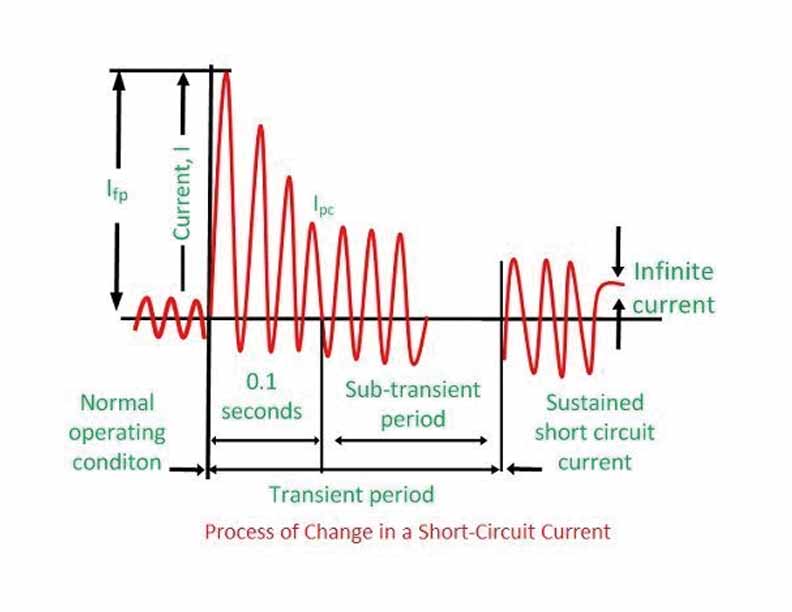
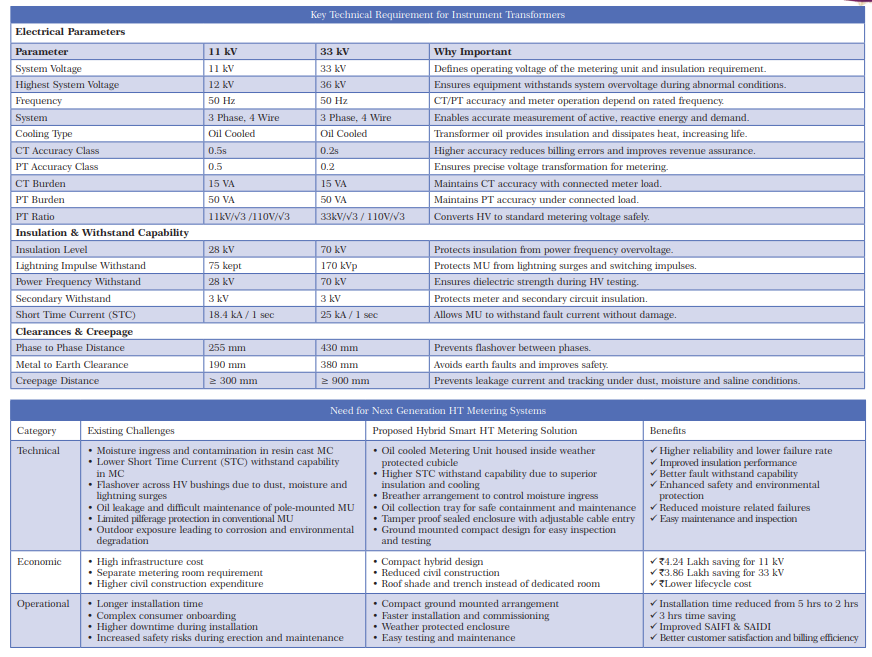
During fault conditions, the short-circuit current rises abruptly to a very high value and passes through transient, sub-transient and steady-state regions. Therefore, the instrument transformer used in HT metering must possess adequate Short Time Current (STC) withstand capability to ensure safe and reliable operation.
Challenges in Existing HT Metering System
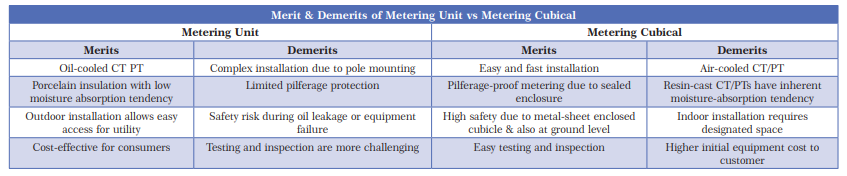
Both instrument transformers whether metering unit or metering cubicle have some merits and demerits. In summarised way, metering unit is better for reliability as oil cooling has very less property to absorb moisture while metering cubical is better for testing, tamper privilege proof but high moisture absorption property as used resin cast CT PT & air-cooled system.
Next Generation HT Metering System
After nineties there was no change in HT consumer’s metering system, however, only meter has been changing from mechanical to static DLMS to smart meter & data flow & reading / billing automation, analytics in power quality, SAFI / SADI improvement, outage monitoring & control has been improving. But at the same time, there is no improvement in installation challenges, consumer costing optimisation, safety, zero failure rate & reduction of safety measures.
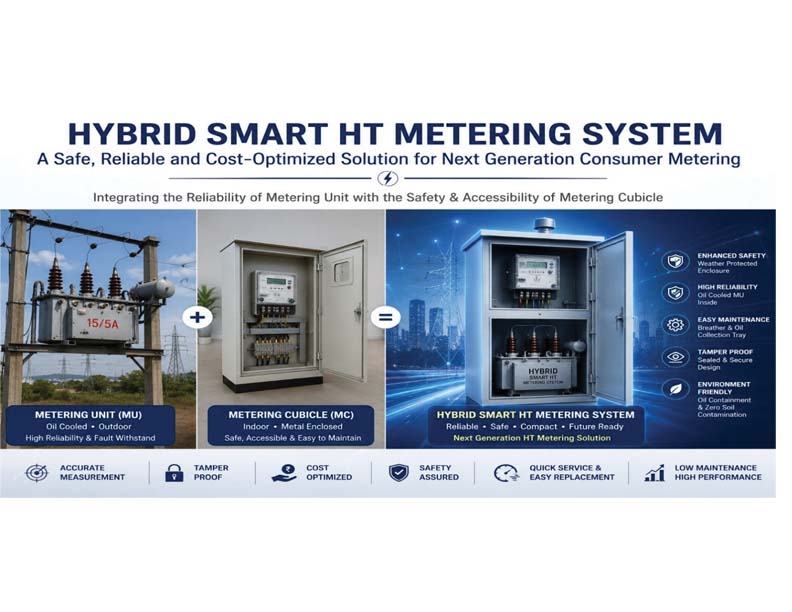
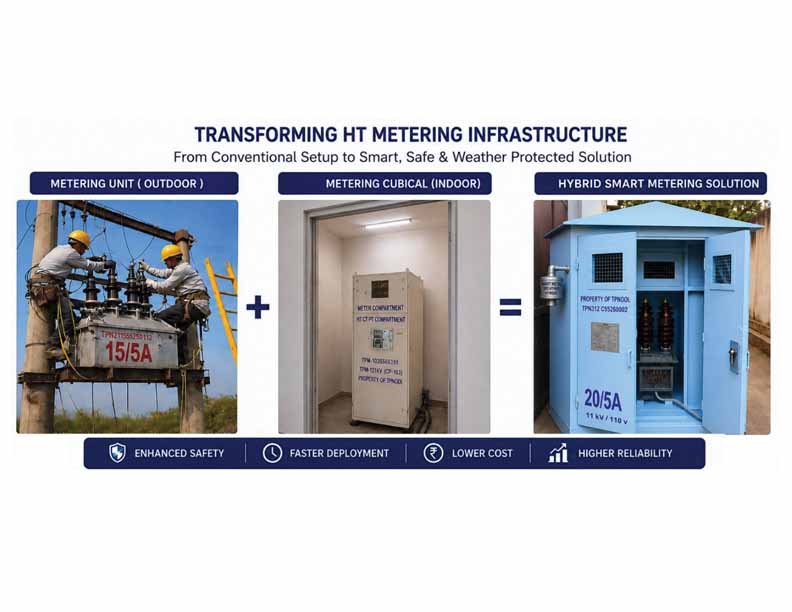
The new generation HT metering is the hybrid combination of metering cubicle & metering unit comprising merits of both instrument transformers. The body of metering cubicle was redesigned to accommodate the MU inside lower chamber & also provide the adjustable hole for incomer & outgoing cables – so that terminated incoming & outgoing cables directly insert into the lower chamber – and thereafter adjust the hole so that no space remains in hole. Lower chamber has also provision of breather so that preventive maintenance can be done as moisture contents increase in lower chamber. Metering unit is placed 60 mm above the bottom surface & there is a provision of removable tray to collect the oil in tray & safely clean the oil inside of lower chamber in case oil leakage occurs, it also prevents the contamination of earth soil. Similarly to metering cubical upper chamber is for meter installation & isolated from lower chamber.
Concept and Design of Hybrid HT Metering System
The proposed Hybrid Smart HT Metering System is an innovative combination of a conventional Metering Unit (MU) and a Metering Cubicle (MC), integrating the advantages of both technologies into a single compact and weather protected solution.
In this design, the body of the metering cubicle has been specially redesigned to accommodate the Metering Unit inside its lower chamber. Adjustable openings are provided for both incoming and outgoing cables, allowing the terminated cables to enter the chamber directly. After cable insertion, the openings can be adjusted and sealed properly so that no gaps remain, thereby preventing the ingress of moisture, dust, insects, or small animals.
The lower chamber is equipped with a breather arrangement to control moisture accumulation and facilitate preventive maintenance. This feature helps maintain a dry internal environment and enhances the reliability and service life of the Metering Unit.
To improve safety and environmental protection, the Metering Unit is mounted approximately 60 mm above the bottom surface of the chamber. A removable oil collection tray is provided beneath the unit to collect any fault /leakage occurred. The tray can be easily removed for cleaning, ensuring safe maintenance practices and preventing contamination of surrounding soil.
The upper chamber of the cubicle is dedicated to meter installation and is completely isolated from the lower chamber containing the Metering Unit. This separation improves operational safety, simplifies maintenance activities and ensures that metering equipment remains protected from oil vapour, moisture, and other environmental effects.
Thus, the Hybrid Smart HT Metering System combines the compactness and weather protection of a metering cubicle with the proven reliability of a metering unit, resulting in a safer, more reliable, environmentally friendly, and low-maintenance HT metering solution.
Future Outlook
The proposed Hybrid Smart HT Metering System is an innovative integration of the conventional Metering Unit (MU) and Metering Cubicle (MC), combining the advantages of both technologies into a single compact and weather-protected solution. The system offers higher Short Time Current (STC) withstand capability, improved insulation performance, enhanced safety and better resistance to moisture and environmental stresses.
In addition to technical benefits, the proposed design significantly reduces infrastructure cost, installation time and consumer onboarding duration. The compact ground-mounted arrangement simplifies testing and maintenance while improving supply reliability and operational safety. The estimated cost saving of `4.24 lakh for 11 kV and `3.86 lakh for 33 kV consumers demonstrates its economic viability.
The Hybrid Smart HT Metering System has the potential to become a next-generation solution for HT consumer metering by providing a reliable, safe, cost-effective and future-ready metering infrastructure. Further field implementation and large-scale deployment can help utilities improve consumer satisfaction, enhance reliability indices such as SAIFI and SAIDI, and accelerate the transition towards smarter power distribution networks.

Dheeraj Mehta is a techno-commercial professional in the power distribution sector with expertise in metering and Advanced Metering Infrastructure (AMI). He is currently working with Tata Power Northern Odisha Distribution Limited (TPNODL). His professional interests include HT metering, smart metering, revenue assurance and innovative consumer metering solutions.