
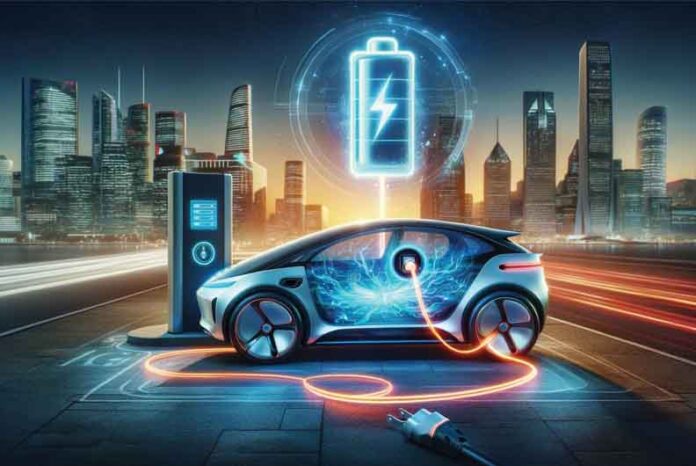
India has moved past the question of whether electric vehicles will grow. The real question now is whether the ecosystem around them, grid capacity, financing discipline, manufacturing depth and regulatory coordination, can grow at the same pace.
This is a story less about vehicles and more about the electrical and industrial system that must carry them.
An Industrial Story Wearing an Automotive Costume
Every few months, another EV sales chart makes its way into a boardroom presentation, and the mood in the room brightens. But ask a distribution utility engineer in a mid-sized Indian city what worries him about EVs, and vehicles barely come up. It is the transformer at the end of his street, the cost reflective tariff structure never designed for this kind of load, and the evening peak arriving earlier every year.
That gap, between the story EVs are usually told through and the story that actually determines whether the transition works, is the subject of this article. In markets with mature charging networks and deep consumer purchasing power, EV adoption can largely ride on aspiration and marketing. India does not have that luxury. Its EV transition has to work through price-sensitive buyers, congested urban infrastructure, uneven state-level policy, fleet and freight economics that behave nothing like private car ownership, and distribution companies (DISCOMs) that must absorb an entirely new pattern of electricity demand without compromising the reliability millions of consumers already depend on.
This is why India’s EV journey deserves scrutiny beyond the celebratory headlines. The market is expanding, the policy push is unmistakable, and the product pipeline is stronger than ever. But a durable transition depends on something less glamorous: whether the ecosystem can shift from incentive-led growth to institutionally sound growth, growth that is investible, interoperable, serviceable, and, above all, electrically manageable.
A Market Growing in Layers, not in a Straight Line
India’s EV market is now large enough to command serious boardroom attention. Recent market assessments place the industry in the tens of billions of dollars in the mid of the current decade, with forecasts pointing to strong compound growth through the next decade. That trajectory matters not only to automakers, it is increasingly relevant to electricity suppliers, real estate developers, charging operators, battery manufacturers, financiers and state regulators, all of whom are now stakeholders in what used to be a purely automotive conversation.
Yet it would be a mistake to treat this as one unified market. It is a layered one. Growth dynamics differ sharply across two-wheelers, three-wheelers, passenger cars, buses and commercial fleets. Electric two- and three-wheelers tend to have the most favourable economics, serving high-utilisation use cases where fuel savings are immediately visible to the owner. Passenger cars face a tougher psychological hurdle: hesitation around upfront pricing, charging convenience and resale confidence persists, even as automakers keep expanding what is on offer.
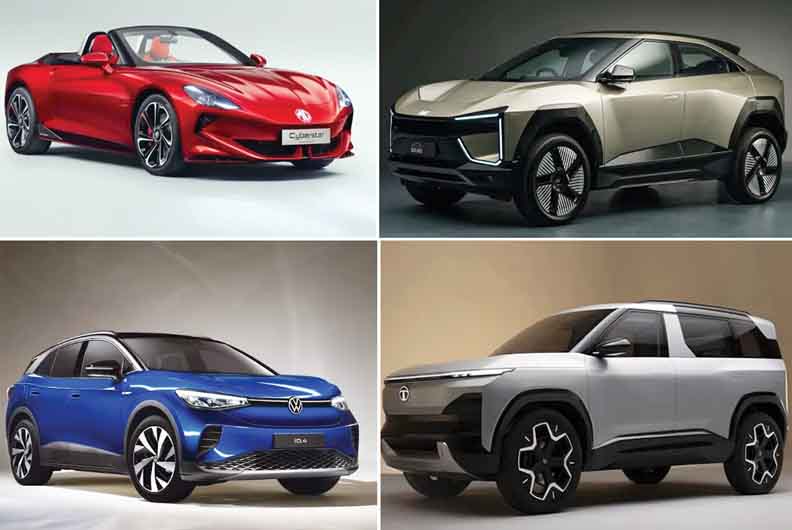
The product pipeline underlines that broadening. Industry trackers list roughly 26 upcoming electric cars for India between 2026 and 2028, including 22 SUVs, three sedans and one coupe, with several launches due in 2026 itself. The lineup spans from accessible models such as the Kia Syros EV and Hyundai Inster to premium offerings such as the Volvo EX90 and Hyundai IONIQ 6, evidence that the market is diversifying by price point, not simply chasing the luxury segment.
That said, more models is not the same as more access. India’s EV growth will remain segmented unless lower-cost vehicles, workable financing and dependable public charging expand together, a distinction that matters most for policymakers and lenders, who might otherwise read a crowded launch calendar as proof of demand depth the market hasn’t reached really.
Policy has Matured but Coordination has not Kept Pace
Policy has been one of the strongest tailwinds behind India’s EV momentum, and it has evolved in a logical direction. Early-stage EV policy usually exists to reduce buyer hesitation through subsidies. Later-stage policy has to solve harder problems: industrial dependence, supply bottlenecks and infrastructure gaps. India is visibly entering that second stage. The PM e-DRIVE scheme, launched in October 2024, reflects this shift, moving emphasis away from pure retail incentives and toward ecosystem building: domestic manufacturing, battery capacity and segment-specific support for broader electric mobility, including public transport and freight. This is not merely an automotive shift; it is a competitiveness issue, a trade issue and, increasingly, an energy-security issue.
The trouble is that policy architecture on the ground remains highly uneven. The centre can set direction, but states still control land access, local incentives, charging permissions and municipal coordination, the actual machinery through which national ambition becomes a working system. The result is a patchwork: Delhi and Maharashtra are frequently cited as frontrunners for using road-tax waivers and registration-fee relief to improve consumer economics, while elsewhere infrastructure lags and support is thinner, producing a geography of adoption clustered around cities that were already advantaged.
For business leaders, the implication is unambiguous: EV strategy in India cannot be designed at the national level alone. Market entry, charging rollouts and financing assumptions all need testing state by state, city by city, and sometimes corridor by corridor. For regulators, fragmented implementation raises costs for every operator trying to scale and quietly dilutes the effectiveness of central ambition.
Charging is Expanding but Density beats Symbolism
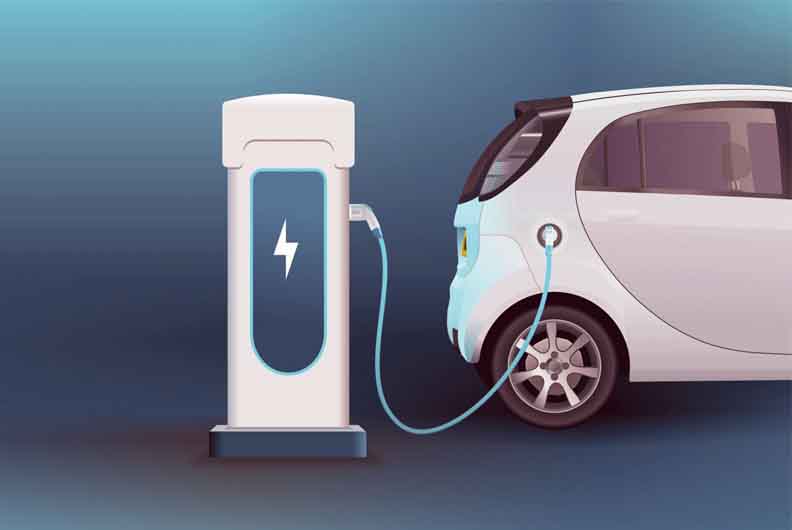
Charging infrastructure is the most photogenic proof point of EV readiness, which is precisely why it deserves scrutiny. The real question is not how many chargers exist nationally, but whether charger location, charger type, grid capacity and expected utilisation actually line up. Under FAME II, 2,877 public charging stations had been approved across the country by 2022, with an ambition to cross 5,000 by 2026. These numbers indicate genuine progress, but a national headline figure can conceal gaps in corridor continuity, urban density, charger uptime and neighbourhood-level access, the details that determine whether an EV owner actually trusts the network.
India’s charging challenge is therefore a density challenge, not simply a deployment one. EV owners need charging where they live, where they work, where fleets park, and where intercity traffic naturally pauses. There is a stated push for national highway EV corridors with fast-charging stations every 50 kilometres on key routes by 2027, including Delhi–Jaipur, Bengaluru–Chennai and Mumbai–Pune. Executed well, such corridors could materially reduce range anxiety for intercity travel and freight movement, infrastructure that changes behaviour rather than just optics.
Even so, public charging alone will not carry the transition. Home charging, workplace charging, depot charging and battery swapping will together decide adoption outcomes. Battery swapping matters particularly for two- and three-wheelers, where fast turnaround often counts more than charging time itself, a reminder that India’s mobility mix, dominated by two-wheelers, shared mobility and commercial fleets, looks nothing like the private-car-centric narratives common in Western EV coverage.
The Real Bottleneck is the Distribution Grid
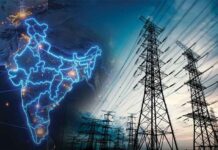
Much of the EV conversation still treats electricity as an infinite background resource, as though every new vehicle can simply plug into an endlessly elastic grid. That is not how power systems behave. The most serious medium-term constraint on EV scale in India may not be vehicle availability or even charger installation, it may be local distribution readiness. Constraints already flagged in current policy assessments include low electricity supply margins in some regions, grid stability concerns, a shortage of skilled manpower and the high upfront cost of infrastructure build-out.
This is where electric mobility collides directly with the power sector. Fast charging is not a retail amenity; it is a concentrated electrical load. Depot charging for buses or logistics fleets can reshape local load curves overnight. Residential clusters of EV adoption can stress transformers and low-voltage networks if charging coincides with the evening peak, exactly when the grid is already under the most pressure. Without proactive planning, a successful mobility policy can quietly manufacture a distribution problem.
For DISCOMs and regulators, EVs therefore demand a new style of demand forecasting. Load planning built on historical consumption patterns will not be enough; utilities need feeder-level impact studies, transformer upgrade schedules, and tariffs that actively encourage managed charging. Time-of-use tariffs, smart-metering integration and digital control of charging behaviour need to move from ‘innovative pilots’ to standard operating tools. Cities such as Pune, Bengaluru and Hyderabad have already been experimenting with smart-grid-linked charging approaches designed to shift load toward off-peak hours, pilots that sit directly at the transition’s central tension: growing electric mobility without transferring avoidable system costs onto the broader consumer base, including those who will never own an EV.
Boardrooms must look beyond Sales to Business-model Durability
The next phase of India’s EV market will reward operating discipline over market noise. An EV charging company does not succeed because it installs chargers; it succeeds when those assets achieve sustainable utilisation, acceptable uptime and commercially viable power procurement. An automaker is not protected simply by announcing an EV portfolio, the deeper questions concern warranty design, residual value, battery sourcing, after-sales network depth, and financing that matches the asset’s real economic life.
For CFOs specifically, the EV transition is fundamentally a capital-allocation story. Charging infrastructure demands upfront investment well before utilisation matures. Battery assets carry technology risk and uncertain residual values. Fleet operators need financing structures aligned to fuel and maintenance savings rather than conventional depreciation assumptions borrowed from combustion-engine fleets. Encouraging growth forecasts do not, by themselves, resolve balance-sheet risk.
This is precisely where India’s commercial fleet and shared-mobility segments may prove decisive. High-usage applications, last-mile delivery, urban logistics, ride-hailing, municipal transport, can justify electrification faster because the operating-cost advantage is easier to capture and underwrite. Fleet economics are more predictable than private-car ownership, making them a natural fit for structured finance. The strategic lesson for the next five years is that India’s EV scaling may be led as much by commercial fleets as by consumer aspiration, a different growth pathway from the one usually assumed in global EV commentary.
Manufacturing Depth will decide Strategic Resilience
India’s EV future will not be secured by assembly alone. If the country stays dependent on imported cells, battery materials and critical components, the transition remains exposed to exchange-rate volatility, geopolitical supply risk and external technology dependence. India has historically relied heavily on imported batteries, and that vulnerability is one of the reasons behind the recent shift in policy approach.
The manufacturing push embedded in recent policy changes matters for this reason. The removal of import duties on several battery components and technology-linked parts helps reduce near-term costs, but it is a bridge, not a destination. The longer objective has to be deepening local capability in cells, pack design, thermal management, power electronics and recycling.
This has a geopolitical dimension as much as an industrial one. EV competitiveness is increasingly inseparable from battery competitiveness, which in turn depends on access to critical minerals, refining capability and technology partnerships. India’s path need not mirror China’s or Europe’s, but it does need a coherent industrial logic: targeted scale, supply security, genuine domestic value addition and credible end-of-life frameworks. Without that, India risks becoming a very large consumption market without strategic control over its own value chain.
Recycling and Second Life are no longer Peripheral Issues
The EV conversation in India still leans heavily toward sales figures and far less toward asset life cycles, but that is beginning to shift. Battery recycling and second-life use are emerging as genuine future policy priorities, with anticipated emphasis on legal guidelines, environmental standards, collection centres and reuse pathways. A mature EV ecosystem does not simply sell more batteries; it manages them responsibly across first use, second use and end-of-life recovery.
Why should this matter to a CEO or CFO rather than only an environmental officer? Because recycling and second life are cost, liability and financing questions as much as environmental ones. Residual values improve when a credible second-life market exists. Insurance products become more rational once battery condition can be reliably measured. Supply chains grow more resilient when valuable materials can be recovered and recirculated rather than imported afresh each cycle. Circularity is not an ESG add-on to the EV business, it is an enabler of better underlying economics.
For regulators, this is a rare opportunity to shape rules before battery waste becomes a large-scale problem rather than after. Standards around state-of-health measurement, collection obligations, data traceability and safe transport could meaningfully reduce future compliance and environmental risk and second-life batteries may also carry implications for distributed storage, quietly connecting EV policy back to electricity system planning.
India needs a Systems Regulator, not a Siloed One
The EV transition cuts across transport, industry, urban development, taxation and electricity simultaneously. Yet regulation largely remains siloed. Automotive ministries think about manufacturing and sales. Urban authorities think about parking and permits. Power regulators think about tariffs and network costs. Each view is reasonable in isolation, and increasingly inadequate together.
India now needs more integrated governance for electric mobility. Charging-station economics depends on tariffs, land access, municipal permissions, technical standards and financial viability, all at once. A fleet electrification project can fail not because vehicles are unavailable, but because the depot lacks sanctioned load, the tariff structure is misaligned, or a local approval is stuck on someone’s desk. The market does not simply need more policy; it needs better-coordinated policy.
For regulators, one principle stands out: technology neutrality paired with system intelligence. Regulators need not pick commercial winners, but they do need to create conditions under which efficient models can scale on their own, transparent charging tariffs, predictable grid-connection norms, sensible treatment of demand charges, active encouragement of managed charging, and data standards enabling genuine interoperability across operators. In the Indian context, regulatory coherence may ultimately prove more valuable than subsidy intensity.
A More Balanced Narrative for India
The popular EV narrative tends to swing between hype and hesitation. One camp insists electrification is inevitable and that only speed is in question. The other points to cost, charging and grid challenges as proof adoption will stall. Both views are incomplete. India’s EV transition is neither effortless nor fragile, it is viable, but only if the country accepts that scale will come from institutional learning, not rhetoric.
That balanced view matters most for leaders in the electrical industry specifically, because EVs do not belong only to automakers. They create new demand for switchgear, cables, transformers, protection systems, metering, communication networks, storage and power electronics, and new responsibilities: maintaining safety, managing power quality, upgrading distribution networks, and ensuring rapid electrification does not shift costs unfairly onto the broader consumer base footing the bill either way.
Seen through that lens, the EV story stops being simply a mobility story. It becomes a restructuring of the interface between the transport system and the power system, and because India is undertaking this while still expanding electricity access and managing affordability pressures, the quality of policy design will matter every bit as much as the quantity of capital deployed.
What Decisive Leadership now Looks like
The most credible EV strategies in India over the next five years are likely to share five traits. First, they will be selective about use cases, prioritising segments where the economics already work, or can be made to work with modest support. Second, they will treat charging as an operational system rather than a marketing accessory. Third, they will integrate grid planning early rather than react to it once infrastructure is already stranded. Fourth, they will pay close attention to financing architecture, particularly for fleets and infrastructure assets whose cash-flow profiles look nothing like conventional consumer lending. Fifth, they will prepare for circularity from the outset, rather than treating recycling as a compliance afterthought.
India’s electric vehicle moment is real. But moments do not automatically become transformations. Transformations require disciplined capital, reliable infrastructure, thoughtful regulation and institutions willing to coordinate across silos that have operated independently for decades. The prize on offer is substantial: cleaner mobility, lower oil dependence, new manufacturing capacity and a stronger innovation ecosystem. The risk is equally real: fragmented execution that leaves behind stranded chargers, stressed local grids and disappointed consumers promised more than the system could deliver.
For the readers, the takeaway is straightforward. The winners in India’s EV future will not simply be those who sell electric vehicles or install charging points. They will be those who understand the full system, the wire behind the charger, the tariff behind the load, the balance sheet behind the battery, and the policy logic behind the market. Electric mobility in India is no longer a niche automotive theme confined to the transport pages. It is an electrical, industrial and regulatory turning point, one that will be won or lost on the strength of the systems built around it, not the vehicles sitting on top of them.

Karn Pallav is a qualified Mechanical Engineer and MBA (Power) graduate from NPTI Faridabad. He is currently working as an Associate Director in one of the Big 4 Consulting Firms. Currently he is posted at Kathmandu, Nepal as an Embedded Economic & Financial Regulatory Advisor to the Electricity Regulatory Commission of Nepal. He has around two decades of management experience in the entire value chain of the Power Sector. He has written five books, namely: 1) The Power of Positive Thinking, 2) Customer Engagement Strategies in Retail Electricity Market, 3) 5 Rules for Life, 4) Whispers of the Heart, and 5) Whispers of the Himalayas.