
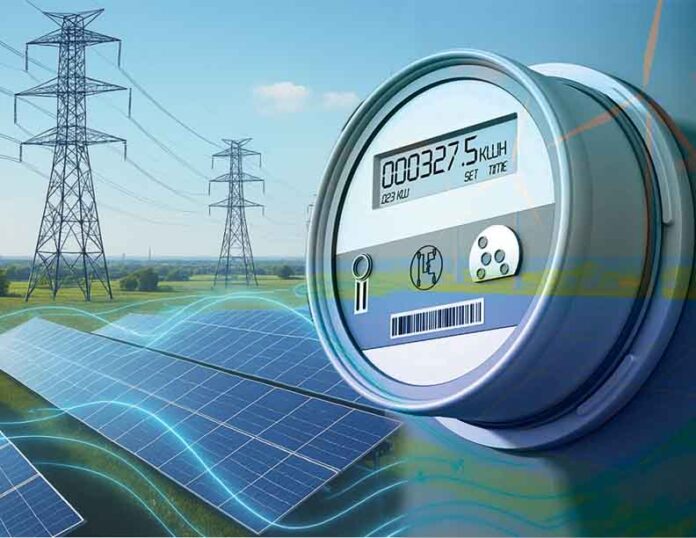
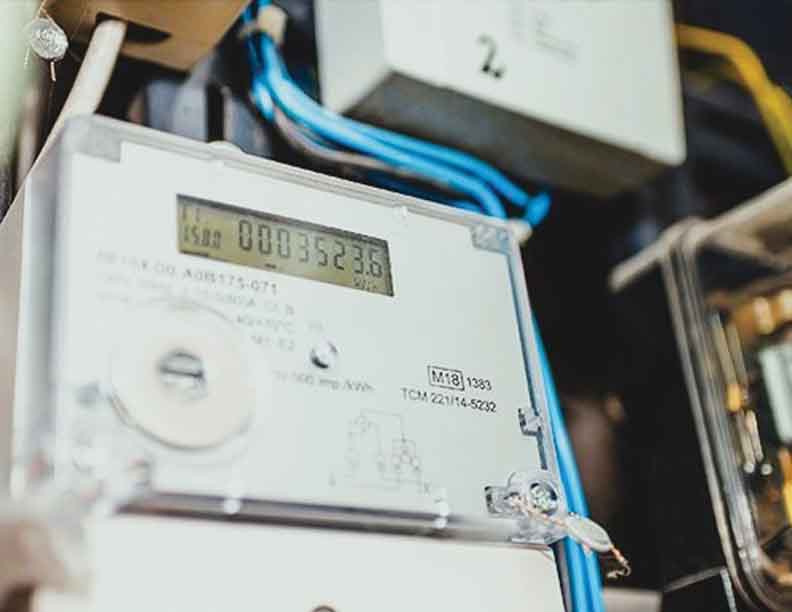
A smart meter is an advanced electronic device that functions as a key component of modern energy management systems, particularly within an Advanced Metering Infrastructure (AMI). It combines precise measurement hardware with embedded digital processing to accurately monitor electrical parameters such as voltage, current, active power, reactive power, and power factor in real time. Unlike traditional electromechanical meters, smart meters use high-speed sampling techniques and internal processing units, such as microcontrollers or digital signal processors, to analyse electrical signals with high accuracy. The measured data is stored in internal non-volatile memory at regular intervals, allowing detailed tracking of energy consumption over time.
One of the defining features of a smart meter is its ability to communicate data automatically through built-in communication technologies, including power line communication, radio frequency networks, or cellular IoT systems. This enables two-way communication between the consumer and the utility provider, allowing remote meter reading, system monitoring, and control functions such as firmware updates or service management. Additionally, smart meters incorporate strong security mechanisms, including advanced encryption and secure access protocols, to protect user data and ensure safe transmission.
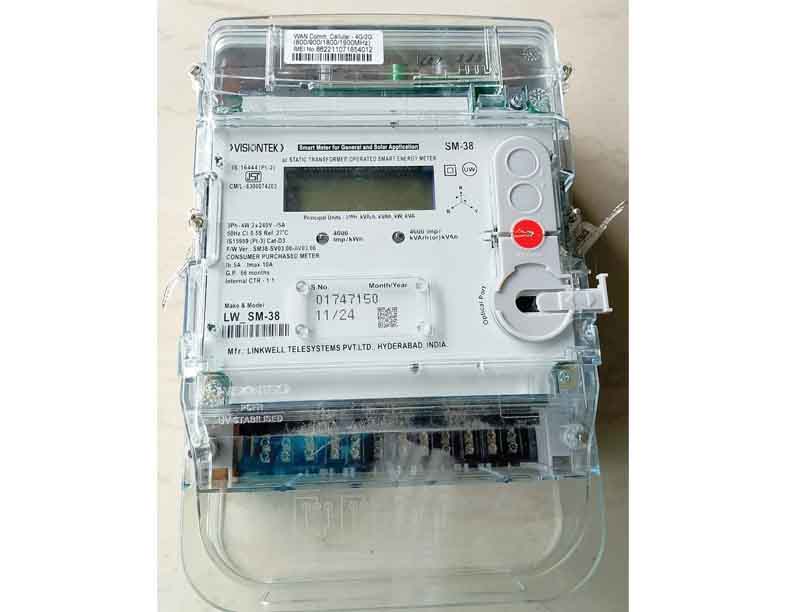
Beyond billing purposes, smart meters play a crucial role in modern power systems by acting as intelligent grid sensors. They can detect outages, support demand response programs, and interact with home energy networks using wireless communication standards. This capability also supports renewable energy integration through accurate net metering and helps maintain grid stability by providing real-time consumption data. Overall, smart meters are essential for enabling efficient, reliable, and intelligent operation of next-generation smart grids.
Importance of Smart Meters in Modern Power Network
Intelligent metering is vital in modern power systems because it converts conventional grids into responsive, data-oriented networks. Unlike traditional meters that only log energy use for billing, these advanced devices continuously measure parameters such as active and reactive power, voltage fluctuations, and overall power quality. This real-time insight allows utilities to identify faults early, analyse system performance, and maintain stable operating conditions, leading to improved reliability and efficiency.
These meters also support the integration of renewable energy sources by accurately tracking both consumption and generation. They enable two-way power flow, allowing users with solar panels or other distributed resources to supply electricity back to the grid while ensuring accurate energy accounting. In addition, their communication capabilities facilitate demand response programs, encouraging consumers to adjust usage during peak periods. This helps balance supply and demand, reduces grid stress, and enhances overall energy efficiency.
Another significant advantage is the enhancement of grid resilience and outage management. Intelligent meters can instantly report power interruptions, enabling faster fault detection and restoration. Their continuous data exchange with central systems provides utilities with better visibility and control over the network, allowing proactive measures to prevent large-scale disruptions. Overall, intelligent metering is essential for achieving a stable, efficient, and flexible power network, supporting the transition toward advanced smart grid systems.
Role in Real-Time Energy Management
The transition from traditional metrology to Intelligent Metering represents a shift from historical data collection to active, real-time power network orchestration. Below are the comprehensive technical details regarding the role of these systems in modern energy management:
Continuous Telemetry and Instantaneous Feedback
Intelligent meters function as high-frequency data acquisition nodes that provide granular visibility into power consumption. By capturing parameters such as active power (P), reactive power (Q), and voltage magnitude (V) at intervals as short as 15 minutes, utilities can develop precise load profiles. This allows for immediate detection of anomalies and provides consumers with the data necessary to optimize their energy footprint.
Dynamic Demand Response (DR) Orchestration
Through the Advanced Metering Infrastructure (AMI), smart meters serve as the communication bridge for automated load shedding and shifting. During periods of critical grid stress, the utility can transmit signals to the meter to interact with a Home Area Network (HAN). This facilitates the automatic throttling of non-essential high-power loads (e.g., HVAC systems or EV chargers), effectively mitigating peak demand without manual intervention.
Implementation of Time-of-Use (ToU) and Dynamic Pricing
Unlike legacy systems, intelligent meters possess internal processing units that support multi-tariff structures. By time-stamping energy consumption using a temperature-compensated Real-Time Clock, the system enables utilities to apply variable pricing models. This economic signalling encourages ‘load shifting’, where energy-intensive processes are moved to off-peak periods, thereby improving the grid’s capacity factor.
Bidirectional Management of Distributed Energy Resources
With the proliferation of residential solar photovoltaics and battery storage, intelligent meters are essential for Net Metering. They utilize bidirectional sensing to distinguish between energy imported from the grid and surplus energy exported back to it. This ensures accurate billing for ‘prosumers’ and provides the grid operator with the data required to manage localized voltage rises caused by high DER penetration.
Systemic Operational Efficiency and Fault Isolation
The automation of data retrieval eliminates the mechanical and human errors associated with manual meter reading. Technically, these meters are equipped with ‘Last Gasp’ functionality utilizing on board capacitors to send a final distress signal during a power failure. This allows for near-instantaneous outage mapping and fault isolation, significantly reducing the Mean Time to Repair (MTTR) for the utility.
Non-Technical Loss Mitigation and Security
Equipped with sophisticated anti-tamper sensors (magnetic field detectors and tilt switches), intelligent meters provide real-time alerts regarding unauthorized access or energy theft. All transmitted data is secured using AES-256 encryption, ensuring that the command-and-control infrastructure remains resilient against cyber-physical threats.
Key Features of a Smart Intelligent Meter
Central Processing Unit (CPU)
In a smart intelligent meter, the CPU acts as the core controller that links measurement functions with communication and user-facing features. It is typically built around a 32-bit microcontroller architecture, which provides sufficient processing capability to handle advanced tasks such as time-of-use billing, tariff management, and continuous data recording.
The CPU oversees memory operations by utilizing different types of storage: flash memory is used to hold the device firmware and operating instructions, while non-volatile memory such as EEPROM securely retains critical information like energy consumption records and event logs even when power is interrupted.
Additionally, the CPU integrates with a real-time clock, which is designed for high accuracy and often includes temperature compensation. This ensures that all energy usage data is precisely time-stamped, enabling reliable implementation of dynamic pricing and accurate billing cycles.
Precision Metrology & Real-Time Analytics
Utilizing high-speed sensing circuits and embedded Digital Signal Processors, these meters perform continuous sampling of voltage and current waveforms. Beyond recording total energy (kWh), they compute complex parameters including Active Power, Reactive Power, and Power Factor (CosÆ). The system also assesses power quality by monitoring Total Harmonic Distortion (THD) and voltage transients, storing this data in non-volatile memory for precise load profiling.
Bidirectional Communication Framework
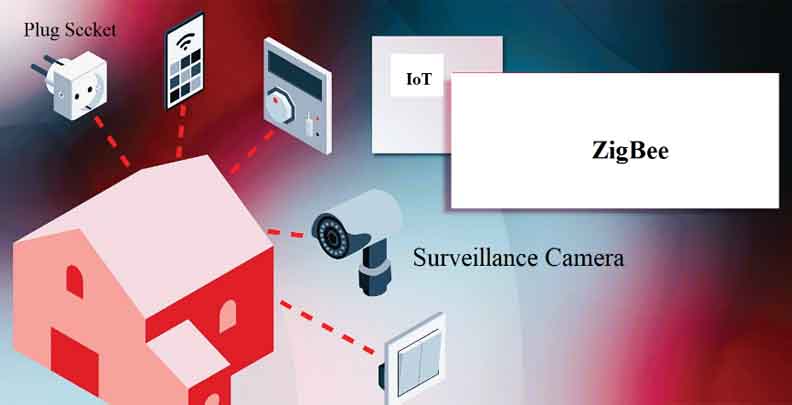
Equipped with a robust communication stack such as utilizing PLC, Radio Frequency mesh (RF-mesh), or Narrowband IoT (NB-IoT), the meter enables two-way data exchange between the utility and the consumer. This infrastructure allows for Remote Firmware Updates (OTA) and automated tariff reconfiguration. Furthermore, integration with Home Area Networks (HAN) via ZigBee or Bluetooth facilitates the coordination of smart appliances for optimized household energy management.
Power Supply and Safety
The power supply and protection system ensures reliable operation under varying electrical conditions. It employs a Switch Mode Power Supply (SMPS) to convert incoming AC voltage into stable low-voltage DC levels, typically 3.3V or 5V, for internal components.
To sustain operation during outages, the design includes an energy storage element such as a supercapacitor or backup battery, which briefly powers critical circuits when the main supply is lost. This short backup enables the meter to send a final ‘last gasp’ signal to inform the utility of the interruption. Additionally, a latching relay is incorporated as a remotely controlled switch, allowing utilities to disconnect or restore power without physical access.
Grid Intelligence & Resiliency
Acting as decentralized monitoring nodes, smart meters enhance network stability through automated Outage Management Systems (OMS). They can instantly transmit ‘Last Gasp’ signals during power failures to map faults. For security, integrated sensors detect physical tampering or abnormal magnetic interference. Crucially, they support Net Metering, accurately measuring the bidirectional energy flow required for integrating distributed renewable sources like solar PV.
Advanced Cybersecurity & Data Integrity
To protect sensitive billing telemetry and grid control commands, these devices employ hardware-based AES encryption and secure authentication protocols. This multi-layered security framework ensures the integrity of the communication link, preventing unauthorized data interception or cyber-physical manipulation of the metering infrastructure.
Demand Response & Load Optimization
Smart meters are essential for Peak Shaving and Load Shifting strategies. By facilitating ToU pricing, they provide economic signals that encourage users to reduce demand during grid peaks. This dynamic interaction improves the grid’s capacity factor and stabilizes the network by modulating loads in response to real-time grid conditions.
An AI-based intelligent metering system
An AI-based intelligent metering system represents the evolution of Advanced Metering Infrastructure (AMI) by integrating machine learning algorithms directly into the grid’s edge. Beyond simple data transmission, these systems utilize Non-Intrusive Load Monitoring (NILM) to disaggregate total energy consumption into appliance-specific signatures, providing granular insights without additional hardware.
AI systems examine a household’s overall energy consumption data to detect distinct usage patterns of individual appliances, eliminating the need to install separate sensors on every device. By applying predictive analytics to high-resolution telemetry, the system can forecast localized demand surges and identify precursors to transformer failure or line faults.
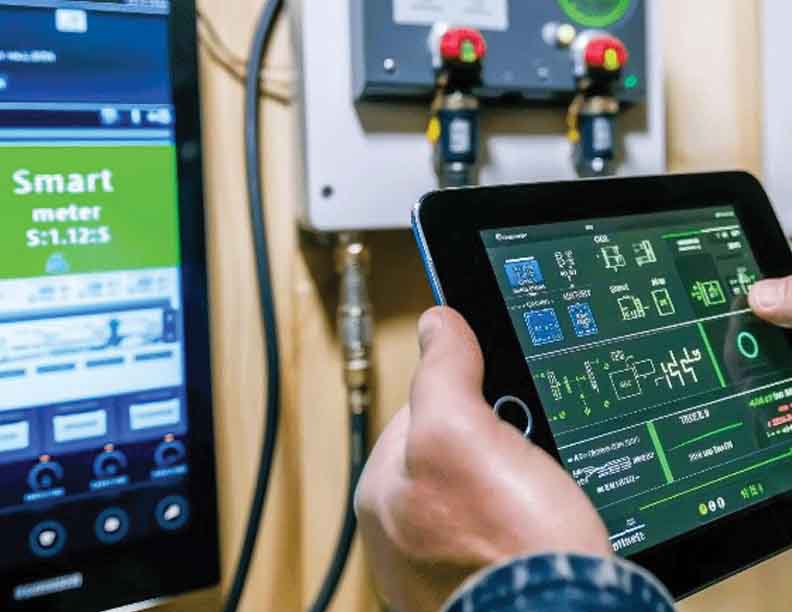
Furthermore, AI-driven anomaly detection enhances grid security by distinguishing between legitimate consumption swings and sophisticated cyber-physical tampering or energy theft. This intelligence enables autonomous Demand Side Management (DSM), where the meter optimizes load distribution in real-time to stabilize the network during peak periods.
Applications of Smart Metering Systems
Automated Billing and Data Acquisition
Smart meters remove the need for manual readings by sending consumption data in real time, allowing accurate billing based on time-of-use pricing.
Grid Operation and Stability
Utility providers can quickly identify power outages, track electrical parameters like voltage and current, and manage distribution efficiently to avoid system overloads.
User Energy Awareness
Consumers gain access to real-time usage data through digital platforms, helping them modify their habits and lower energy costs.
Demand-Side Management
By studying consumption trends, utilities can encourage users to cut back during peak hours through incentives and dynamic pricing.
Multi-Utility Monitoring (Water, Gas, Electricity)
Smart metering extends beyond electricity, enabling applications such as leak detection in water systems and level monitoring in industrial storage tanks.
Integration with Smart Homes
These systems can connect with home automation technologies to control and optimize the energy use of smart devices.

Dr. Bidrohi Bhattacharjee holds a Ph.D. in Electrical Engineering from the Indian Institute of Technology (ISM), Dhanbad, India. He earned his B.E. in Electrical Engineering and M.Tech. in Illumination Technology and Design from Jadavpur University, Kolkata, West Bengal, India. Currently he is working as HoD and Assistant Professor at the Electrical Engineering Department in Budge Budge Institute of Technology, Kolkata, India. His research interests span power electronics, electric drives, renewable energy, sustainable development, electric vehicles, and battery charging technologies. He also holds several patents in the areas of power electronics, renewable energy, and electric vehicles.