

Every megawatt of electricity from coal plants to solar farms to offshore wind passes through at least one switch before reaching homes, factories, or electric vehicles. Yet despite being indispensable to engineers, utilities, and regulators, switching technology has rarely commanded boardroom attention.
That is changing. As the energy transition accelerates, grids grow more complex, and the cost of outages rises, the intelligence and reliability of every circuit breaker and switchgear cabinet are under scrutiny as never before.
Why Switches Matter More Than Ever?
The power sector is undergoing its most profound transformation in a century. The shift from centralised generators to variable renewables, solar PV and wind, has introduced grid complexities barely imaginable two decades ago: altered fault currents, reversed power flows, and sharply higher switching events.
Electrification of transport, heating, and industry is further straining networks with novel demand profiles, while regulators across the EU, UK, US, India, and Asia-Pacific are enforcing stricter SAIDI and SAIFI reliability standards with non-compliance penalties reaching tens of millions of dollars annually.
In this environment, the switch is no longer a commodity, it is a strategic asset. Choosing between vacuum and SF6 circuit breakers, or between air-insulated and gas-insulated switchgear, carries significant implications for capital spend, lifecycle costs, environmental compliance, and operational flexibility across a 30-to-40-year asset life.
The Regulatory and ESG Dimension
SF6, the insulating gas in most high-voltage switchgear for the past 50 years, carries a global warming potential 23,500 times that of CO2, making the environmental footprint of switchgear impossible to ignore. The EU’s F-Gas Regulation, with a revised framework effective 2026, is pushing the industry firmly toward alternative gases and vacuum technologies. For CSOs and ESG-focused investors, this transition is now a regulatory and reputational imperative, not a choice.
In response, major manufacturers Hitachi Energy, Siemens Energy, Schneider Electric, and GE Vernova, have developed SF6-free alternatives including clean air, g³ (Green Gas for Grid), and fluoronitrile-based mixtures, delivering comparable performance with far lower environmental impact and increasingly commanding premium market valuations.
Anatomy of a Power Switch: Principles and Parameters
Before diving into specific switch types, it is essential to understand the core performance parameters that define switching capability, a prerequisite for procurement officers, engineers, and regulators when evaluating competing technologies.
Core Switching Parameters
- Rated Voltage (kV): The maximum system voltage the device can continuously withstand.
- Rated Current (A or kA): The continuous current the device can carry without overheating.
- Breaking Capacity (kA): The maximum short-circuit current the device can safely interrupt — arguably the most critical safety parameter.
- Making Capacity (kA peak): The maximum current into which the device can close without damage.
- Insulation Level (BIL): Resistance to lightning and switching surges, expressed in kV.
- Interrupting Medium: The medium used to extinguish the electrical arc — SF6, vacuum, air, or oil.
- Operating Duty Cycle: The number of fault interruptions the device can perform before requiring maintenance.
- IP Rating: Degree of protection against ingress of dust and water — critical for outdoor and coastal installations.
Together, these parameters define a switch’s safe operating envelope. Under-specification particularly inadequate breaking capacity, can result in failure to interrupt fault currents, with consequences ranging from equipment destruction and fire to loss of life. In the power sector, the cost of getting this wrong is measured in blackouts, casualties, and multi-million-dollar asset losses.
The Main Switch Types: A Technical and Strategic Overview
High-Voltage Circuit Breakers: The Workhorses of the Transmission Grid
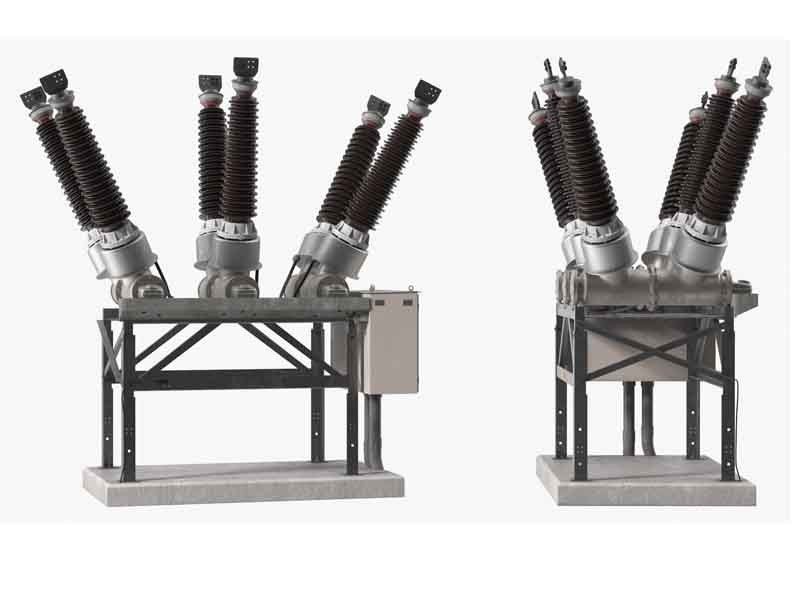
The High-Voltage Circuit Breaker (HVCB), operating between 72.5 kV and 1,200 kV, is the transmission grid’s primary protective device isolating faults by opening its contacts within 2–5 cycles (33–100 milliseconds at
50 Hz).
SF6 breakers dominated from the 1970s, displacing oil and air-blast technologies through superior arc-quenching ability, SF6 being five times more effective than air, delivering significant savings in substation footprint and civil works for TSOs managing large
grid portfolios.
The next generation of HVCBs is SF6-free, using vacuum interrupters (viable up to ~145 kV) or fluoronitrile-CO2 mixtures such as g³, achieving equivalent performance with over 99% lower GWP. Leading TSOs including RTE (France) and National Grid ESO (GB) have already committed to SF6-free procurement, with 420 kV clean-air breaker pilots now in service.
Vacuum Circuit Breakers: The Distribution Workhorse
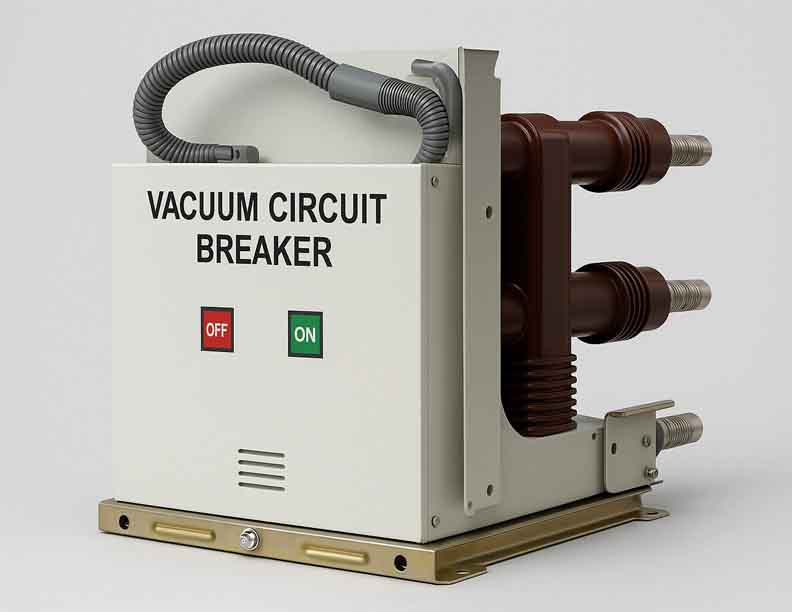
At medium voltages (1 kV–36 kV), the Vacuum Circuit Breaker (VCB) has been the dominant technology since the 1990s. Its principle is elegant: separating contacts in a near-perfect vacuum extinguishes the arc naturally at the first current zero, typically within half a cycle with no gas molecules to sustain ionisation.
The performance advantages are compelling. VCBs are virtually maintenance-free across 10,000+ mechanical operations and 100 fault interruptions, hermetically sealed against pollutants, ideal for coastal, industrial, and desert environments, and produce no hazardous by-products, unlike SF6 breakers.
For distribution network operators, the business case is clear: lower total cost of ownership, higher availability, simpler maintenance, and seamless integration with protection relays and SCADA systems, making VCBs a natural foundation for smart grid architectures.
Air-Insulated Switchgear (AIS): Proven, Accessible, and Evolving
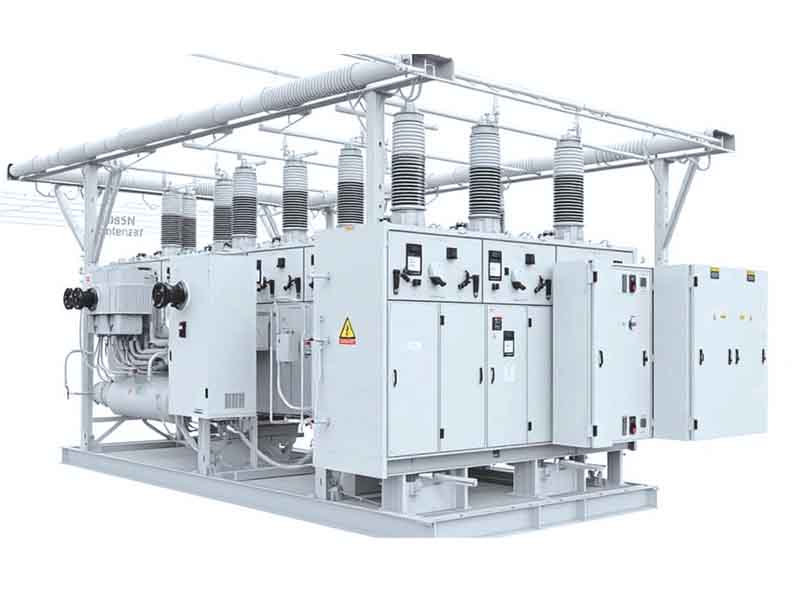
Air-Insulated Switchgear (AIS) remains the predominant technology at EHV and UHV substations worldwide, favoured where land is abundant, conditions are benign, and per-bay capital cost is a priority. Well understood and straightforward to maintain, it offers a significant cost advantage over gas-insulated alternatives.
Modern AIS has evolved well beyond the open-air switching yards of the past century. Digital protection and control systems, dry-type instrument transformers, and IEC 61850 communication have transformed AIS into a fully digital substation platform, enabling automation, remote operation, and secure IED communications.
However, its large footprint, sensitivity to pollution and severe weather, and wide equipment clearance requirements make it increasingly unsuitable for constrained urban sites, coastal environments, and applications where compactness and high reliability are paramount, ceding ground to gas-insulated solutions in these contexts.
Gas-Insulated Switchgear (GIS): The Premium Solution for Constrained Environments
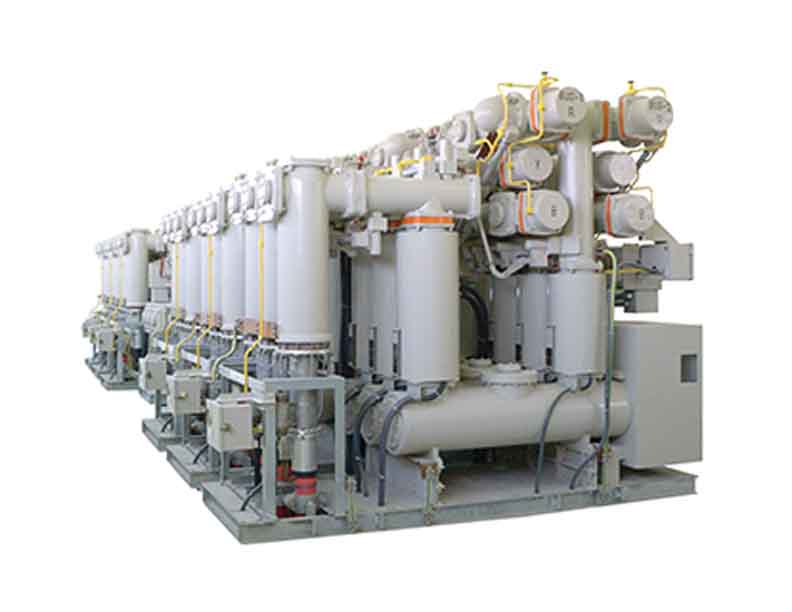
Gas-Insulated Switchgear (GIS) encloses all live components — busbars, breakers, disconnectors, earthing switches, and instrument transformers, within earthed metal enclosures filled with insulating gas (SF6 or alternatives). Superior dielectric properties reduce clearances by a factor of 8–10 versus AIS, shrinking substation footprint to as little as 20% of an equivalent AIS installation.
This space efficiency is transformative where land is scarce. Urban underground substations, offshore platforms, data centres, and high-density industrial sites all favour GIS, and when land, civil works, and real estate costs are factored into lifecycle analysis, GIS frequently outperforms AIS economically in these settings despite its higher capital cost.
Sustained market growth is driven by urbanisation, renewable energy densification, and industrial electrification. Major offshore wind projects in the North Sea and East Asia are already specifying GIS substations at 66 kV and above, with next-generation projects targeting 220 kV offshore GIS to minimise platform requirements.
Disconnectors and Earthing Switches: The Safety Foundation
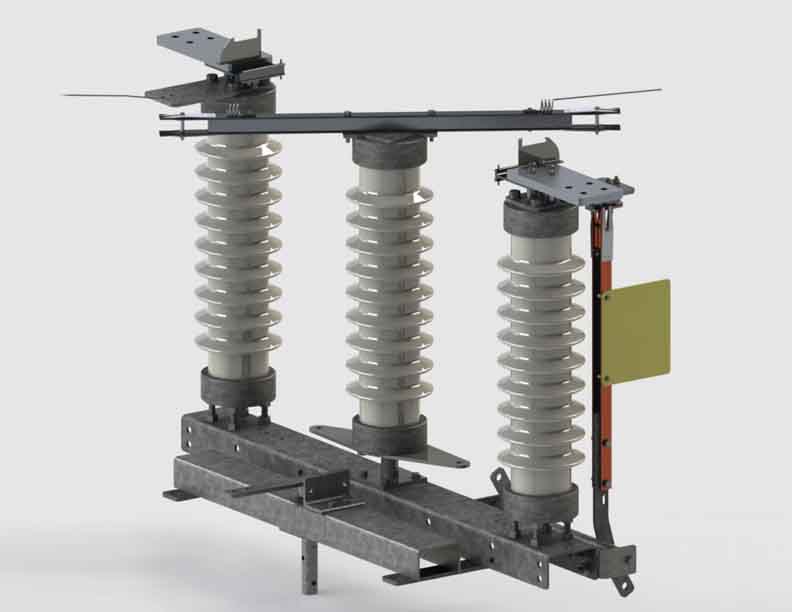
Often overlooked strategically, disconnectors (isolators) and earthing switches are the foundational safety devices of any substation. They do not interrupt fault currents — instead, they provide a visible, verifiable circuit break, enabling maintenance teams to work safely on de-energised equipment.
Their correct operation, governed by strict interlocking schemes, is arguably the single most critical procedural discipline in power system operations. Switching sequence errors such as closing an earthing switch on a live busbar have caused fatalities and major equipment failures across the industry’s history.
Digitisation through SCADA-integrated interlocking logic has significantly reduced human switching errors, while the COVID-19 pandemic accelerated adoption of motorised disconnectors with remote supervisory control particularly at bulk power substations.
Load Break Switches and Ring Main Units: The Nerve Centres of Distribution
Load Break Switches (LBS) and Ring Main Units (RMUs), rated typically from 11 kV to 36 kV, are the workhorses of urban underground cable networks performing feeder switching under normal load conditions that disconnectors cannot handle, and enabling operators to reconfigure routes, isolate faults, and restore supply with minimal disruption.
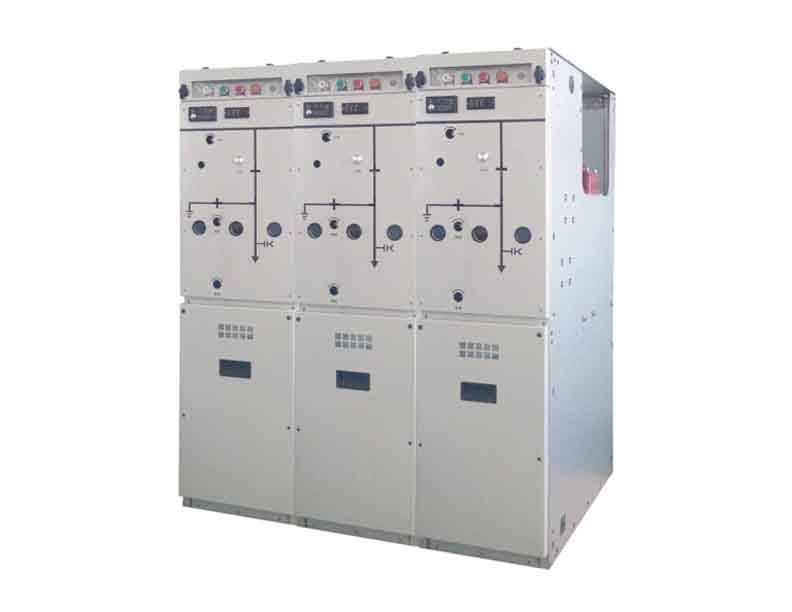
The RMU is a cornerstone of modern distribution design: a compact, sealed unit housing two or three switch positions often with integrated metering and fused transformer connection deployed across thousands of urban secondary substations. Modern vacuum or SF6-free RMUs require virtually no maintenance over a 30-year design life, a compelling advantage for utilities facing workforce pressures and rising operating costs.
Automatic Reclosers: Building the Self-Healing Grid
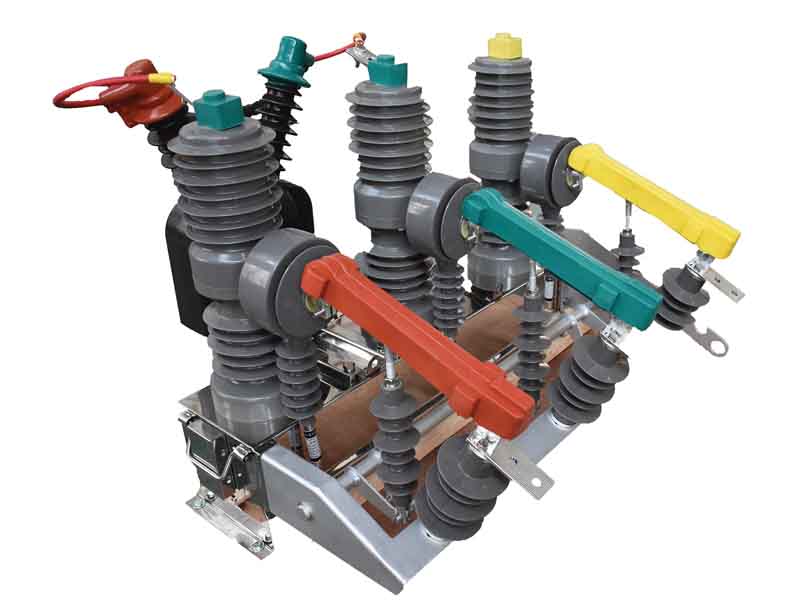
On overhead distribution lines, the dominant network topology across the US, Australia, Asia, and rural regions globally Automatic Circuit Reclosers (ACRs) are the primary defence against transient faults, which account for 70–80% of all distribution interruptions. Caused by lightning, wind, or momentary animal contact, these faults clear naturally if the circuit is briefly opened and re-energised, restoring supply without dispatching a field crew.
Modern intelligent reclosers far exceed their electromechanical predecessors. With integrated microprocessor protection, 4G LTE/RF mesh/fibre communications, and remote operation, they support adaptive protection schemes, directional overcurrent protection for DG-connected feeders, and real-time fault location. Combined with automated switches and SCADA, a network of intelligent reclosers can deliver a self-healing grid, restoring the vast majority of customers within seconds of a fault, entirely without human intervention.
HVDC Breakers: The Frontier of Switching Technology
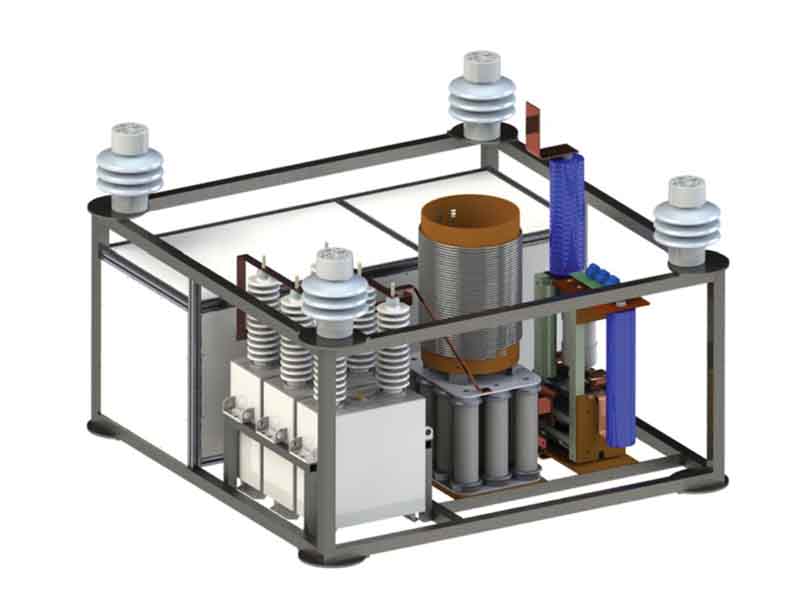
The HVDC circuit breaker is the most technically challenging switching device in the power sector. Unlike AC systems, where current passes through zero 100–120 times per second, DC has no natural current zero, requiring it to be actively forced, a feat of considerable engineering ingenuity.
Commercially viable HVDC breakers, capable of interrupting tens of kiloamperes at up to 525 kV DC within 2–3 milliseconds, have only emerged in the past decade, pioneered by Hitachi Energy and Siemens Energy. These hybrid devices combining mechanical disconnectors with power-electronic commutation circuits are essential enablers of multi-terminal HVDC grids. As offshore wind, cross-border interconnectors, and long-distance renewable transmission projects increasingly depend on HVDC, these breakers are set to become among the most strategically vital switching components of the 21st-century grid.
Comparative Overview of Power Sector Switches
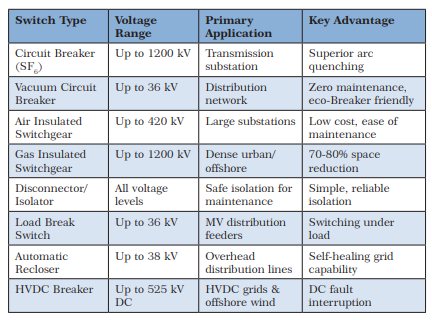
The following table provides a reference summary of the principal switch types discussed in this article, highlighting their voltage range, primary application, and key technical advantage.
Strategic Considerations for Decision-Makers
Total Cost of Ownership vs. Capital Cost
One of the most persistent misconceptions in power sector procurement is equating lowest capital cost with best value. A breaker selected on tender price alone, without lifecycle analysis, can prove far more expensive when maintenance, forced outage, and disposal costs are factored in.
The numbers bear this out. An 11 kV vacuum circuit breaker may carry a 15–20% premium over an oil breaker, yet its maintenance-free operation and zero disposal liability typically deliver positive NPV within 5–7 years. Similarly, EHV GIS may cost 2–3 times more per bay than AIS, but over a 40-year lifecycle, accounting for land, civil works, maintenance, and reliability, it frequently dominates.
TOTEX-based regulatory frameworks, increasingly adopted across multiple jurisdictions, directly incentivise this whole-life cost thinking by removing the artificial separation between CAPEX and OPEX, aligning procurement decisions with long-term network value rather than short-term budget optics.
The SF6 Transition: Risk and Opportunity
For utility executives and regulators, the SF6 transition is both a compliance risk and a commercial opportunity. Heavy SF6 investments face growing liability as regulations tighten and insurers begin pricing in stranded asset risk. Leading utilities are responding with proactive strategies SF6 equipment inventories, retirement schedules, and SF6-free procurement mandates increasingly expected by shareholders and ratings agencies assessing ESG performance.
Manufacturers with credible, validated SF6-free product lines are well positioned for significant market share gains over the coming decade. Regulators and procurement teams should familiarise themselves urgently with IEC 62271-1 and its supplementary specifications for alternative gas equipment, the technical framework underpinning this industry-wide transition.
Cybersecurity: The Hidden Risk in Digital Switching
The same digital connectivity that enables remote operation and SCADA integration also introduces cybersecurity vulnerabilities absent in electromechanical equipment. A cyber intrusion manipulating relay protection settings or issuing false trip commands to circuit breakers could trigger cascading outages with catastrophic consequences.
Mandatory frameworks, NERC CIP in North America, NIS2 in the EU, and equivalents elsewhere, are imposing stringent cybersecurity requirements across the power sector, extending to the supply chain. Switchgear manufacturers must demonstrate cybersecurity-by-design, while utilities must implement rigorous cyber risk programmes covering their entire digital switching fleet.
For CISOs and COOs, this is no longer theoretical. Attacks on Ukrainian electricity infrastructure have already demonstrated the real-world consequences of inadequate cybersecurity in power system control.
Procurement and Supply Chain Considerations
The COVID-19 pandemic exposed significant switchgear supply chain fragility, with HV circuit breaker lead times stretching to 18–24 months and specialised GIS bays to 24–36 months. In response, utilities and TSOs are moving away from single-source supply towards approved vendor panels, strategic inventory holdings, and longer-term framework agreements.
For business development managers, this environment presents clear opportunity. Customers now prioritise supply chain commitment, enhanced service agreements, and real-time order visibility. Manufacturers offering credible domestic or regional manufacturing capacity, alongside global sourcing flexibility, hold a decisive advantage in tender evaluations.
Conclusion: Switching to a Smarter Future
The world’s electrical grids are transforming at a pace that challenges conventional infrastructure planning horizons, with generation, consumption, and environmental pressures all shifting simultaneously.
Switching technology sits at the intersection of every one of these changes, from the load break switch on a rural feeder to the HVDC breaker on an offshore wind corridor. The decisions that CEOs, CTOs, COOs, engineers, and regulators make today on switchgear technology, procurement, and maintenance will define grid reliability, safety, and environmental performance for a generation.
The industry’s message is unambiguous: invest in intelligence, sustainability, and the data capabilities needed to manage an increasingly complex asset base. The gatekeepers of power have never been more critical — or more sophisticated. Those who act with strategic clarity will be best placed to lead the energy transition with confidence.

Karn Pallav is a qualified Mechanical Engineer and MBA (Power) graduate from NPTI Faridabad. He is currently working as Head (Regulatory Affairs) in a leading power DISCOM at New Delhi. He has around two decades of management experience in the entire value chain of the Power Sector. He has vast experience in power utilities dealing with competition issues, tariff determination, licensing and other techno-commercial matters. Being an engineer and Power Manager, he is also interested in technical issues related to Conventional and Renewable Generation, Open Access, parallel license regime, smart grid, AMI, smart meters, cyber-security issues and E-mobility. He has also written six books, namely – 1) The Power of Positive Thinking, 2) Customer Engagement Strategies in Retail Electricity Market, 3) 5 Rules For Life, 4) Whispers of the Heart, 5) Whispers of the Himalayas’, and 6) Guardians of the Future: Human Values and Ethical AI.