
The word ‘energy’ has a very wide gamut, it includes hydrocarbons as well as electricity. ‘Hydrocarbons’ are organic compounds consisting of hydrogen and carbon, forming the basis of fossil fuels. Thus, they are the primary energy sources. On the other hand, ‘electricity’ is a secondary energy source, meaning it is generated (converted) from other primary sources like fossil fuels, nuclear power, or renewable sources.
Although, the use of renewable energy sources is growing very rapidly, hydrocarbons are expected to remain a critical component of the global energy mix for at least next three decades.
Oils supplied by Iran, including crude, gasoline, diesel, and fuel oil, are primarily used for electricity production, transportation fuel, and manufacturing petrochemicals like plastics and fertilizers. Exported largely to China, Venezuela, and Syria, these oils are valued for their mid-range density, making them highly efficient for refining into fuel.
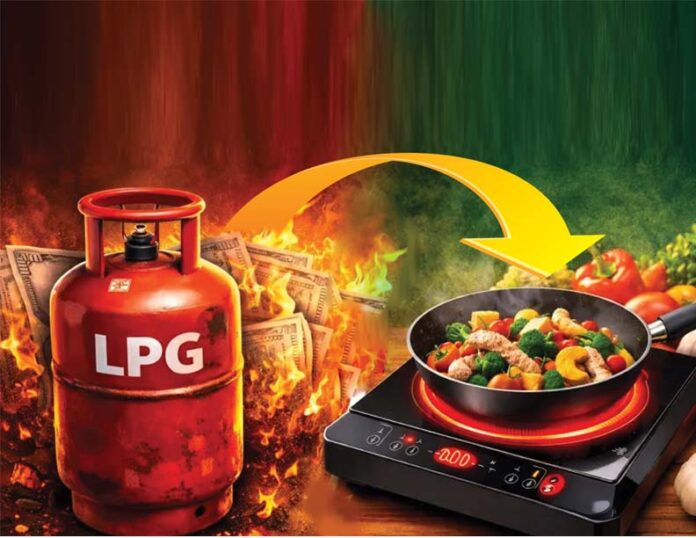
India does not depend on Iranian crude oil much. However, our country imports about 60% of total requirement of LPG (Liquefied Petroleum Gas) from Qatar, the UAE, Saudi Arabia, and Kuwait. And around 90% of those imports (nearly 54% of total consumption) comes through the Strait of Hormuz. As of today, the Strait of Hormuz is functionally closed and experiencing a severe crisis following Iran’s retaliatory actions to U.S.-Israeli strikes. Consequently, we are passing through a phase of severe crisis of our kitchens’ primary fuel.
What can be used in kitchens when LPG is not easily available?
When the situation is so tough, then definitely we have to think of alternatives. The first thing that we can do is to switch over to electrical appliances.
Commonly used electrical kitchen appliances:
- Induction Cooktops: These are efficient and fast, using electromagnetic technology to heat cookware directly. In India, on an average, induction cooktops consume between 1,200W and 2,000W. An ordinary induction cooktop consumes 1.5–2 kWh (units) of electricity per hour of continuous, high-power use.
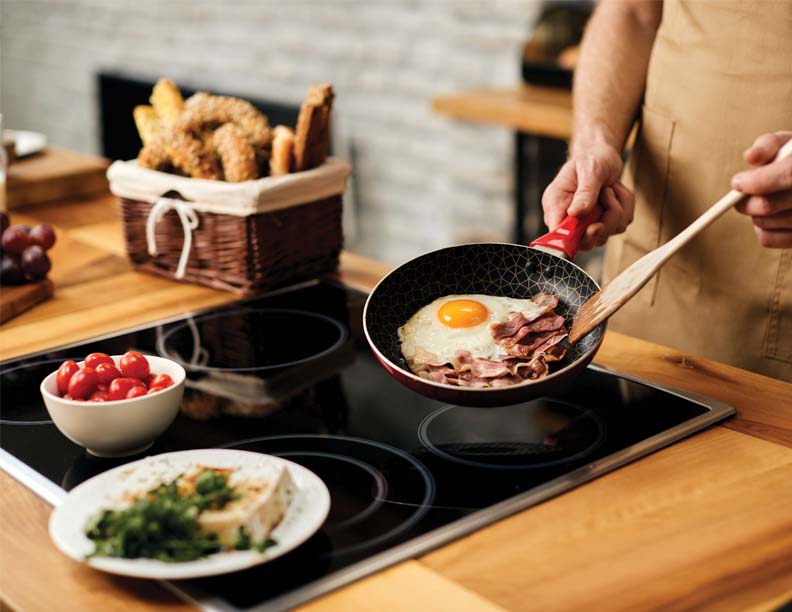
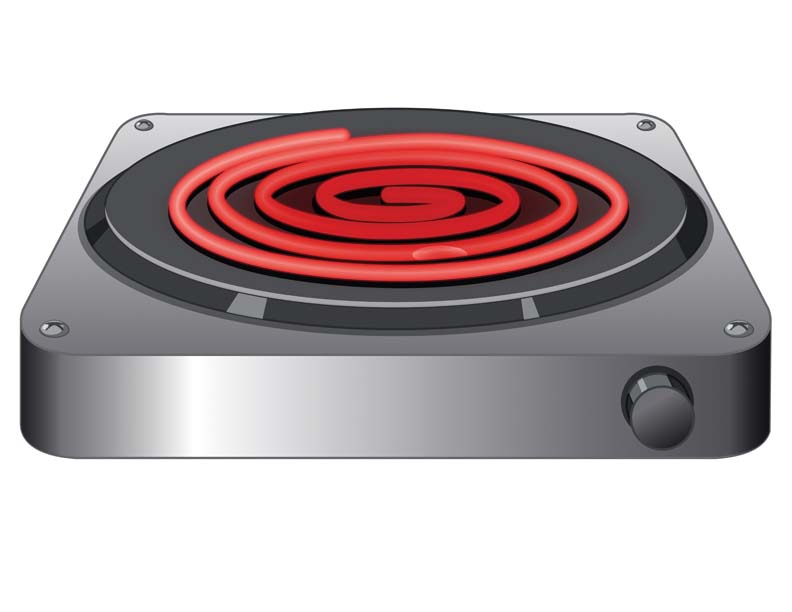
- Electric Hot Plates or Stoves: These are very simple plug-in devices that function in a way similar to traditional gas burners to boil water, cook, or reheat food items. Very common hot plates consume 500 W to 900 W. If a 900 W hot plate runs continuously for 1 hour the consumption will be 0.9 kWh or 0.9 unit.
- Electric Rice Cookers: These are useful for cooking rice, soups, and steaming vegetables, often with minimal supervision. In India, the most common wattage range for these appliances is between 300 to 1500 watts.

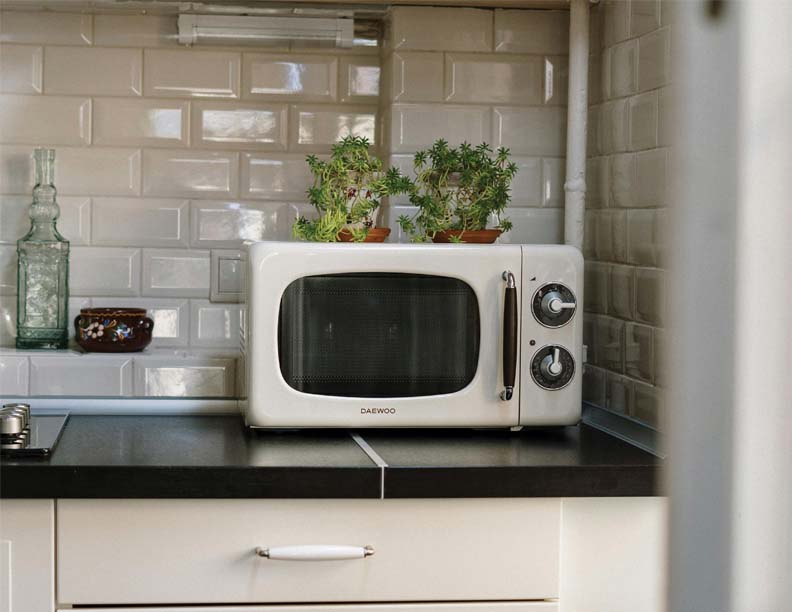
- Microwave Ovens: These are good for reheating, quick meals, and steaming vegetables. Most common power range: 700W to 1200W for cooking, with convection models.
- Electric Kettle: These are useful for quickly boiling water for tea, coffee, or for quick cooking tasks like making noodles. Typical Wattage 1500 W or less.

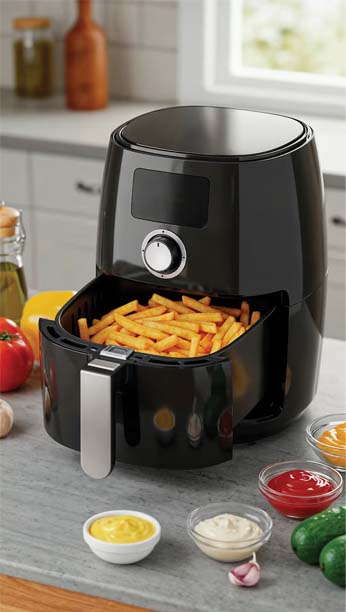
- Air Fryers: These can be used for baking, grilling, and frying with minimal oil. They are available in different capacities consuming between 800 to 1800 W. The most popular models consume around 1500 W.
Preferred options for rural or spacious areas:
- Solar Cookers: These offer an eco-friendly option that uses sunlight to cook, ideal for rice, pulses, and slow-cooked meals. Solar cookers in India are gaining momentum as a sustainable, zero-cost cooking solution, with innovations like Indian Oil Corporation Ltd.’s Surya Nutan enabling indoor, all-weather, and nighttime cooking via thermal storage. Key types include box, parabolic, and panel cookers. These devices help reduce LPG dependence, lower carbon emissions, and provide a reliable, eco-friendly alternative for both households and community cooking.
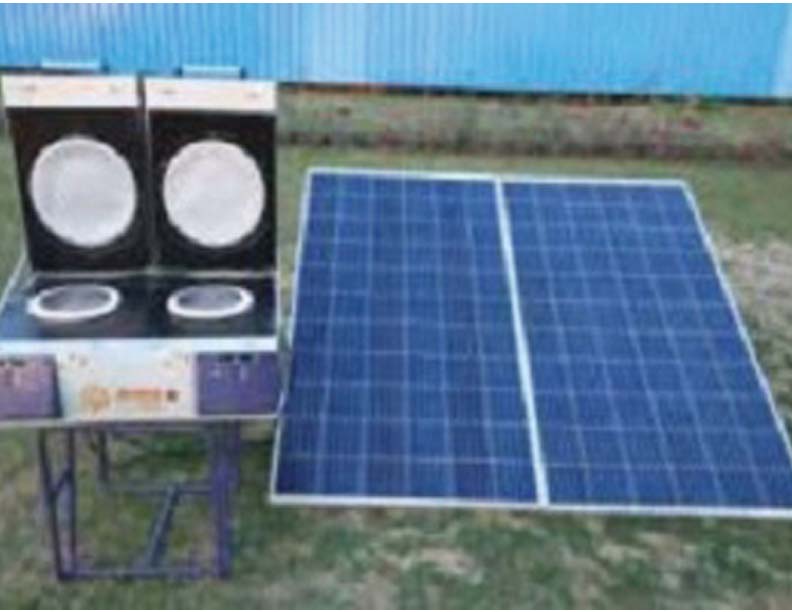
Image Courtesy: Indian Oil Corporation Ltd.
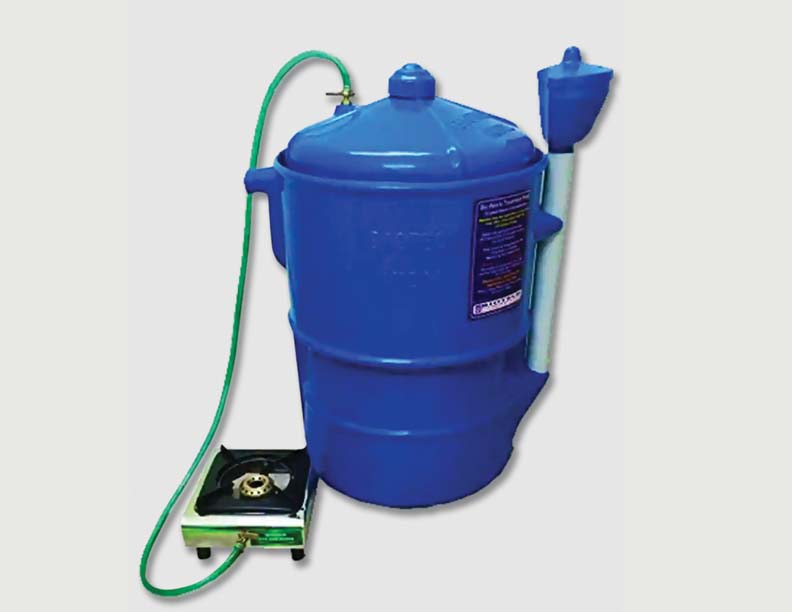
- Biogas Systems: These convert organic kitchen waste into fuel for cooking. Small, portable biogas plants in India, such as those from Biotech India, Sintex, and Koshish, enable households to convert organic kitchen waste into methane gas for cooking and liquid fertilizer.
How to exercise fuel economy to save cost?
Whether cooking on LPG stove or on electric stove, a few best practices can lead to fuel economy or saving. Hopefully, the current war scenario will change in a few days, however, the following best practices suggested by Petroleum Conservation Research Association (PCRA) will yield results for ever.
Remember:
- Light your stove only after you have kept all the ingredients within your reach and ready for cooking.
- Pressure cooking saves fuel and time. Use separators in the pressure cooker to cook different items at the same time.
- Surplus water consumes additional fuel, which could otherwise be saved.
- Always reduce the flame (lower the set point in case of electric heater) once boiling starts.
- Sizeable savings in fuel are possible if you soak cereals in water before cooking.
- Hide the flame with broad bottomed, vessel. Do not use vessels which are narrow as they allow the flame to creep up on the sides.
- Always place a lid on an open cooking vessel or pan.
- Use the small burner or lower flame more often, as the case may be especially when you have time
to spare. - A bright, steady blue flame means efficient burning. If you see an orange, yellow on non-uniform flame, clean the burner or wick as the case may be.
- Cooking vessels should always be scrubbed clean.
- Allow frozen food to reach room temperature before cooking.
- Eat together to save fuel (avoid repeated heating of food for each person in the family).
“What are the benefits of cooking using electrical appliances?”
“E-cooking offers a superior alternative to fuel-based cooking due to its lower import dependency, higher efficiency, and reduced indoor air pollution, creating safer household environments. Affordability is a key factor driving the adoption of any new cooking fuel in India, and electricity-based cooking offers significant cost savings compared to both traditional and modern fuels such as LPG and PNG.E-cooking in FY2024-25 proved 14% cheaper than PNG and 37% cheaper than non-subsidised LPG, and competitive with the current LPG price with a universal subsidy available to all consumers – without imposing a fiscal burden.”
Institute for Energy Economics and Financial Analysis.
What are the benefits of cooking using electrical appliances?
Food preparation with electrical appliances offers several benefits, starting from enhanced safety and energy efficiency to improved convenience and healthier cooking options. Modern electric cooking, particularly induction, has become a preferred choice due to its speed, precision, and ease of cleaning.
- Safety and Health: Electric cooking, especially induction, removes risks associated with gas leaks, open flames, and carbon monoxide. Induction cooktops remain cool to the touch, reducing the risk of burns.
- Energy Efficiency: Induction cooktops are highly efficient, transferring heat directly to the vessel, which saves energy and reduces utility bills.
- Speed and Precision: Induction provides rapid heat-up times – boiling water up to 50% faster than gas – and instant response to temperature changes, allowing for precise control, such as gentle simmering or high-power searing.
- Convenience and Cleaning: The flat, smooth surface of electric cooktops means there are no grates or burner parts to clean, preventing spills from burning onto the surface.
- Versatility: Beyond stovetops, other electric appliances like Electric Pressure Cookers (EPCs) offer ‘set-and-forget’ convenience, and air fryers allow for healthier, lower-oil cooking.
- Environmental Impact: When powered by renewable energy sources, electric cooktops have a lower carbon footprint and improve indoor air quality by producing zero direct emissions.
Conclusion
It is said that necessity is the mother of invention, however as far as electric cooking is concerned, the appliances are already available in the market. In most of the urban Indian kitchens, one or two of them are already present too, however, now the time has come when we need to completely switch over to the cooking systems based on electricity.
This will not only fetch benefits to all individuals but also help us in reducing national carbon footprint.
By P. K. Chatterjee (PK)