
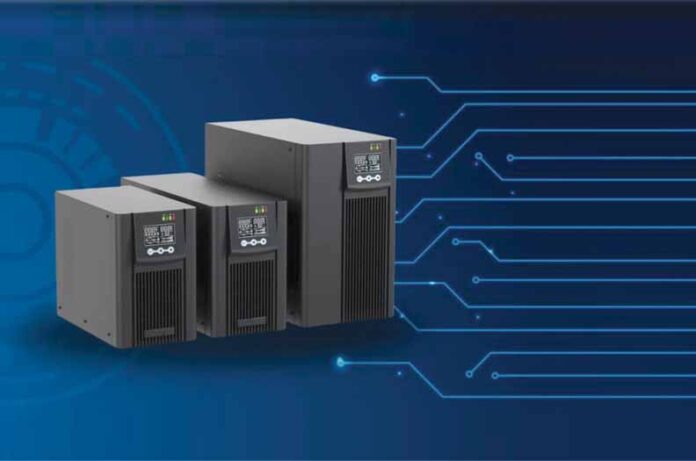
A single second of power outage can cost a data center millions. It can silence life-saving hospital equipment. It can halt an entire manufacturing plant. This reality has transformed the Uninterruptible Power Supply (UPS), once a simple backup device, into a critical infrastructure component. For India, a nation rapidly expanding its digital infrastructure, renewable energy integration, and industrial automation, UPS systems serve a vital role. They bridge the gap between an unreliable grid and the demands of a modern, automated economy.
India has made significant strides in power generation, particularly from renewable sources. Yet, frequent outages and unstable voltage levels remain a persistent challenge. Industries, healthcare facilities, telecom networks, and IT infrastructure bear the brunt of this instability. Even a brief disruption can trigger serious consequences, operational setbacks, data loss, and equipment damage. In healthcare, the stakes are even higher. A momentary power failure can become a matter of life and death.
What Is a UPS? Defining the Technology
Core Definition and Purpose
A UPS is an electrical unit that does two things (i) it delivers backup power during outages and (ii) keeps devices running without interruption. Unlike a conventional generator, which takes time to start, a UPS switches to backup power almost instantly. The transition happens within microseconds. Sensitive electronics experience zero disruption.
But a UPS does more than just backup power. It also shields connected equipment from voltage spikes, surges, and fluctuations. When the main grid supply becomes unreliable, the UPS steps in. It recreates stable AC power using two core components — a battery bank and an inverter. The result is clean, steady, uninterruptible power delivered without a moment’s delay.
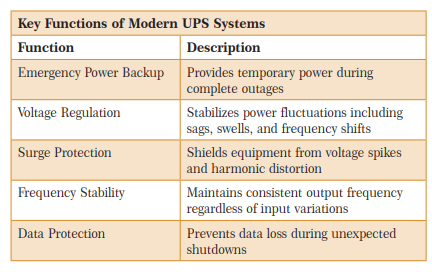
UPS systems are typically used to protect hardware such as computers, data centers, telecommunication equipment, medical devices, and manufacturing control systems.
Technical Working Principle – How UPS Systems Operate
Core Components and Their Functions
A UPS system comprises four fundamental components that work seamlessly to ensure uninterrupted power delivery:
- Rectifier (or Charger): The rectifier converts AC power from the main supply into DC to charge the batteries and feed the inverter. This component ensures batteries remain continuously charged during normal operation.
- Inverter: The inverter converts DC power from the batteries back into clean AC power for the connected load. This is the critical component that delivers power during outages.
- Battery Bank: Batteries store electrical energy in DC form, providing the backup power source. Modern UPS systems use either Valve-Regulated Lead-Acid (VRLA) batteries or lithium-ion batteries, with the latter gaining traction for efficiency.
- Semiconductor Switches: These controlled switches manage power flow between mains, batteries, and load, enabling instantaneous transfer during outages.
Power Flow During Normal and Outage Conditions
Normal Operation (Grid Available):

During Outage:

The inverter recreates AC power from the battery bank, ensuring continuous operation. This double-conversion process in online UPS systems completely isolates the connected load from grid inconsistencies.
Types of UPS Systems – Choosing the Right Configuration
UPS systems vary significantly in complexity, capability, and cost. Understanding these differences is critical for selecting the appropriate system for specific applications.
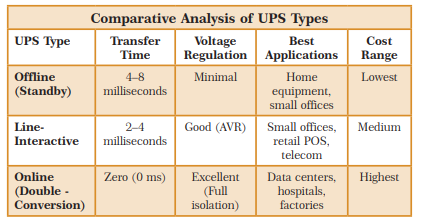
Offline (Standby) UPS
These are the most basic and affordable UPS models. They power devices directly from the mains and switch to battery backup only when the main supply fails. However, there’s a slight delay in switching (4–8 milliseconds), and they provide minimal voltage regulation. They’re best suited for home or small office equipment where power sensitivity is low.
Line-Interactive UPS
This mid-range option adds voltage regulation to the offline design through Automatic Voltage Regulation (AVR). It can correct minor voltage fluctuations without switching to battery and provides better protection from brownouts and spikes. Ideal for small offices, retail POS systems, or telecom equipment in areas with moderately reliable power.
Online (Double-Conversion) UPS
These high-end systems continuously convert power from AC to DC and back to AC, completely isolating the connected load from grid inconsistencies. There’s zero transfer time in the event of an outage, making them perfect for mission-critical environments like data centers, medical facilities, and factories. They are more expensive but offer the highest level of protection.
Critical Recommendation: In critical applications, the cost of downtime often far outweighs the additional investment in online UPS systems. That’s why most experts recommend online double-conversion UPS for sensitive or high-value setups. For situations where there’s a risk of disruption from extreme power quality situations like voltage harmonic distortion or utility capacitor switching events, a double conversion UPS is probably the best option.
Battery Technologies – The Heart of UPS Systems
Lead-Acid versus Lithium-Ion: The Technology Transition
The battery is the critical energy storage component in UPS systems, and the choice between technologies significantly impacts performance, cost, and longevity.
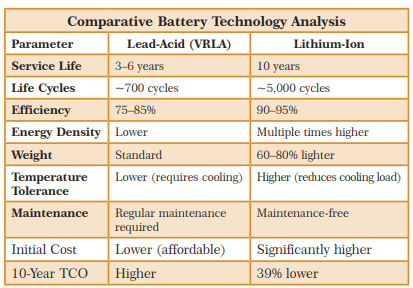
Lead-Acid Battery Characteristics
Lead-acid batteries dominate the UPS market for affordability, making them the traditional choice for most applications. Valve-Regulated Lead-Acid (VRLA) batteries are time-tested solutions that customers continue to use despite newer alternatives. However, they have a relatively short life cycle and require regular maintenance.
Lithium-Ion Battery Advantages
Lithium-ion batteries are gaining significant traction for efficiency in IT and residential sectors. The transition from lead-acid to lithium-ion in India’s residential UPS market marks a transformative period.
Key Benefits:
- Reduced Footprint: Li-ion batteries provide multiple times the energy and power density compared to VRLA, reducing UPS footprint and weight
- Longer Service Life: The most important advantage is the long service life, approximately 10 years versus 3–6 years for lead-acid
- Higher Efficiency: 90–95% efficiency means less power lost during charging and discharging
- Temperature Resilience: Can operate at higher temperatures without losing capacity, reducing cooling system load
- Total Cost Ownership: Despite higher initial investment, 10-year TCO decreases by 39% compared to lead-acid
Challenge: The initial investment for lithium-ion is significantly higher, which remains the primary barrier to widespread adoption. However, at least 10% savings are guaranteed even with optimistic estimates.
Critical Applications – Where UPS Systems Are Essential
Sector-Specific UPS Deployment
UPS systems are used across industries to protect data, equipment, and operational continuity. The following sectors represent the most critical applications:
Data Centers and IT Infrastructure: Data centers integral to India’s digital economy demand seamless, uninterrupted power to avoid data loss or service disruption. The data center UPS market size was USD 4.04 billion in 2024 and is projected to reach USD 6.27 billion by 2030, at a CAGR of 8.0% from 2025 to 2030.
Requirements
- Online double-conversion UPS with zero transfer time
- Redundancy configurations (2N or N+1) for mission-critical sites
- Advanced energy monitoring and thermal management features
- Smart communication protocols (SNMP, IEC 61850) for integration
As businesses and consumers demand more digital services, the need for reliable UPS systems has intensified to ensure operational continuity.
Healthcare and Medical Facilities: Hospitals use layered UPS and backup generator systems to ensure life-saving equipment never loses power, not even for a millisecond. In healthcare, power reliability isn’t just a convenience, it’s a necessity.
Critical Applications
- Life-support systems and ventilators
- Surgical equipment and monitoring devices
- Medical imaging (MRI, CT scanners)
- Pharmacy and laboratory equipment
For mission-critical sites like hospitals, the cost of UPS failure far outweighs installation cost, making redundancy essential.
Telecommunications: Over a million telecom towers in India, many in rural or off-grid locations, are moving toward hybrid power solutions combining UPS, batteries, renewables, and even hydrogen fuel cells.
Requirements
- Line-interactive or online UPS depending on location criticality
- Integration with renewable sources for off-grid towers
- Robust surge protection for lightning-prone areas
Industrial and Manufacturing: Industrial grade UPS systems are specialized power backup systems designed to support heavy-duty applications in manufacturing plants. They provide continuous and stable power supply to manufacturing equipment, ensuring operations continue uninterrupted even during power outages.
Applications
- Process control systems and SCADA
- Communication networks
- Computerized manufacturing equipment
- Safety and emergency systems
In industrial setups, UPS systems safeguard control systems, communication networks, and computer systems, acting as a buffer between sensitive electronics and the unstable grid.
Banking and Financial Services: Banking and insurance companies require UPS to prevent data loss during transactions and maintain critical server operations. Power reliability is essential for ATMs, transaction processing systems, and core banking infrastructure.
Emerging Applications
- Smart Education: UPS is being adopted even in rural digital classrooms. In Haryana, compact line-interactive UPS units were installed in schools to ensure stable operation of ICT equipment.
- Renewable Energy Integration: Solar and wind systems need SPDs on both AC and DC sides. Hybrid systems (solar + battery + generator) are using UPS functions to ensure uninterrupted supply. One groundbreaking trend in 2025 is the seamless integration of industrial UPS systems with renewable energy sources.
- Smart Substations: Utilities now use UPS for control systems and digital communication gear in IEC 61850-compliant substations.
India’s UPS Market – Growth Dynamics and Trends
Market Size and Growth Projections: The India uninterrupted power supply system market size reached USD 405.8 million in 2025 and is set to reach USD 686.6 million at a CAGR of 5.84% by 2034. The market size reached USD 382.50 million in 2024, with IMARC Group expecting it to reach USD 678.35 million by 2033, exhibiting a growth rate of 6.08% during 2025–2033.
According to 6Wresearch, the India UPS Systems Market is projected to grow at CAGR of 5.8% during 2020–2026.
Key Growth Drivers
- Government Initiatives: Rising investment in IT, cloud computing, data centers, and manufacturing industries with the aim of making India self-reliant under government policies like Make in India, Digital India, and Atmanirbhar Bharat are major factors driving UPS market growth.
- Digital Economy Expansion: As India’s cloud and IT sectors boom, data centers demand high-availability UPS systems. The digital economy’s growth directly correlates with UPS adoption.
- Renewable Energy Integration: India’s dramatic transformation with significant growth in generation capacity from renewable sources requires UPS for grid stability and backup.
- Industrial Automation: Industries increasingly rely on UPS systems to counter inconsistent power supply, preventing operational setbacks.
2025 Market Trends
AI and IoT Integration: Artificial Intelligence (AI) and Internet of Things (IoT) are revolutionizing how industrial UPS systems are monitored, managed, and optimized.
- Sustainability Focus: With sustainability becoming a global priority, industrial UPS manufacturers are prioritizing energy-efficient designs and eco-friendly practices.
- Renewable Integration: Seamless integration of industrial UPS systems with renewable energy sources is one of the most groundbreaking trends in 2025.
Regulatory Framework—Standards and Compliance in India
BIS Standards: IS 16242 (Part 1):2025
The Bureau of Indian Standards (BIS) has revised IS 16242 (Part 1)—the Indian safety standard for Uninterruptible Power Systems (UPS)—aligning it with IEC 62040-1:2017.
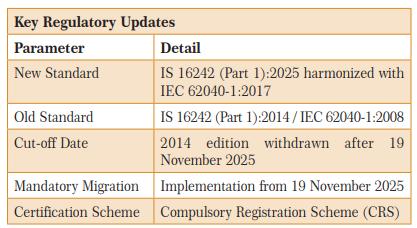
Scope of IS 16242 (Part 1):2025: The standard provides safety requirements imposed on UPS devices in residential, commercial, and industrial settings. It deals with construction, design, and performance of UPS systems, minimizing hazards associated with electric shock, energy hazard, fire, heat, and mechanical hazards.
The standard applies to small UPS devices used in homes and offices, as well as in data centers, hospitals, and factories with major-scale systems installed.
Compliance Requirements
- Testing and Certification: Before UPS systems are marketed in India, they must be safety tested at BIS-recognized laboratories. Licences not demonstrating compliance by 19 November 2025 will not remain valid.
Manufacturers Must:
- Product Analysis: Compare current UPS design to IEC 62040-1:2017 requirements
- Testing: undergo tests in BIS-listed laboratories on safety
- Documentation: Create technical documentation including product specifications, test reports, and risk assessments
- Certification: Seek BIS certification under CRS
- Labelling: BIS Standard Mark must appear on certified products before market distribution
Importers Must: Have UPS equipment certified according to IS 16242 (Part 1):2025 requirements. The Indian market will not allow sale of products without BIS certification.
Other Regulatory Frameworks
- National Building Code (NBC 2016): Mandates use of Type 1 and Type 2 Surge Protection Devices (SPDs) in all new buildings.
- Telecom and Power Utility Guidelines: Increasingly require UPS backup for critical systems such as SCADA controls and communication devices.
- Environmental Compensation (EC) Guidelines (2024): On September 10, 2024, the Ministry of Environment, Forest, and Climate Change (MoEFCC) unveiled groundbreaking EC guidelines for battery waste management.
Extended Producer Responsibility (EPR):
- Rs 18 per kg for lead batteries
- Up to Rs 2,400 per kg for lithium batteries
Penalty System:
- First default: Rs 20,000
- Repeat violations: Rs 80,000
These stringent EC guidelines mark a pivotal moment in India’s journey towards sustainable battery waste management.
Surge Protection—Complementary Technology for Complete Power Protection
Why UPS and SPDs Work Together
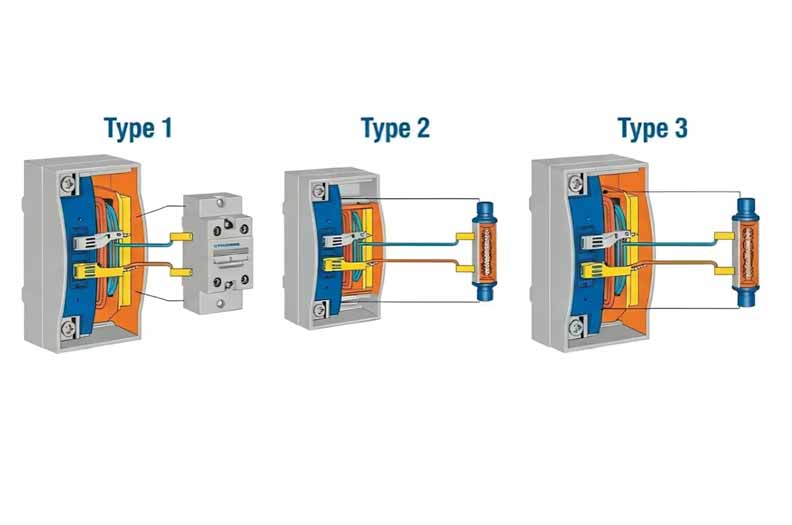
While UPS protects against power loss and minor fluctuations, Surge Protection Devices (SPDs) defend against dangerous voltage spikes often caused by lightning or sudden switching events in the power network.
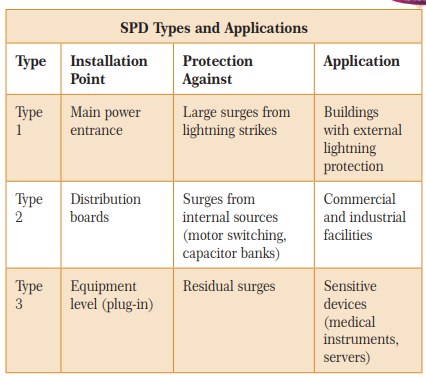
Effective surge protection follows a tiered approach, installing all three types in coordination ensures comprehensive protection across the entire facility.
Standards for SPDs
BIS aligns with international IEC standards to regulate SPD design and performance under the IS/IEC 61643 series. SPDs must coordinate with switchgear and fuse protections per IEC standards.
To be continued …

Karn Pallav is a qualified Mechanical Engineer and MBA (Power) graduate from NPTI Faridabad. He is currently working as an Associate Director in one of the Big 4 Consulting Firms. Currently he is posted at Kathmandu, Nepal as an Embedded Economic & Financial Regulatory Advisor to the Electricity Regulatory Commission of Nepal. He has around two decades of management experience in the entire value chain of the Power Sector. He has written five books, namely: 1) The Power of Positive Thinking, 2) Customer Engagement Strategies in Retail Electricity Market, 3) 5 Rules for Life, 4) Whispers of the Heart, and 5) Whispers of the Himalayas.