
Over the past decade, electrification efforts have materially altered India’s rural landscape. With the support of the Saubhagya programme and other schemes, approximately 28.6 million households were provided electricity connections, profoundly altering the energy access landscape. This landmark became the single most ambitious last mile infrastructure initiative in the history of independent India. Once a limitation of access, connectivity is now predominantly institutionalized across rural geographies.
Yest, access is just the beginning of this story. The next stage of development depends on the reliability, quality, and productive deployment of energy.
The macroeconomic underpinnings for this evolution are India’s renewables expansion. The total cumulative installed solar capacity was nearly 140.6 GW (140,601.75 MW) as of 31 January 2026, and total renewable installed capacity reached approximately 254 GW in late 2025 (Ministry of New and Renewable Energy, 2025). These figures indicate they are not just diversification of energy: it indicates a strategic readiness to decentralize generation closer to demand centres.
Decentralization is not a luxury thing for rural India; it is an operational imperative. Distributed solar assets, feeder-wise solarization, and localized storage options minimize transmission losses and improve supply stability. Once electricity is predictable, it transitions from a utility service to an economic tool.
The PM-KUSUM scheme is a set example of such a transition. With approximately 920,000 solar pumps installed at different levels of implementation, farm energy consumption is gradually changing from diesel-fuelled use to clean, daytime solar power.
This transition lowers farm input costs and increases the availability of irrigation, thereby balancing the rural load generation pattern. Over time, such interventions can help to enhance farm-level margins and improve the stability of rural income.
But the fact that electrification alone does not ensure economic mobility is underscored by an essential insight by a research from the World Bank’s Independent Evaluation Group. That leads to welfare gains when power access complements investments such, for example, in appliances, credit, digital connectivity and skills. In reality the illumination enhances the living standards while productive load provides income generation.
This distinction is critical as India redefines “Har Gaon Roshan, Har Ghar Roshan”
The mandate must be applied not only to lighting homes but also to energizing firms. From an industrial perspective, doing this entails a new approach. Equipment in the field of rural infrastructure needs to be durable and not have a wide range of voltage conditions as the country faces various environmental challenges. Service ecosystems need to be local to maintain and ensure lifecycle reliability. Financing innovation should consider the cash flow cycles for rural residents, allowing households/micro-entrepreneurs to access productive assets without putting too much capital strain.
From a policy point of view, metrics need to adapt. Connection rates are important but not enough. Hours of supply, outage frequency, equipment uptime, and productive energy usage should make part of performance evaluation. Distribution planning needs to follow the pace of emerging demand from irrigation, agro-processing, rural manufacturing, and digital services.
Significantly, the renewable backbone of rural electrification is also in line with India’s larger climate commitments. Integration of clean energy cuts down carbon intensity and mitigates long-run import risk factors. When rural growth is underpinned by renewable capacity, inclusive development meets environmental stewardship.
The real opportunity is in convergence. Electrification, renewable capacity, agricultural modernization, and rural entrepreneurship cannot exist in silos. In the next decade, integrated village energy planning – where you are strengthening a connected grid and simultaneously developing decentralized solar assets and storage, will characterize the quality of things going forward.
India has successfully completed the foundation phase development phase. Now, policy ambition needs the result, aimed at converting megawatts into concrete change in rural income, education, accessibility of healthcare, and expansion of micro-enterprise.
“Har Gaon Roshan, Har Ghar Roshan” is not just a catch phrasing term. It is a developmental philosophy and sees energy as the connective tissue of progress. When electricity power is reliable, cheap, and productive, it turns villages into nodes of growth, not end points of consumption.
The next chapter of India would not be written in account of access statistics alone. It will be influenced by how effective power is marshalled to generate opportunities, resilience, and sustained upward movement. If stakeholders coalesce around reliability, decentralization and productive deployment, electrification will emerge as one of the most potent engines of India’s inclusive growth story.
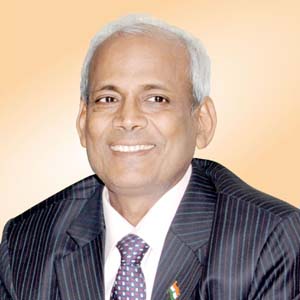
Padma Shri Jai Prakash Agarwal,
Chairman, Surya Roshni Limited