
India is undergoing a rapid clean energy revolution, aiming to deploy 500 GW of non-fossil capacity by 2030, having already reached ~200 GW. However, this growth has exposed critical grid stress points:
- Curtailment & Congestion: Many states are facing problem of curtailment of solar output, resulting in financial losses, largely due to grid bottlenecks.
- Balancing & Flexibility Gaps: With solar surging midday and demand peaking in the evening, coal plants are forced to ramp down then ramp up again, reducing efficiency and life. To address this, India is piloting BESS at coal plants, to absorb excess solar midday and release power later.
- Storage Mismatch: Current battery storage is minimal, falling drastically short of the estimated 61 GW by 2030 and 97 GW by 2032 needed. (Refer figure 1)
- Cost & Efficiency Imperative: Yet, storage is becoming increasingly viable. Projects combining solar and storage now deliver firm power at `3–3.5 / kWh, and battery prices have dropped 65% since 2021, making co-located systems cheaper and quicker to build than new thermal plants.
India has set a target to achieve 50% cumulative installed capacity from non-fossil fuel-based energy resources by 2030 and has pledged to reduce the emission intensity of its GDP by 45% by 2030, based on 2005 levels.
The incorporation of a significant amount of variable and intermittent Renewable Energy into the energy mix presents a challenge for maintaining grid stability and uninterrupted power supply. The challenge with Renewable Energy sources arises due to their varying nature with time, climate, season or geographic location.
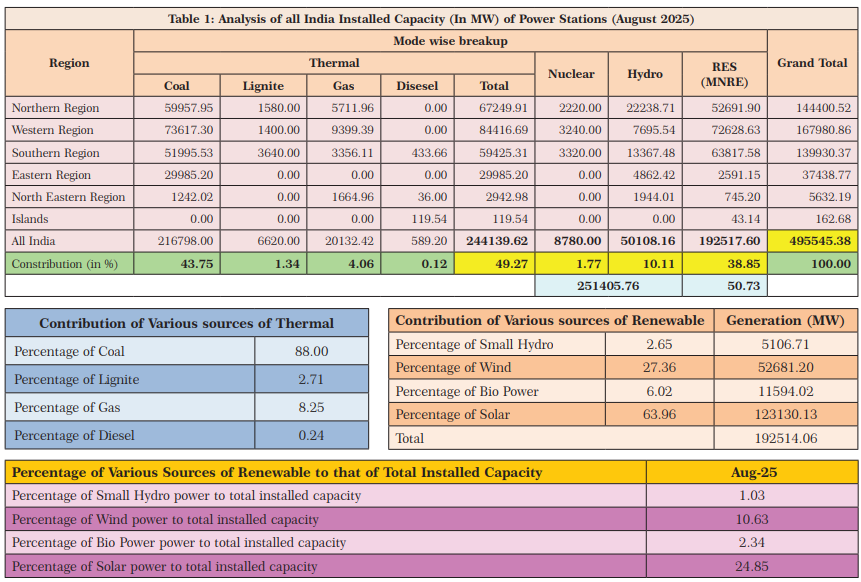
Energy Storage Systems (ESSs) can be used for storing available energy from Renewable Energy and further can be used during peak hours of the day. The various benefits of Energy Storage are help in bringing down the variability of generation in RE sources, improving grid stability, enabling energy/ peak shifting, providing ancillary support services, enabling larger renewable energy integration, brings down peak deficit and peak tariffs, reduction of carbon emissions, deferral of transmission and distribution capex, energy arbitrage etc. The detail of total installed capacity of India as on August 2025 is shown in Table 1.
Battery Energy Storage System (BESS) – An Overview
A Battery Energy Storage System (BESS) is a technology that stores electrical energy in the form of chemical energy and releases it when needed. It plays a vital role in modern power systems, particularly with the integration of renewable energy sources like solar and wind.
Purpose of BESS
BESS provides several key functions:
- Energy Arbitrage: Storing energy during low-demand (cheap) periods and supplying it during high-demand (expensive) periods.
- Grid Stability & Frequency Regulation: Balancing supply and demand to maintain grid frequency.
- Backup Power: Ensuring uninterrupted power during outages.
- Renewable Integration: Storing excess solar/wind energy and delivering it when generation is low.
- Peak Shaving: Reducing peak power demand on the grid or facility.
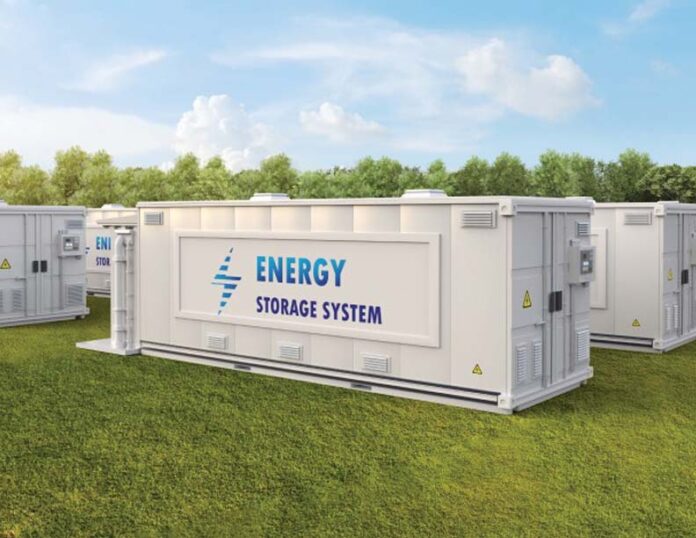
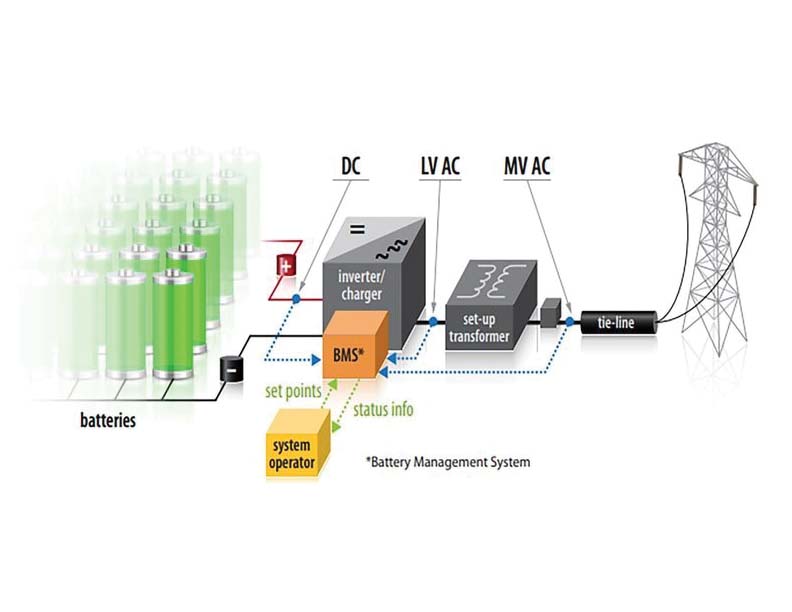
Basic Components of a BESS (Refer figure 1)
- Battery Cells/Modules: The core component where energy is stored chemically.
- Battery Management System (BMS): Monitors voltage, current, temperature, and state of charge (SOC) for safety and efficiency.
- Power Conversion System (PCS)/Inverter: Converts DC power from the battery to AC power for the grid or load.
- Energy Management System (EMS): Optimises charging and discharging based on demand, prices, and grid conditions.
- Thermal Management System: Maintains temperature within safe limits for performance and longevity.
- Safety Systems: Include circuit breakers, fire suppression, and ventilation systems.
Key Performance Parameters
- Energy Capacity (kWh or MWh): Total energy that can be stored.
- Power Rating (kW or MW): Maximum rate of energy discharge.
- Efficiency (%): Ratio of energy output to energy input (round-trip efficiency).
- Cycle Life: Number of charge–discharge cycles before capacity drops below a specified threshold.
- Response Time: How quickly the system can respond to a command (milliseconds to seconds).
- Depth of Discharge (DoD): Percentage of total capacity that can be safely used.
Types of Batteries Used in BESS
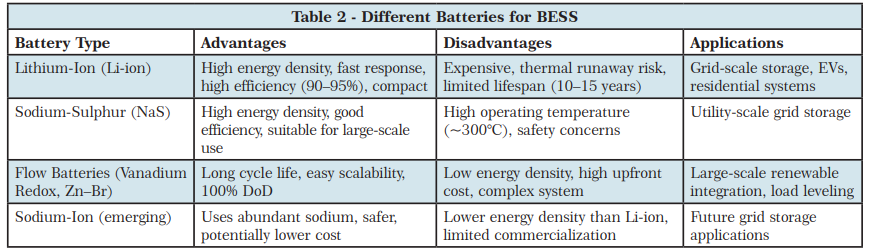
Different battery chemistries offering varying performance, cost, and lifespan characteristics as given in table 2.
A Battery Energy Storage System (BESS) is a cornerstone of the modern power grid, improving flexibility, reliability, and sustainability. While Lithium-ion currently dominates due to its high efficiency and maturity, flow batteries and sodium-based technologies are emerging as strong contenders for large-scale and long-duration energy storage.
Lithium Ion Batteries for BESS
Let’s go through the working principles of the
Lithium-Ion battery types used in Battery Energy Storage System.
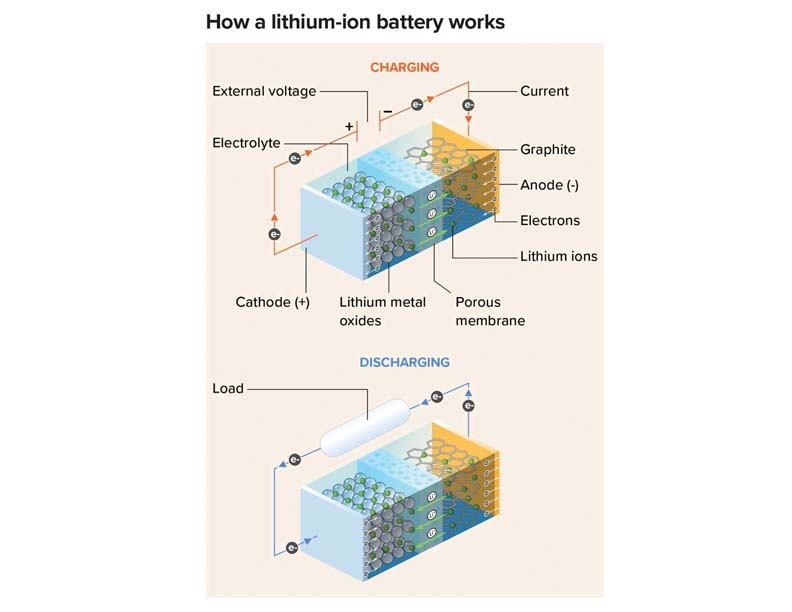
A Lithium-Ion Battery (Li-ion) consists of:
- Anode (Negative electrode): Usually graphite (C)
- Cathode (Positive electrode): Typically lithium metal oxide (e.g., LiCoO2, LiFePO4, or LiNiMnCoO2)
- Electrolyte: Lithium salt (e.g., LiPF6) dissolved in organic solvent
- Separator: Prevents physical contact between electrodes but allows ion flow
During Discharging:
- The process reverses: Li+ ions move back from anode → cathode, generating a flow of electrons through the external circuit (supplying power). (Refer figure 2)
During Charging:
- External electrical energy drives Lithium ions (Li+) from the cathode → anode through the electrolyte.
- At the same time, electrons move through the external circuit to the anode, where they combine with Li+ ions to form intercalated lithium in graphite.
Key Characteristics
- Voltage: ~3.2 – 3.7 V per cell
- Efficiency: 90–95%
- Cycle Life: 3,000–10,000 cycles depending on chemistry
- Advantages: High energy density, fast response, low self-discharge
- Challenges: Safety (thermal runaway), cost, temperature sensitivity
Growth & Safety of BESS in India
As per National Electricity Plan (NEP) 2023 of Central Electricity Authority (CEA), the energy storage capacity requirement is projected to be 82.37 GWh (47.65 GWh from PSP and 34.72 GWh from BESS) in year 2026-27. This requirement is further expected to increase to 411.4 GWh (175.18 GWh from PSP and 236.22 GWh from BESS) in year 2031-32.
Further, CEA has also projected that by the year 2047, the requirement of energy storage is expected to increase to 2380 GWh (540 GWh from PSP and 1840 GWh from BESS), due to the addition of a larger amount of renewable energy in light of the net zero emissions targets set for 2070. A long-term trajectory for Energy Storage Obligations (ESO) has also been notified by the Ministry of Power to ensure that sufficient storage capacity is available with obligated entities. As per the trajectory, the ESO shall gradually increase from 1% in FY 2023-24 to 4% by FY 2029-30, with an annual increase of 0.5%. This obligation shall be treated as fulfilled only when at least 85% of the total energy stored is procured from Renewable Energy sources on an annual basis.
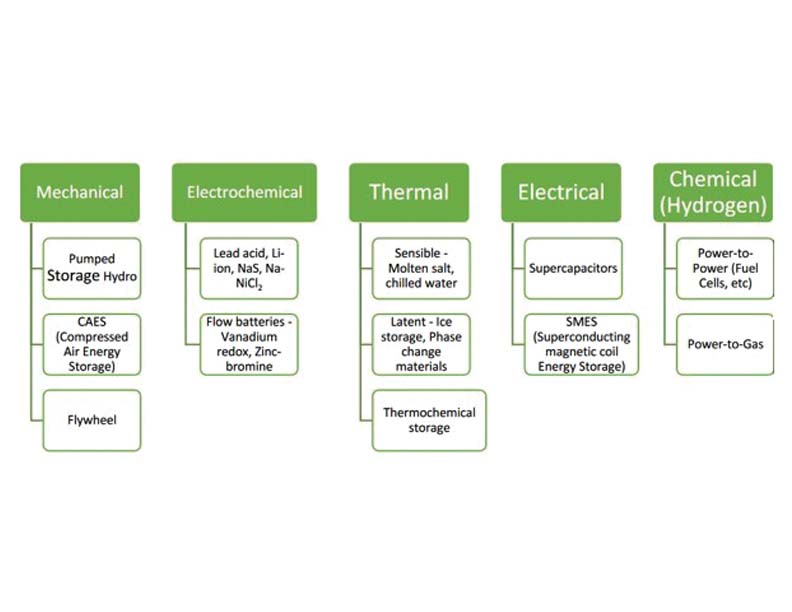
There are several energy storage technologies available, broadly – mechanical, thermal, electrochemical, electrical and chemical storage systems, as shown in figure 3.
The Government of India and agencies have begun formalising policy for storage. MNRE/MOP operational guidelines (e.g., Viability Gap Funding, VGF for BESS) and CEA draft/issued safety/grid-integration regulations provide the first national-level frameworks for BESS deployment, while state regulators (e.g., draft APERC BESS regulation) are developing state rules that target distribution-level uses, curtailment management, and market access. These moves reduce regulatory uncertainty but many details (settlement mechanisms, SOE/Discom procurement models, long-term contracting for storage) are still evolving.
Notable initiatives include large tenders by NTPC/NHPC and pilot programs to collocate BESS with existing generation (including proposals to trial storage at coal plants to reduce ramping stresses), and high-profile auctions for standalone BESS (NHPC 500 MWh auction awards). These pilots produce early empirical data on performance, contract design, and interconnection challenges but are not yet comprehensive across states.
The Central Electricity Authority (CEA) of India has introduced the Draft Central Electricity Authority (Measures relating to Safety and Electric Supply) (First Amendment) Regulations, 2025, which includes a new section on safety rules for Battery Energy Storage Systems (BESS). These draft regulations address aspects like design, installation, operation, and emergency procedures for BESS.
The proposed regulations cover areas such as technical design requirements, installation standards including minimum distances between components or structures, fire safety measures like detection and suppression systems, and the need for BESS-specific training for fire safety personnel.
Examples of BESSs in India
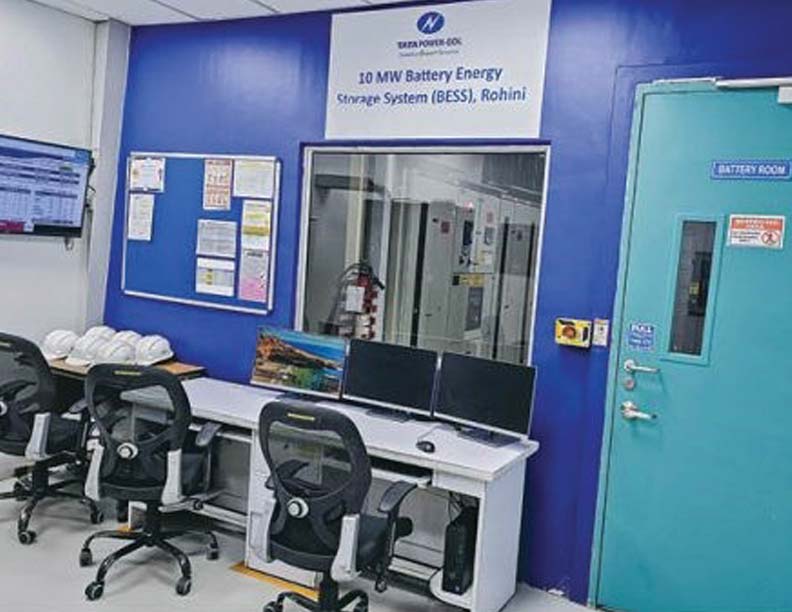
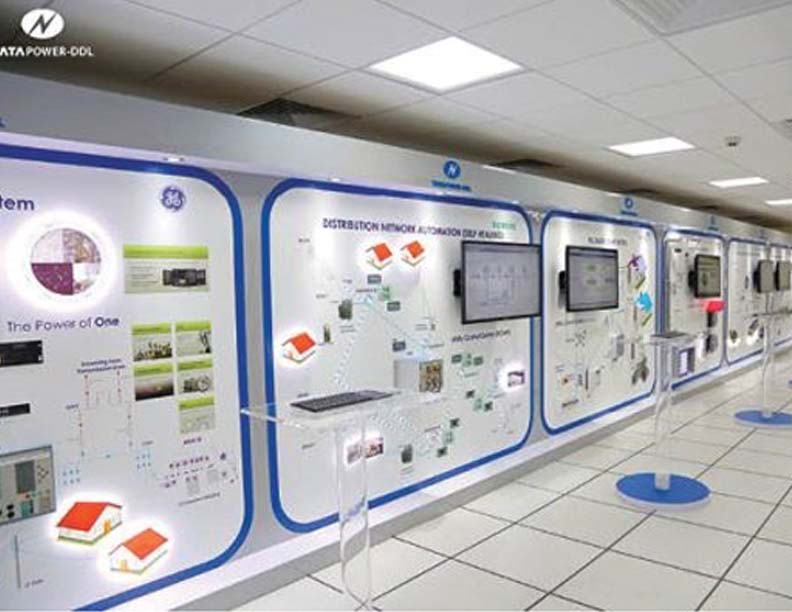
Tata Power-DDL – BESS (Rohini Grid-24) – 10 MW
A distribution-level BESS installed by Tata Power-DDL (in collaboration with AES/Mitsubishi in earlier deployments) at the Rohini substation. Reported as a 10 MW system for distribution services. Uses LFP (Lithium Iron Phosphate – Lithium ferro phosphate) chemistry in containerised configuration for grid services (demand-side management, frequency regulation, supply reliability). (Refer figure 4)
BRPL / BSES Kilokari – South Asia’s largest urban utility-scale BESS (20 MW / 40 MWh) – Delhi
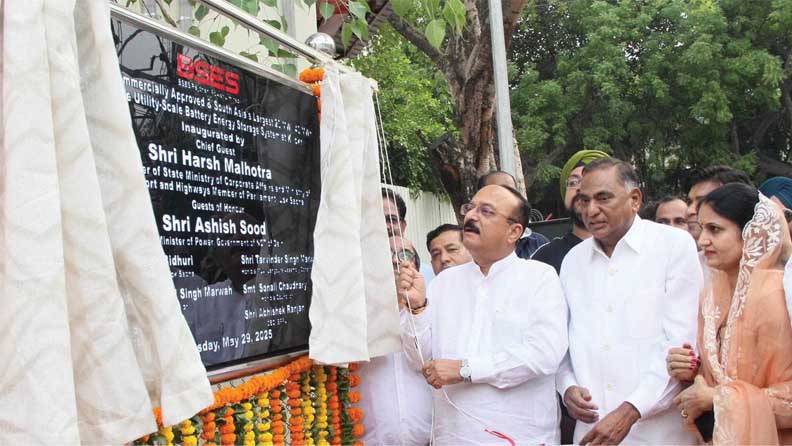
BRPL (BSES Rajdhani Power Ltd) inaugurated a 20 MW / 40 MWh LFP BESS at Kilokari substation in south Delhi (May 2025 press coverage). It is designed to deliver up to 4 hours daily (two hours day, two hours night) to alleviate local peak stress and improve reliability. This project is helping for peak shaving, local reliability (Refer figure 5).
Leh / Ladakh Solar + BESS projects (e.g., Leh 50 MWh / 50 MW solar co-located
Multiple High-Altitude Projects: Tata Power Solar was awarded a 50 MWh co-located BESS with 50 MW PV at Leh (EPC press/award reporting in 2021). These projects typically use containerised LFP with HVAC/thermal controls appropriate for cold/high-altitude.
Conclusion
- BESS is no longer hypothetical for India: Rapidly falling pack prices, large VGF/PLI (Production Linked Incentive) programs, and SECI/PSU tenders mean BESS is commercially entering the market.
- Prioritise locational value: Rajasthan/Gujarat (curtailment), Delhi/Mumbai (distribution reliability), Ladakh/islands (diesel replacement) should be early focus geographies for maximising impact.
- Safety & regulation must scale with deployment: Implement CEA draft safety standards, mandatory reporting, and local fire service readiness—
Coordination across policy levers is essential: Manufacturing policy (PLI), procurement (VGF/SECI) and market reforms (ancillary design / ToD rollout) must be synchronised to avoid under-utilisation or stranded assets.
India’s push for renewables (solar/wind) makes BESS critically important for energy security and grid stability. But to scale effectively, the above challenges must be addressed.

Dr. Rajesh Kumar Arora obtained his B. Tech. and M.E. degrees in Electrical Engineering from Delhi College of Engineering, University of Delhi. He completed his PhD in grounding system design from UPES, Dehradun. He is also a certified Energy Manager and Auditor and has worked in 400kV and 220kV Substations for more than 14 years in Delhi Transco Limited (DTL). He has also worked as Deputy Director (Transmission and Distribution) in Delhi Electricity Regulatory Commission (DERC). Presently he is working in D&E (Design and Engineering) department of DTL.

Vivek Kr. Jain holds a B.Tech in Electrical Engineering and brings over 23 years of experience in the power sector, specialising in power system design, grid integration studies, and renewable energy plant engineering, including EHV switchyard design up to the 400 kV class. His professional expertise also extends to the design and engineering of Battery Energy Storage System and hybrid renewable energy projects. He is currently serving as the Head of Electrical Engineering at Avaada Energy Ltd.