
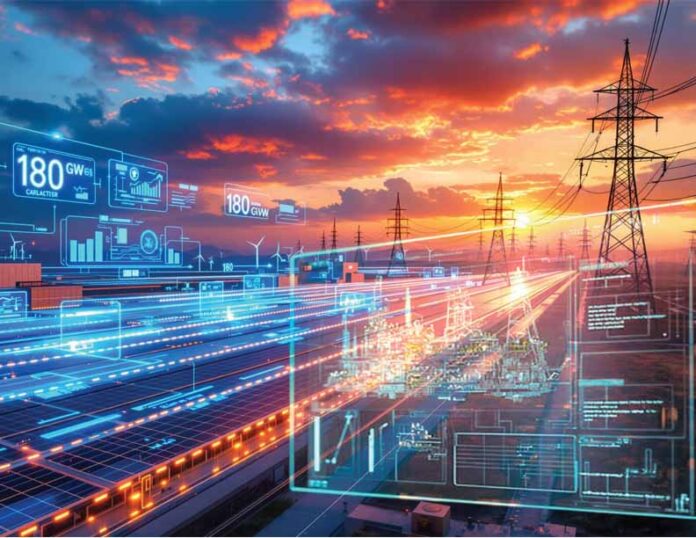
Automation in the power domain signifies the growing application of advanced and intelligent technologies to streamline operations that previously relied on manual intervention. By enabling real-time monitoring, efficient grid management, and optimised energy utilisation, automation enhances productivity, reduces operational costs, improves safety standards, and supports long-term environmental sustainability.
Power sector automation consists of three fundamental processes – data capture, power system monitoring, and power system control – which operate in an integrated and automated manner.
- Data capture: This involves the systematic collection of information in the form of measured analogue values of different parameters of power system and binary data of different control devices. This data serves as the foundation for subsequent monitoring, analysing, decision making and control actions.
- Power system monitoring: It is undertaken by field personnels and maintenance engineers who analyse the collected data either remotely, through computer-based interfaces and visual displays, or near the equipment site using local-panel indicators and portable computers.
- Power system control: This translates to the transmission of actionable signals to various devices within the network of components designed to monitor, regulate and safeguard the overall power infrastructure.
As power networks expand in size and complexity, with an increasing number of power sources and control devices distributed across extensive and sometimes challenging geographical areas, the need for centralised monitoring and management becomes critical. For large-scale national grids as well as microgrids, centralised access to information regarding the status of the grid and its equipment, along with the capability for remote control and maintenance of the grid, customers, and different power sources, can be effectively achieved through the application of information technology. This leverages advancements in computational power, data storage, high-speed communication, and the integration of diverse technological solutions. Key areas of focus include customer engagement, Information Technology (IT) transformation, Operational Technology (OT), and the management of work and asset value. The framework responsible for monitoring and controlling power grid is commonly referred to as the Distribution Automation System (DAS).
The purpose of automation goes beyond merely substituting human labour, it aims to optimise system performance, enhance reliability, and achieve a level of precision that cannot be consistently attained by humans. Furthermore, automation significantly strengthens safety by reducing ecological health hazard. In addition, a substantial portion of tasks related to scheduling, billing, and account management in many organisations have already been automated.
Several technologies are key drivers of automation in the power sector:
- Supervisory Control and Data Acquisition (SCADA) Systems: They enable local and remote monitoring and control of power system network.
- Artificial Intelligence (AI) and Machine Learning (ML): Those study a plethora of information to optimise energy generation, distribution, and consumption.
- Robotics: They conduct maintenance, repairs, cleaning of solar panels, and inspections in hazardous or hard-to-reach areas.
- Drones: Facilitate inspection of power lines, pipelines, and other critical infrastructure.
Several technological solutions are considered instrumental for the development and modernisation of power systems. These include hybrid and digital substations, High Temperature Low Sag (HTLS) conductors to improve power flow within limited RoW, helicopters and Unmanned Aerial Vehicles (UAVs) facilitate route surveys, construction, and monitoring of transmission lines. Advanced technologies such as Voltage Sourced Converter (VSC)-based HVDC systems, Phase Shifting Transformers (PST), grid-forming inverters, Dynamic Line Rating/Loading, and travelling wave fault detectors further contribute to the efficient and reliable operation of modern power networks.
Dynamic Line Rating (DLR)
Dynamic Line Rating (DLR) is a Grid-Enhancing Technology (GET) that determines the real-time power capacity of transmission lines using live environmental data as well as real time measurement of sag of the transmission line through sensors.
To effectively implement Dynamic Line Rating (DLR), it is essential to integrate advanced sensors and monitoring systems within transmission and distribution networks. These systems, installed on or near the lines, continuously record instantaneous environmental and operational data such as: wind speed, ambient temperature, solar radiation, circuit loading, line status, conductor temperature and ground clearance.
The collected data is transmitted to a central control system through communication interface, where it is analysed to support informed operational decisions, including efficient thermal load management and enhanced line performance.
This maximises the use of existing grid assets, enhances reliability, and defers costly infrastructure upgrades. In turn, DLR supports lower electricity costs, quicker integration of different energy resources, and higher inclusion of Variable Renewable Energy (VRE) in the grid ensuring safety and compliance with the statutory norms.
For instance, strong winds help cool transmission lines, allowing them to carry more electricity safely. Primary data from field, when applied to technical standards such as IEEE 738 and CIGRE TB498, generate static line ratings. These data can be further refined into predictive forecasts using algorithms that integrate statistical analysis, modelling techniques, and dynamic weather data. Such analysis enables the system to anticipate the line’s capacity at any moment, allowing operators to safely increase power flow beyond static limits when conditions are favourable.
Certain Dynamic Line Rating (DLR) systems can forecast line capacity up to 72 hours ahead, aiding in effective grid planning and operation. By utilising favourable weather conditions, DLR can boost the power-carrying capacity of existing transmission lines – sometimes by as much as 200%. However, implementation must be approached cautiously to prevent new operational risks and to account for existing system constraints. Substations or lines may get damaged by natural or human-induced events, a robust grid can redirect power through alternative routes. With accurate short-term and day-ahead forecasting, DLR can also assign ‘emergency’ ratings to in-service lines, helping maintain system reliability during contingencies.
Advantages of Automation
- Fault prediction: By integrating AI with sensors, equipment can be continuously monitored to detect issues before failure occurs, reducing downtime, costs, and risks while improving safety and efficiency.
- Maintenance facilitated by image processing: Globally few electricity grids use drones provided with high-resolution and infrared cameras to check temperature of transmission lines and pylons. This image-based maintenance allows efficient fault detection across large and hard-to-reach areas.
- Energy efficiency determination: Smart devices like Google Home, Amazon Alexa and Nest – let users monitor and control home energy use. AI-enabled meters can also optimise consumption and storage, improve demand and generation forecasts, and support renewable integration, reducing reliance on fossil-fuel backup systems.
- Disaster recovery: By predicting power availability and prioritising delivery, AI can accelerate recovery while minimising system strain. Additionally, rapid access to imagery and data allows for faster damage assessment and more informed decision-making within the critical hours following a disaster.
- Utility theft management: Unauthorised connections and consumption pose a major challenge in the power sector. AI can detect them by analysing usage patterns, payments, and other data, and when paired with smart meters, it enhances monitoring and reduces the need for costly physical inspections.
Communication – Back Bone of Automation
Communication in power sector automation refers to the communication systems and technologies that enable efficient, reliable, and intelligent two-way communication between components of modern electrical grids. The evolution from conventional power grids to smart grids is characterised by the integration of electrical power systems with advanced Information and Communication Technologies (ICT), resulting in automated, widely distributed energy delivery networks capable of monitoring and responding to changes from power plants to individual appliances.
Smart grid communication technologies comprise of both wired and wireless systems. Wired technologies include Fiber optics and Power Line Communication (PLC). Wireless technologies used in smart grids include Wi-Fi, cellular networks such as LTE and 5G, and cognitive radio systems. Commonly used methods to transport data are PLC, IP/Ethernet, LPWAN, MPLS, etc. These technologies are used for different applications based on their suitability for coverage, latency and other supporting environment and protocols. Communication protocols include IEC 61850, TCP/IP (Transmission Control Protocol/Internet Protocol), DNP (Distributed Network Protocol), MQTT (Message Queuing Telemetry Transport). Core applications and services dependant on this communication system are protection, metering, SCADA, predictive maintenance, etc.
Challenges in Way of Automation
While AI offers significant opportunities to enhance power distribution and consumption, transmission, and generation, it still faces challenges related to efficiency, transparency, affordability, and the amalgamation of renewable energy into power systems.
Traditional grid infrastructure in rural regions often suffers from deferred maintenance and outdated technology. Rural regions often suffer from limited or non-existent broadband internet access and cellular coverage. Transitioning to a smart grid necessitates substantial upfront investment in Advanced Metering Infrastructure (AMI), communication networks, and grid automation technologies. The challenge lies in demonstrating a viable return on this investment, particularly when serving a smaller customer base spread across vast distances.
As internet use and IT capabilities continue to expand, cybersecurity has become a critical concern for authorities. The increasing integration of operational and information systems, supported by smart technologies and cloud-based real-time data, has heightened exposure to cyberattacks, hacking attempts, and system malfunctions that could disrupt normal operations. Such malicious intrusions can endanger power supply and compromise overall grid security. In particular, False Data Injection (FDI) attacks have emerged as a newer and more severe threat to smart grid cybersecurity.
Way Forward
India’s fast-growing power sector presents substantial opportunities for innovation across both technical and operational domains. However, it also challenges engineers and researchers with tasks such as managing bulk power transmission from distant regions, safeguarding grid security, and tackling environmental impacts.
To meet rising demand, the transmission system must expand through measures such as implementing high-capacity long-distance HVDC and HVAC systems, deploying Flexible AC Transmission Systems (FACTS) devices like STATCOM, SVC or Thyristor Controlled Series Capacitor (TCSC) on 400 kV and 220 kV lines where feasible. Other initiatives include developing smart transmission grids, overlaying 765 kV AC lines on existing 400 kV networks, equipment for 1200 kV and 765 kV AC systems, FRP cross arms or composite insulator cross arms, and high-temperature conductors for transmission lines. Efforts also focus on designing seismic-resistant substations, conducting pollution and lightning mapping studies, creating centralised data repositories, and implementing automated Emergency Restoration Systems (ERS). Additionally, demand-side measures can help reduce grid congestion, a key factor in system management costs.
A smart grid is essentially a digital enhancement of the power distribution network, designed to improve operational efficiency and support the integration of alternative energy sources. Other key areas such as Computer aided monitoring and control of Smart Distribution Transformers, Customer level intelligent automation system, Data communication system for Distribution Automation, Substation and feeder level automation, Distribution Control Centre (DCC) software, greater Substation and Feeder Level Automation, Smart Metering, Intelligent Electronic Devices (IEDs), are to be developed and deployed.
The Central Electricity Authority (CEA) released the “CEA (Cyber Security in Power Sector) Guidelines 2021,” in October 2021, providing a roadmap for enhancing cybersecurity in the power sector. Now incorporated into the Indian Electricity Grid Code (IEGC) 2023, these guidelines help power companies safeguard the operational integrity and fault tolerance, mitigating cyber risks.
Global Initiatives
The Digital Demand-Driven Electricity Networks (3DEN) initiative is a joint effort by the International Energy Agency (IEA), the United Nations Environment Programme (UNEP) and the Italian Ministry of Environment and Energy Security. It aims to accelerate power sector modernisation through digitalisation, smart grid technologies, and demand-side resource management, leading to greater reliability, affordability, and inclusivity for households, communities, and businesses. As part of the initiative, the IEA will draw on global analysis, reports, and best practices to develop and share practical tools and guidance.
During its first phase (2020–2024), the programme emphasised analytical studies, the creation of regulatory frameworks, and pilot projects to advance the adoption of digital energy technologies. Key focus regions included Colombia, Indonesia, India, Brazil, Tunisia, South Africa, Morocco, as well as countries across ASEAN, Africa, and Latin America.
Pilot projects carried out in Colombia, Brazil, India and Morocco achieved significant outcomes. They strengthened electricity reliability for over 320,000 beneficiaries, covering low-income households, small enterprises, and key community services like schools and healthcare facilities. The projects helped avoid nearly 3,800 tonnes of CO2 emissions annually through renewable integration, improved profitability, and customer-driven flexibility, while deferring close to USD 60 million in infrastructure investments by harnessing digital capabilities. They also enhanced active demand, reduced downtime, and digitised more than 60 GWh of industrial operations. Over 650 people were trained and engaged in deployment and E-participation, building local capacity to ensure viability of these solutions. Additionally, the projects enabled testing of innovative business models that demonstrated both financial and energy efficiency benefits from digitalisation.
In India, the consortium collaborated with Panitek Power and The Energy and Resources Institute to develop a digital twin for electric distribution grids. This innovation improved operational reliability, enhanced outage management, and lowered costs for around 20,000 consumers.
These pilot projects highlight the quantifiable operational benefits through digitalisation in improving system efficiency, consistency, and endurance, particularly within rapidly evolving energy systems.
Tata Consulting Engineers Role in Automation
Tata Consulting Engineers (TCE) uses its strong engineering background and digital technology to offer complete solutions around the world. For more than sixty years, TCE has handled complex projects in areas such as power plants, smart cities, infrastructure, and major landmarks.
Tata Consulting Engineers Limited (TCE) offers a complete end-to-end Dynamic Line Rating (DLR) solution that turns conventional power grids into dynamic, intelligent systems. TCE has successfully implemented India’s first 400 kV DLR project, demonstrating its strong expertise and leadership in the Indian power sector. This is a proven, fully operational solution already delivering measurable value.
Other services offered include 3D engineering, 4D and 5D simulations, Building Information Modelling (BIM), asset digitalisation and information management, as well as product engineering and turnkey machine development.
Conclusion
Implementing energy efficiency measures is generally faster than building new generation or grid infrastructure. When combined with advanced data analytics, smart-grid technologies enhance the integrity and competence of electricity networks. The large and complex datasets produced are well-suited to AI and machine learning, which can support fault detection, power quality monitoring, predictive maintenance, and predicting generation of renewable energy. Advances in ICT, big data, distributed computing, and AI have driven the growth of smart metering, generating vast amounts of data at high speed.
Power utilities should adopt a proactive approach to resilience against hazards like extreme weather, wildfires, and cyber threats. This involves creating resiliency roadmaps with weather forecasts, fire and flood modelling, real-time sensors and cameras, and continuous situational awareness. Cybersecurity assessments are particularly critical for new devices, systems, and service providers.

Sandhya Mukherjee; a graduate in Electronics and Power from Visvesvaraya National Institute of Technology, Nagpur; has been in Power Sector with experience of design engineering, consulting, quality management and operations of thermal power station. Presently, she is working in Technology Vertical of Tata Consulting Engineers Ltd., in the role of Assistant General Manager.