
India’s power sector stands as one of the world’s most complex and rapidly evolving energy ecosystems. With a peak demand exceeding 250 GW and ambitious renewable energy targets, the nation’s electrical infrastructure requires sophisticated control systems to ensure reliable, safe, and efficient power delivery. At the heart of this vast network lie control panels, the critical yet often under-appreciated components that serve as the nerve centres of electrical systems across generation, transmission and distribution networks.
The Foundation of Modern Power Systems
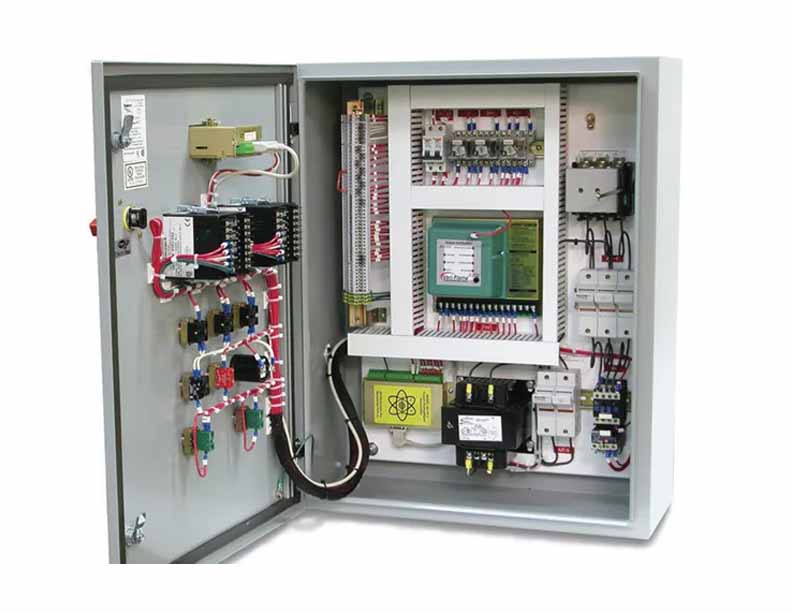
Control panels represent far more than mere electrical enclosures; they are sophisticated interfaces that bridge the gap between human operators, complex machinery, and advanced digital systems. These systems perform four fundamental functions that are essential to modern power operations:
- Operational Control: This forms the primary function, enabling the switching, starting, and regulation of critical equipment including motors, generators, and transformers. This capability ensures that power systems can respond dynamically to changing demand patterns and operational requirements.
- Protection Systems: They are housed within control panels provide the first line of defence against electrical faults and equipment failures. Through protective relays, circuit breakers, and isolators, these systems safeguard expensive infrastructure and prevent cascading failures that could impact large portions of the grid.
- Monitoring and Diagnostics: These capabilities have become increasingly sophisticated, incorporating real-time data collection on voltage, current, frequency, power factor, and overall system health. Modern panels integrate seamlessly with SCADA systems, providing operators with comprehensive visibility into system performance.
- Automation Functions: These represent the cutting edge of control panel technology, enabling automatic switching, load sharing, synchronisation, and fault management through programmable logic controllers and advanced communication protocols. This automation is crucial for managing the complexity of modern power systems, particularly as renewable energy sources introduce new variability challenges.

Diverse Applications Across the Power Value Chain
The Indian power sector employs a sophisticated array of control panel types, each optimised for specific applications within the electricity value chain.
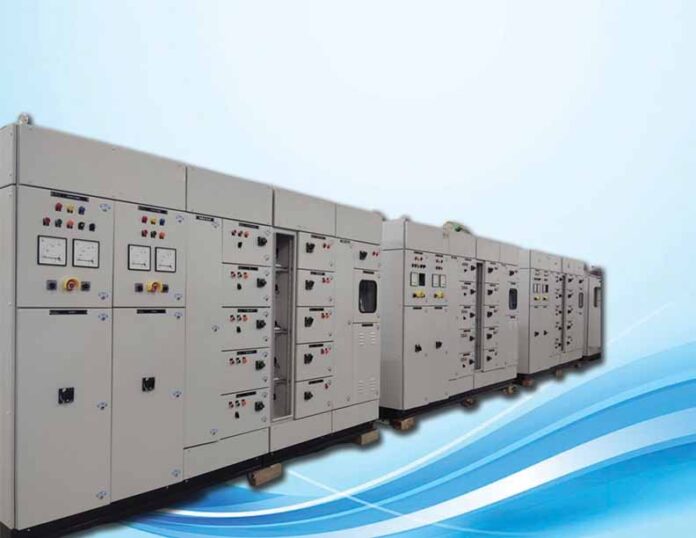
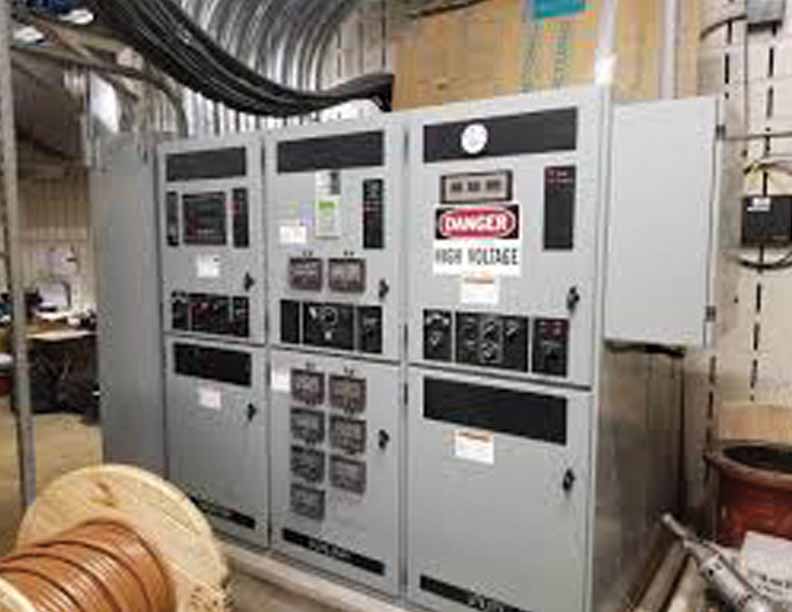
- Power Control Centers (PCCs): These serve as centralised command units for managing large electrical loads across thermal, hydro, nuclear, and renewable generation facilities. These robust systems house circuit breakers, protective relays, precision meters, and bus-bar arrangements designed to handle high fault levels while ensuring continuous power supply to critical equipment such as boilers, turbines, and auxiliary systems.
- Motor Control Centers (MCCs): These form the operational backbone of industrial plants, refineries, and generation auxiliaries. These systems control and protect motor-driven equipment including pumps, conveyors, blowers, and compressors. Modern MCCs increasingly incorporate Variable Frequency Drives (VFDs) to enhance energy efficiency, directly supporting India’s Bureau of Energy Efficiency initiatives.
- Generator Control Panels (GCPs): These manage the complex task of synchronisation and load sharing among multiple diesel generator sets. Equipped with automatic transfer switches, these panels ensure seamless power transitions during grid outages, making them indispensable for hospitals, data centres, metro systems, and other mission-critical infrastructure.
- Relay and Protection Panels: They are integral to grid-scale substations, managing transmission voltages from 66 kV to 765 kV across India’s high-voltage network. These sophisticated systems incorporate numerical relays with advanced protection functions including distance protection, overcurrent detection, differential protection, and under-frequency relays, playing a vital role in maintaining system reliability amid the growing variability introduced by renewable energy sources.
- Synchronising Panels: They have gained prominence in facilities where multiple power sources must operate in harmony. These systems synchronise voltage, frequency, and phase sequence between grid power, diesel generators, and renewable sources, preventing system instability. Their adoption has accelerated across metro rail projects, airports, data centres, and large commercial developments.
- Instrumentation and SCADA Panels: These form the digital backbone of modern substations and generation facilities. Housing programmable logic controllers, remote terminal units, Ethernet switches, and human-machine interfaces, these panels enable comprehensive remote monitoring and control capabilities, supporting initiatives like Power Grid Corporation’s Digital Substation mission.
Regulatory Framework and Standards Compliance
The critical nature of power infrastructure demands strict adherence to comprehensive technical standards and regulatory requirements. Control panels in India must conform to multiple layers of specifications:
International standards including IEC 61439 and its Indian equivalent IS/IEC 61439 govern low-voltage switchgear and control gear assemblies, ensuring global compatibility and reliability. The Indian standard IS 8623 specifically addresses requirements for factory-built assemblies, while the Central Electricity Authority guidelines establish safety protocols for electrical installations.
Additional regulatory oversight comes from IE Rules and CERC/SERC regulations, which impose strict protection requirements for grid-connected panels. Leading manufacturers address these requirements through advanced design features including IP protection ratings up to IP65, arc-proofing capabilities, type-tested assemblies, and sophisticated fire detection systems.
India’s Manufacturing Excellence
India has developed a robust control panel manufacturing ecosystem that serves both domestic needs and international markets across Africa, the Middle East, and Southeast Asia. This manufacturing strength rests on several key pillars:
- Local Value Addition: This has been significantly enhanced through Make in India initiatives, with indigenous component manufacturing reducing dependency on imports while building local technical expertise. This localisation strategy has improved supply chain resilience while reducing costs for domestic projects.
- Customisation Capabilities: These represent a particular strength of Indian manufacturers, who have developed flexible design approaches that can accommodate diverse project requirements ranging from small-scale industrial applications to ultra-high-voltage substations.
- Automation Integration: This has accelerated through strategic partnerships between Indian panel manufacturers and global automation leaders including Siemens, ABB, Schneider Electric, and L&T. These collaborations bring cutting-edge technology to Indian projects while building local technical capabilities.
- Testing Infrastructure: These provided by institutions like the Central Power Research Institute ensures that Indian-manufactured panels meet international standards through comprehensive type-testing and certification programs.
Technological Innovation and Digital Transformation
The evolution of control panels from simple switchgear enclosures to intelligent, connected systems reflects broader digitalisation trends across the power sector. Key technological advances include:
- Digital Integration: This means integration through numerical relays, smart meters, and IoT sensors that feed real-time data to cloud-based analytics platforms, enabling predictive maintenance and optimised operations.
- Enhanced Safety Systems: These include arc-fault detection and mitigation technologies that significantly improve operator safety in high-risk environments.
- Modular Design Philosophy: This maximises space efficiency in urban substations and renewable installations where real estate constraints are significant.
- Cybersecurity Integration: This addresses the growing threat landscape as SCADA-integrated panels become more connected and potentially vulnerable to cyber attacks.
- Energy Efficiency Features: These include advanced motor starters and drives that minimise electrical losses in industrial environments, directly supporting national energy efficiency objectives.
- Predictive Analytics: These leverage artificial intelligence algorithms to anticipate equipment failures before they occur, reducing downtime and maintenance costs.
Enabling India’s Renewable Energy Transition
Control panels play an increasingly critical role in India’s renewable energy sector, which has become the fastest-growing segment of the country’s power mix. In solar power installations, specialised panels manage DC-AC conversion processes, inverter interlocking systems, transformer protection, and comprehensive SCADA-based monitoring.
Wind energy applications require sophisticated motor control centres and relay panels that protect induction generators while controlling complex yaw and pitch mechanisms that optimise turbine performance. Hybrid renewable projects present particularly complex challenges, requiring synchronising panels that can seamlessly integrate solar, wind, and battery energy storage systems with existing grid infrastructure.
As India pursues its ambitious target of 500 GW renewable capacity by 2030, control panel manufacturers face unprecedented opportunities to develop cost-effective, digitally enabled, and environmentally sustainable solutions tailored to renewable energy applications.
Challenges and Future Outlook
Despite significant progress, several challenges continue to impact control panel deployment in India. Market fragmentation, with numerous unorganised players supplying substandard products, threatens system reliability and safety. Skill gaps in smart panel design and integration limit the industry’s ability to fully leverage available technologies.
The future trajectory of control panels in India will be shaped by the convergence of digitalisation, localisation, and sustainability imperatives. Digital substations will drive universal adoption of intelligent electronic devices and communication-enabled panels. Energy storage control systems will require sophisticated panels capable of managing grid-scale battery installations.
Environmental considerations will promote green manufacturing practices using recyclable materials and low-carbon production processes. Control panels will evolve into integrated command platforms for distributed energy resources, while regulatory frameworks will impose stricter standards for power quality and safety.
Conclusion
Control panels may not capture public attention like solar parks or smart meters, but they represent the essential foundation of India’s power sector transformation. From ensuring grid reliability to enabling renewable energy integration, these systems embody the intersection of engineering precision, operational safety, and digital intelligence. For manufacturers, engineers, and policymakers, investing in advanced, standardised, and future-ready control panels is not merely a technical decision – it is a strategic imperative for powering India’s continued economic growth and energy security.

Karn Pallav is a qualified Mechanical Engineer and MBA (Power) graduate from NPTI Faridabad. He is currently working as the Head (Regulatory Affairs) in a leading power DISCOM at New Delhi. He has around two decades of management experience in the entire value chain of the Power Sector. He has vast experience in power utilities dealing with competition issues, tariff determination, licensing and other techno-commercial matters. Being an engineer and Power Manager, he is also interested in technical issues related to Conventional and Renewable Generation, Open Access, Parallel License Regime, Smart Grid, AMI, Smart Meters, Cyber-Security Issues and E-Mobility. He has also written five books, namely – 1) The Power of Positive Thinking, 2) Customer Engagement Strategies in Retail Electricity Market, 3) 5 Rules For Life, 4) Whispers of the Heart and 5) Whispers of the Himalayas.