

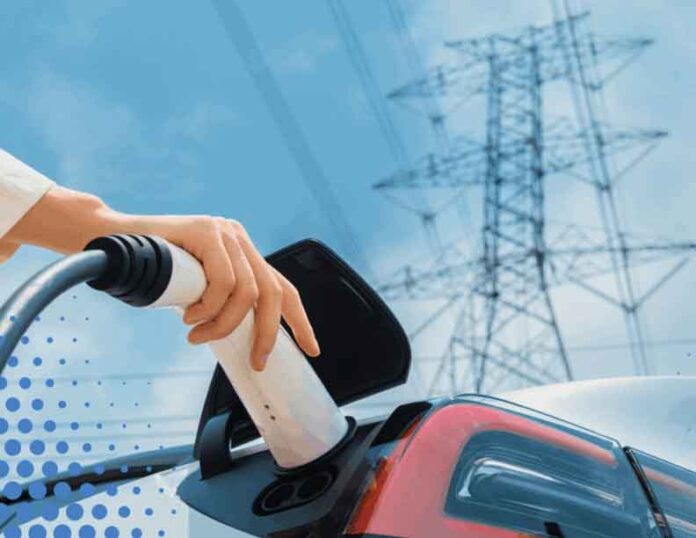
Vehicle-to-grid technology offers the second possibility. It enables an electric vehicle connected through a bidirectional charger to draw electricity while charging and return a controlled portion of stored energy to the grid when required. A large number of parked vehicles can therefore function as a geographically distributed energy-storage system.
This opportunity is becoming increasingly relevant to Indian distribution companies, or DISCOMs. India’s public charging network, policy support and electric mobility ecosystem are expanding rapidly. As of February 2026, the government reported that 29,151 public electric-vehicle charging stations had been installed across the country. The PM Electric Drive Revolution in Innovative Vehicle Enhancement scheme has allocated `2,000 crore for public charging infrastructure, with operational guidelines permitting participation by eligible public and private entities.
The immediate priority remains the provision of accessible charging. Nevertheless, the charging infrastructure being installed today will determine whether electric vehicles merely increase peak demand or eventually provide demand response, renewable-energy balancing and local grid-support services.
Moving Beyond Uncontrolled Charging
In conventional charging, the vehicle begins drawing power as soon as it is connected. When thousands of consumers return home and charge their vehicles during evening hours, the resulting demand can coincide with residential and commercial peaks. This can increase feeder loading, transformer stress, voltage drop and distribution losses.
Smart charging represents the first stage of grid integration. The DISCOM, charging operator or aggregator shifts charging to periods when electricity demand is lower, renewable generation is higher or network capacity is available. This is commonly called grid-to-vehicle controlled charging.
Vehicle-to-grid extends the arrangement by enabling reverse power flow. Subject to the vehicle owner’s mobility requirement, minimum battery state of charge and battery-health limits, a portion of the stored energy may be dispatched during critical periods. After the grid requirement has passed, the vehicle can resume charging.
The Central Electricity Authority has identified managed charging as the preferred foundation for vehicle-to-grid implementation. Its recommendations include interoperable charging systems, bidirectional chargers, central monitoring, advanced metering, coordination between transport and power-sector planning, optimal location of charging hubs and suitable tariff incentives.
Why Does Vehicle-to-Grid Matters to DISCOMs?
Peak-load management
The first commercial opportunity is peak reduction. DISCOMs frequently procure expensive electricity to meet short-duration evening peaks. A coordinated fleet of electric vehicles can reduce its charging demand or supply limited power during these intervals.
The value of vehicle-to-grid does not depend only on the total energy stored in the vehicles. Its most useful characteristic is dispatchable power. Even when discharge continues for a relatively short duration, it may help a utility manage a feeder peak, reduce its maximum demand or avoid emergency procurement.
Fleet vehicles are particularly attractive for early projects. Electric cars used by government departments, corporate organisations, taxi aggregators and institutional campuses often follow predictable schedules. Electric buses and commercial fleets also have known depot locations and defined operational windows. Their availability can be estimated more reliably than that of privately owned vehicles.
Integration of solar and wind power
India’s distribution networks are receiving increasing quantities of rooftop solar and utility-scale renewable power. Solar generation is highest during the daytime, whereas electricity demand in many urban areas peaks during the evening. Electric vehicles parked at offices, campuses and commercial facilities can absorb daytime solar generation and later provide controlled support during high-demand hours.
The Ministry of Power’s 2024 charging-infrastructure guidelines specifically encourage charging during solar hours. They also promote open communication protocols and connected charging infrastructure, which are essential for future managed-charging and vehicle-to-grid applications.
In this arrangement, the electric vehicle is not treated as a conventional generator. It becomes a flexible storage resource that moves electricity between different periods. This can reduce renewable-energy curtailment, improve local utilisation of rooftop solar and limit sudden changes in the net demand observed by the DISCOM.
Distribution congestion relief
The usefulness of vehicle-to-grid is highly location-dependent. Discharging vehicles on an unconstrained feeder may produce little network benefit, while the same capacity connected near an overloaded transformer or a voltage-sensitive section can be valuable.
DISCOMs can therefore procure vehicle-to-grid support based on feeder conditions rather than implementing one uniform programme across the entire service area. Charging stations located at bus depots, office complexes, shopping centres, railway stations and residential communities can be mapped against transformer loading, voltage performance and projected electric-vehicle penetration.
The CEA recommends that DISCOMs assess electric-vehicle charging requirements at both grid and feeder levels, considering spatial concentration, charging behaviour and time-of-day measures. These assessments can support load-management strategies, grid-upgrade planning and future power procurement.
Voltage and reactive-power support
Modern bidirectional converters may provide active-power and reactive-power control. Reactive-power support can improve local voltage without requiring substantial battery discharge, provided that the inverter, charger and interconnection standards permit such operation.
This could create an important application for feeders experiencing voltage fluctuation because of rooftop solar, electric-vehicle fast charging or rapidly varying commercial demand. The CEA has recommended suitable provisions for reactive-power compensation through bidirectional charging infrastructure and has suggested that manufacturers examine reactive-power support without exposing batteries to additional charge–discharge cycles.
For DISCOMs, this means that the future value of a charging point may not be limited to electricity sales. Its power-electronic interface could also provide voltage regulation and local power-quality support.
Indian Industry Is Moving from Concept to Demonstration
Vehicle-to-grid in India is still at the pilot and demonstration stage, but important developments have begun.
The India Smart Grid Forum, with technical support from the University of Delaware, conducted a practical vehicle-to-grid demonstration involving BSES Rajdhani Power Limited, BSES Yamuna Power Limited, Tata Power Delhi Distribution Limited and Kerala’s Agency for New and Renewable Energy Research and Technology. The project retrofitted four electric cars with on-board bidirectional power modules and tested alternating-current vehicle-to-grid functions and green-electricity charging. ISGF describes it as the first such practical demonstration in South Asia.
Kerala State Electricity Board Limited has also outlined a vehicle-to-grid pilot approach based on bidirectional energy flow, smart charging and discharge during peak-demand periods. Its proposed strategy recognises the need for charging infrastructure, collaboration with manufacturers, sophisticated grid management and supportive provisions for tariffs, billing, privacy and standardisation.
These developments indicate that Indian utilities are beginning to evaluate electric vehicles as grid resources rather than only as new electricity consumers. The next stage must move from technical demonstration to measurable commercial value.
Emerging Business Opportunities
DISCOM-led flexibility programmes
A DISCOM could contract with vehicle owners or fleets for an agreed amount of power availability during selected hours. Participants would receive compensation for keeping their vehicles connected and allowing controlled discharge within predefined limits.
The contract must protect the vehicle owner’s mobility requirement. The consumer should be able to specify departure time, required state of charge and whether the vehicle is available for grid support. Compensation could include an availability payment, an energy payment and an additional incentive for responding during critical network conditions.
Aggregator services
A single electric car offers little capacity from the system operator’s perspective. An aggregator can combine hundreds or thousands of vehicles and offer their collective flexibility as one controllable resource.
The aggregator would forecast vehicle availability, communicate with chargers, verify delivered energy, manage customer preferences and settle payments. The DISCOM would send a dispatch or flexibility request to the aggregator rather than controlling each vehicle individually.
This model creates opportunities for charging-network companies, fleet-management firms, energy-service companies, software developers and demand-response providers. The CEA has specifically identified optimal tariff design and revenue stacking across different markets as important enablers for commercial vehicle-to-grid deployment.
Fleet depots and workplace charging
Private passenger vehicles have uncertain plug-in periods, but fleets and workplace vehicles remain parked for predictable durations. Consequently, electric taxi fleets, institutional vehicles, corporate fleets, delivery vehicles and government cars are suitable early adopters.
Workplace charging can absorb solar electricity between morning and afternoon. The same vehicles may provide limited support before employees leave or may remain connected longer when operated as fleet assets. Bus depots can also offer substantial aggregated battery capacity, although transport schedules and minimum route-energy requirements must receive priority.
Charging Hubs Combined with Renewable Energy
Charging hubs equipped with rooftop solar, stationary batteries and vehicle-to-grid chargers can provide multiple services. Solar power can charge vehicles during the day, stationary batteries can smooth rapid variations, and participating vehicles can provide additional flexibility when connected.
Such hubs could be developed at metro stations, airports, logistics parks, universities, hospitals and industrial campuses. The charging operator earns revenue from mobility services, while the DISCOM gains a controllable resource at a known location.
Battery Swapping and Battery-to-Grid Services
Battery-swapping stations may also participate in grid support because several charged and discharged batteries are stored at one controlled site. Unlike privately owned vehicles, these batteries can be scheduled centrally, subject to the requirement that sufficient charged units remain available for customers.
The Ministry of Power’s battery-swapping guidelines formally recognise battery-to-grid as an arrangement in which swappable batteries can supply electricity back to the grid. The guidelines also assign state nodal agencies a coordinating role with DISCOMs and State Electricity Regulatory Commissions.
Challenges Before Commercial Deployment
Battery degradation remains a major concern for consumers and vehicle manufacturers. Frequent or deep discharge may accelerate ageing, depending on battery chemistry, temperature, charging rate and operating range. Vehicle-to-grid programmes must therefore limit depth of discharge, maintain minimum state of charge and incorporate battery-health-based compensation. Warranty conditions must clearly state whether participation is permitted. Battery usage data should be available to the vehicle owner, manufacturer and service provider under transparent data-governance rules. Interoperability is another challenge. Vehicles, chargers, charging-management systems, aggregators and utility platforms must exchange information reliably. Open communication protocols, standardised connectors, cybersecurity requirements and uniform testing procedures will be essential.
NITI Aayog has emphasised that future vehicle-to-grid integration will depend on data frameworks covering charging infrastructure, consumer behaviour, grid capacity, renewable generation and battery condition. It has also highlighted the need for clear rules regarding data ownership, privacy, access rights and common protocols.
Regulatory treatment must also evolve. State commissions will need to determine how reverse energy flow should be metered, whether vehicle-to-grid participation constitutes electricity supply or a grid service, who may aggregate vehicles and how programme costs should be recovered. A poorly designed tariff could shift charging load without producing network benefits, while a well-designed tariff can align vehicle-owner incentives with feeder requirements.
A Practical Roadmap for Indian DISCOMs
Indian DISCOMs need not begin with large-scale reverse power flow. A gradual progression can reduce risk.
The first stage should focus on feeder studies, electric-vehicle forecasting and managed unidirectional charging. Utilities can identify locations where charging demand is likely to create transformer overloading, voltage deviation or new peak-demand conditions.
The second stage should introduce bidirectional pilot projects involving captive fleets, workplaces, government vehicles or taxi aggregators. Each project should quantify peak reduction, voltage improvement, response time, energy losses, consumer earnings, battery degradation and communication reliability.
The third stage should integrate vehicle-to-grid platforms with smart meters, distribution-management systems, renewable-generation forecasts and outage-management tools. Dispatch decisions should reflect both market prices and local feeder constraints.
The final stage would establish vehicle-to-grid as a routinely procured flexibility service. DISCOMs could invite aggregators to offer defined capacity at specified locations and periods, similar to contracting demand response or distributed storage.
Charging-infrastructure readiness is already being treated as an important component of state-level electric-mobility progress. NITI Aayog’s India Electric Mobility Index evaluates public-charger availability, renewable-generation share, power availability, building provisions, capital support and infrastructure-development initiatives. These indicators provide a useful foundation, but future assessments may also need to consider smart-charging and bidirectional capability.
Conclusion
Vehicle-to-grid technology offers Indian DISCOMs an opportunity to convert a rapidly growing electrical load into a flexible distribution-system resource. Its value can extend beyond peak-energy supply to include renewable-energy absorption, congestion management, voltage control, reactive-power support and improved utilisation of existing network assets.
The technology alone will not create these benefits. Commercial deployment requires interoperable chargers, advanced metering, reliable communication, battery-health protection, dynamic tariffs, aggregator participation and clear regulatory provisions.
The strongest early opportunity lies in predictable fleets and concentrated charging locations. Carefully designed pilots at bus depots, corporate campuses, government facilities, taxi hubs and institutional parking areas can establish the technical performance and financial value needed for wider implementation.
For DISCOMs, the strategic question is no longer whether electric vehicles will affect the distribution network. They certainly will. The more important decision is whether utilities will manage them only as an additional demand or develop them as active partners in building a flexible, renewable-rich and resilient electricity system.

Ch. Srinivas has over a decade of teaching and research experience in advanced power systems, electric mobility, renewable energy integration, and AI-driven energy management. He has published 42+ research papers in reputed publication houses, including IEEE, Springer, and Wiley. Currently working in Madanapalle Institute of Technology & Science (Deemed to be University), Andhra Pradesh, he actively guides student and faculty research in smart distribution systems, EV-integrated energy systems, battery management, and power system optimization. He also serves as the Faculty In-Charge of the Climate Action Unit at Madanapalle Institute of Technology & Science, where he contributes to sustainability-oriented academic and institutional initiatives. His work focuses on connecting academic research with practical energy-sector challenges in India.

Venkateswara is a second-year Electrical and Electronics Engineering student at Madanapalle Institute of Technology & Science, Andhra Pradesh. He serves as a Student Climate Ambassador under the Climate Action Unit and is interested in rooftop solar, renewable energy integration, distribution systems, and climate action.