
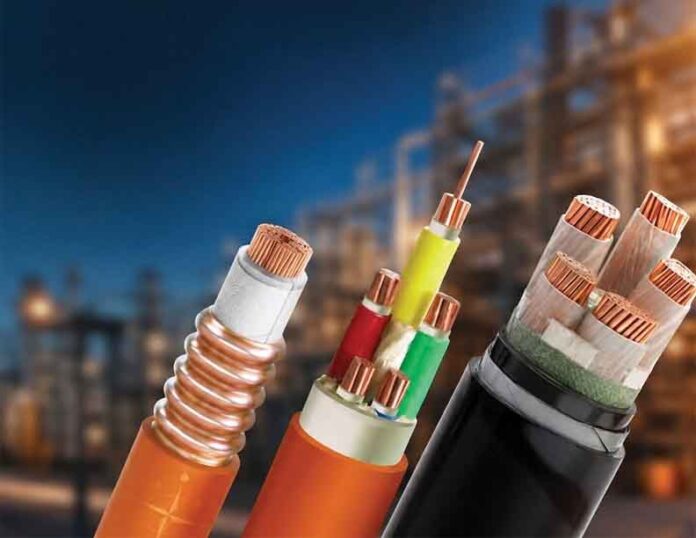
The rapid advancement of electrical power systems, driven by increasing electricity demand, renewable energy integration, smart grids, underground transmission networks, and Electric Vehicle (EV) infrastructure, has significantly increased the performance requirements of modern power cables. Unlike conventional cable systems, modern power networks require cables that can transmit large amounts of electrical energy safely, efficiently, and reliably while ensuring high current-carrying capacity, excellent dielectric strength, superior thermal stability, low dielectric losses, and long service life.
Consequently, traditional Paper Insulated Lead Covered (PILC) cables have been progressively replaced by advanced polymer-insulated cables, particularly Cross-Linked Polyethylene (XLPE) and Ethylene Propylene Rubber (EPR) cables, which provide superior electrical, thermal, mechanical, and environmental performance.
These modern cable technologies have become indispensable for contemporary transmission and distribution systems due to their enhanced reliability, reduced maintenance requirements, and compatibility with underground power networks, renewable energy systems, smart grids, and sustainable electrical infrastructure.
Requirements of Modern Power System Cables
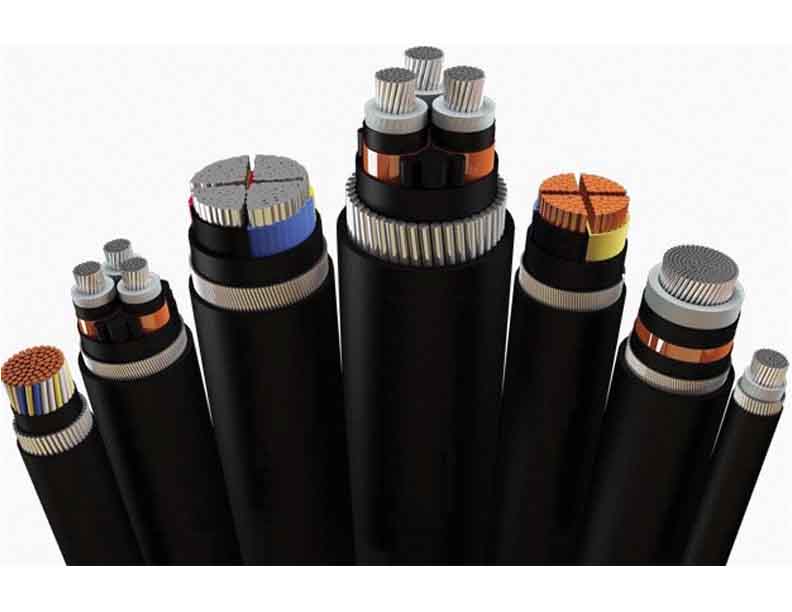
Modern power system cables are designed to meet the increasing demands of reliable, efficient, and sustainable electrical power transmission and distribution. They must possess high current-carrying capacity to safely transmit large amounts of electrical power without excessive heating.
The insulation should have high dielectric strength and excellent electrical properties to withstand high operating voltages and prevent electrical breakdown. To improve transmission efficiency, cables must exhibit low dielectric losses, minimizing energy dissipation and heat generation during AC operation. High mechanical strength and thermal stability are also essential to withstand mechanical stresses, overloads, short-circuit conditions, and varying environmental temperatures.
High Dielectric Strength
Dielectric strength is the maximum electric field that an insulating material can withstand without electrical breakdown. Modern cable insulation materials possess very high dielectric strength, allowing safe operation under medium, high, and extra high voltage conditions.
Typical dielectric strength values are:
- PVC: 20–40 kV/mm
- XLPE: 25–45 kV/mm
- EPR: 20–35 kV/mm
A high dielectric strength enables the cable to withstand transient over voltages, lightning impulses, and switching surges while reducing the probability of insulation failure. Consequently, thinner insulation layers can be used without compromising safety.
High Thermal Stability
Thermal stability refers to the ability of a cable insulation system to maintain its electrical and mechanical properties at elevated temperatures during continuous operation, overload conditions, and short-circuit events.
Modern polymer-insulated cables, particularly XLPE (Cross-Linked Polyethylene), exhibit excellent thermal stability due to their three-dimensional cross-linked molecular structure. Unlike thermoplastic materials, XLPE does not soften or deform at high temperatures.
Typical operating temperatures are:
- Continuous operating temperature: 90°C
- Emergency overload temperature: 130°C
- Short-circuit temperature (5 seconds): 250°C
High thermal stability prevents insulation degradation, minimizes thermal ageing, increases current-carrying capacity, and extends cable service life.
Low Dielectric Losses
In AC power systems, the insulation behaves as a dielectric medium and experiences dielectric losses due to polarization. These losses generate heat and reduce transmission efficiency.
The dielectric power loss is given by:

where:
- w=2πf is the angular frequency,
- C is the cable capacitance,
- V is the operating voltage,
- tan d is the dielectric loss factor.
This characteristic is particularly important in high-voltage underground transmission cables.
Excellent Moisture Resistance
Moisture is one of the primary factors responsible for the deterioration of insulation in underground power cables. The ingress of water into the cable insulation can initiate water-treeing, a phenomenon in which microscopic tree-like channels develop within the insulating material under the combined influence of moisture and electric stress.
Over time, this leads to insulation ageing, an increase in leakage current, a reduction in dielectric strength, and ultimately dielectric breakdown, resulting in cable failure and interruption of power supply. Therefore, effective protection against moisture is essential for ensuring the long-term reliability and safe operation of underground cable systems.
High Mechanical Strength
Modern power cables are designed to provide high reliability, a long service life (30–50 years), and minimal maintenance while offering excellent resistance to moisture, chemicals, corrosion, UV radiation, and electrical ageing. They increasingly use Low-Smoke, Halogen-Free (LSZH) and recyclable insulation materials to improve safety and reduce environmental impact.
Consequently, advanced polymer-insulated cables, particularly XLPE cables, have become the preferred choice for modern power systems, including smart grids, renewable energy networks, HVDC transmission, underground power distribution, and EV charging
Cross-Linked Polyethylene (XLPE) Cable
XLPE cable is the most widely used power cable in modern electrical transmission and distribution systems – because of its excellent electrical, thermal, mechanical, and environmental properties. It uses XLPE as the insulating material, providing high dielectric strength, superior thermal stability, excellent moisture resistance, and long-term reliability through a three-dimensional cross-linked molecular structure.
Owing to its high current-carrying capacity, low dielectric losses, long service life (30-50 years), and minimal maintenance requirements, XLPE cables have largely replaced traditional Paper Insulated Lead Covered (PILC) cables and are extensively used in LV, MV, HV, and EHV power systems, including underground transmission, substations, renewable energy installations, smart grids, and EV charging infrastructure.
Construction of XLPE Cable
An XLPE cable consists of several carefully engineered layers, each designed to perform a specific electrical, mechanical, and protective function. At its core is the conductor, manufactured from high-conductivity electrolytic copper or aluminium in solid, stranded, compact stranded, or segmental form, which efficiently carries electrical current while minimizing resistive (I²R) losses.
The conductor is covered by a semiconducting conductor screen, which eliminates air gaps, provides a smooth electrical interface, equalizes the electric field, and prevents partial discharge. Surrounding this is the XLPE insulation layer, the primary dielectric barrier that offers high dielectric strength, excellent insulation resistance, and reliable electrical isolation between the conductor and earth while withstanding high operating voltages.
An insulation screen, also made of semiconducting material, is applied over the XLPE insulation to ensure uniform electric stress distribution, suppress electrical treeing, reduce insulation ageing, and enhance dielectric reliability.
A metallic screen, consisting of copper tape or copper wires, surrounds the insulation screen to carry fault currents, provide effective earthing, shield against electromagnetic interference, and improve operational safety.
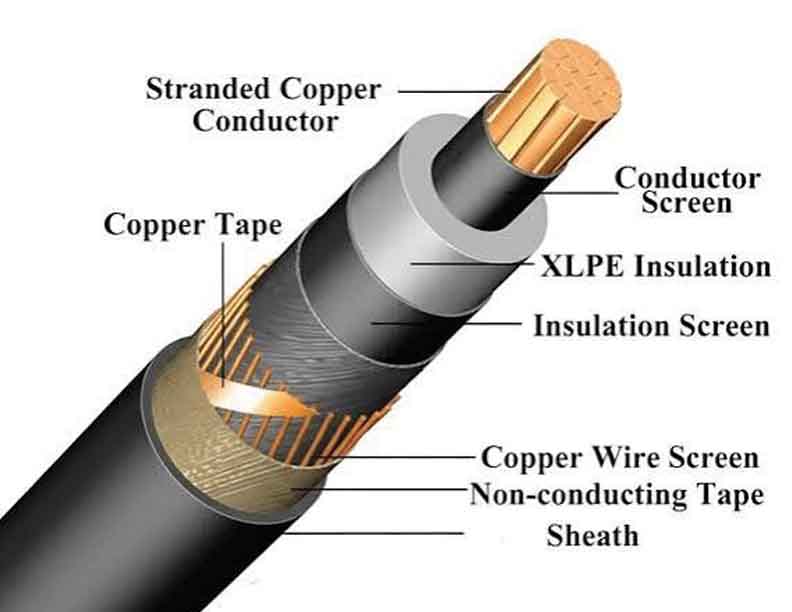
The cable is further protected by an inner sheath of PVC or polyethylene, which provides additional mechanical support and maintains the integrity of the cable assembly. For underground and industrial applications, a steel wire armour, steel tape armour, or aluminium wire armour is incorporated to protect the cable from mechanical impact, compression, tensile forces, rodent attacks, and installation damage.
Finally, an outer sheath, typically made of PVC, polyethylene, or Low Smoke Zero Halogen material, provides excellent protection against moisture, chemicals, corrosion, ultraviolet radiation, abrasion, and harsh environmental conditions while also enhancing fire safety.
The combined action of these layers ensures high electrical performance, mechanical robustness, long-term durability, and reliable operation under demanding service conditions.
Applications of XLPE cables
XLPE cables are widely used in modern power engineering because of their superior electrical, thermal, mechanical, and environmental performance. They are the preferred choice for underground transmission and distribution systems (11 kV to 400 kV and above), especially in urban areas where overhead lines are impractical.
Owing to their high current-carrying capacity, excellent dielectric strength, thermal stability, and mechanical durability, XLPE cables are extensively employed in industrial power distribution, electrical substations, and renewable energy systems such as solar photovoltaic (PV) plants, wind farms, hydroelectric stations, and Battery Energy Storage Systems (BESS).
They also play a vital role in smart grid infrastructure, electric vehicle charging stations, and offshore wind farms, including submarine power transmission, where their outstanding moisture resistance, low maintenance requirements, long service life, and ability to withstand harsh environmental conditions ensure reliable and efficient power transmission.
Consequently, XLPE cables have become an indispensable component of modern electrical transmission and distribution networks.
Ethylene Propylene Rubber (EPR) Cable
EPR cable is a modern polymer insulated power cable that employs Ethylene Propylene Rubber as its primary insulating material. EPR is a synthetic elastomer produced through the copolymerization of ethylene and propylene, often with the addition of a third monomer to enhance flexibility, thermal stability, and resistance to ageing.
Unlike thermoplastic insulation materials, EPR is a thermosetting rubber that retains its elasticity and mechanical integrity over a wide temperature range without softening, cracking, or becoming brittle. The insulation is formulated with ethylene, propylene, cross-linking agents, fillers, antioxidants, flame-retardant additives, stabilizers, and processing aids.
During the vulcanization or cross-linking process, these components form a three-dimensional elastic molecular network that significantly improves the material’s dielectric strength, thermal endurance, mechanical durability, and chemical resistance.
Owing to its excellent electrical insulation, high dielectric strength (20-35 kV/mm), low dielectric losses, superior flexibility, continuous operating temperature of 90°C (up to 105°C for specially formulated grades), and outstanding resistance to moisture, ozone, chemicals, ultraviolet radiation, and weathering, EPR has become one of the most reliable insulation materials for low-, medium-, and high-voltage power cables. Consequently, EPR cables are extensively used in industrial plants, mining operations, marine vessels, offshore oil and gas platforms, renewable energy systems, substations, and underground distribution networks where long-term reliability, flexibility, and environmental resistance are essential.
Construction of EPR cable
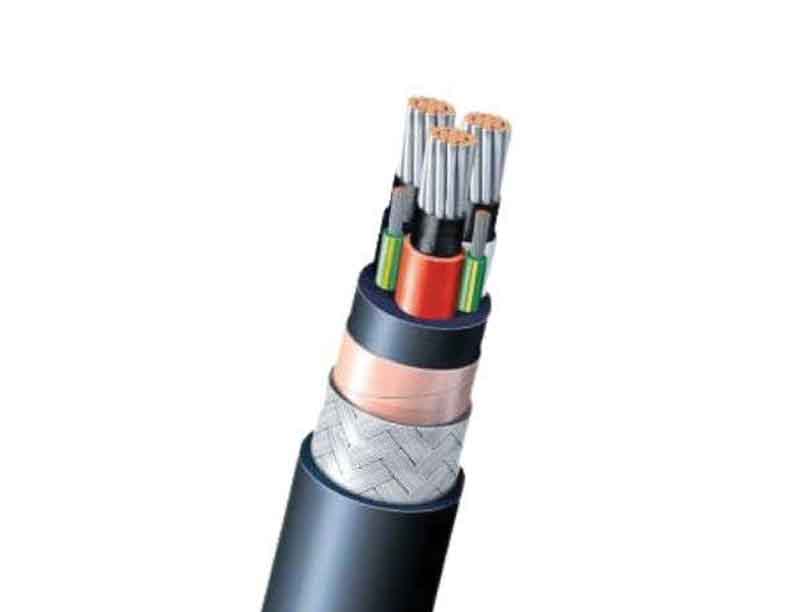
An EPR-insulated power cable consists of several carefully designed layers that collectively provide efficient electrical insulation, mechanical protection, and environmental resistance. At the centre of the cable is a high-conductivity copper or aluminium conductor, available in solid, stranded, or flexible stranded form, which efficiently carries electrical current while minimizing conductor resistance and power losses.
The conductor is covered by a semiconducting conductor screen that eliminates air voids, smooths the electric field distribution, and prevents partial discharge. Surrounding this is the cross-linked EPR insulation, which serves as the primary dielectric barrier, providing high dielectric strength, excellent electrical insulation, thermal stability, and resistance to leakage current.
An insulation screen, also made of semiconducting material, is applied over the EPR insulation to ensure uniform electric stress distribution, suppress electrical treeing, reduce insulation ageing, and enhance long-term reliability. A metallic screen, consisting of copper tape or copper wires, provides a path for fault currents, effective earthing, electromagnetic shielding, and improved operational safety.
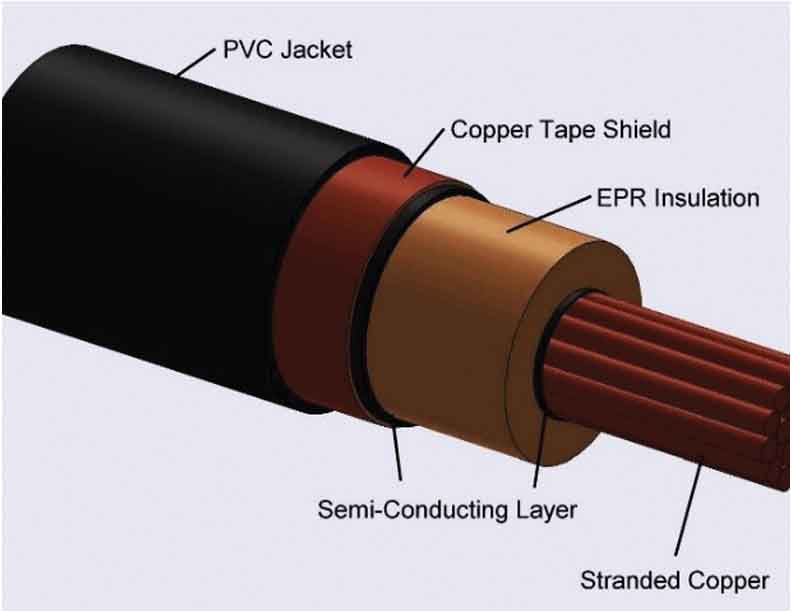
The cable is further protected by an inner sheath made of PVC or polyethylene, which provides mechanical support and moisture protection. Depending on the installation conditions, steel wire armour, steel tape armour, or aluminium armour is incorporated to protect the cable against mechanical impact, compression, tensile forces, and installation damage.
Finally, an outer sheath, manufactured from PVC, polyethylene, or Low Smoke Zero Halogen (LSZH) material, safeguards the cable against moisture, chemicals, corrosion, abrasion, ultraviolet radiation, and harsh environmental conditions, thereby ensuring reliable and long-lasting performance in demanding industrial, underground, marine, and offshore applications.
Application of EPR cables
EPR cables are widely used in modern power systems because of their excellent flexibility, high dielectric strength, superior thermal stability, and outstanding resistance to moisture, chemicals, and harsh environmental conditions.
They are extensively employed in industrial power distribution, marine and offshore installations, renewable energy systems, substations, underground distribution networks, and EV charging infrastructure. Owing to their exceptional flexibility, vibration resistance, and mechanical durability, EPR cables are also ideal for portable equipment and mobile electrical installations operating under demanding conditions.
Conclusion
The advancement of modern power networks has significantly increased the demand for high-performance cable technologies that ensure reliable, efficient, and sustainable power transmission. Advanced polymer-insulated cables, particularly XLPE and EPR cables, have emerged as the preferred solutions due to their superior electrical insulation, high current-carrying capacity, excellent thermal stability, low dielectric losses, and exceptional resistance to mechanical and environmental stresses.
With their long service life, minimal maintenance requirements, and compatibility with underground transmission systems, renewable energy integration, smart grids, HVDC networks, and EV charging infrastructure, these cables play a pivotal role in enhancing the reliability, safety, and efficiency of modern electrical power systems.
As power systems continue to evolve toward greater sustainability and digitalization, high-performance cable technologies will remain fundamental to the development of resilient and future-ready electrical transmission and distribution networks.

Dr. Bidrohi Bhattacharjee holds a Ph.D. in Electrical Engineering from the Indian Institute of Technology (ISM), Dhanbad, India. He earned his B.E. in Electrical Engineering and M.Tech. in Illumination Technology and Design from Jadavpur University, Kolkata, West Bengal, India. Currently he is working as HoD and Assistant Professor at the Electrical Engineering Department in Budge Budge Institute of Technology, Kolkata, India. His research interests span power electronics, electric drives, renewable energy, sustainable development, electric vehicles, and battery charging technologies. He also holds several patents in the areas of power electronics, renewable energy, and electric vehicles.