
India’s power system is undergoing a structural transition. With ambitious targets for non‑fossil capacity and rapidly falling costs of solar and wind, the generation mix is shifting from predictable, dispatchable sources to variable, weather‑dependent resources. Managing this transition requires technologies that can ensure reliability, grid stability and economic efficiency.
Traditionally, intermittency was addressed using fossil‑fuel‑based generator sets (diesel or gas). However, advances in energy storage – both electrochemical and hydro‑mechanical – have created alternatives that are cleaner and, over the system life, often more economical. A life‑cycle cost perspective is therefore essential for informed technology choice.
Intermittency of Renewable Energy: The Core Challenge
Solar and wind generation exhibit: Short‑term variability (seconds to minutes), affecting frequency and voltage. – Diurnal variation, especially for solar PV. – Seasonal patterns, influenced by monsoon and wind regimes.
An effective solution must provide fast response, adequate duration and reasonable cost over its operating life.
Technology Options Overview
Power Generator Sets
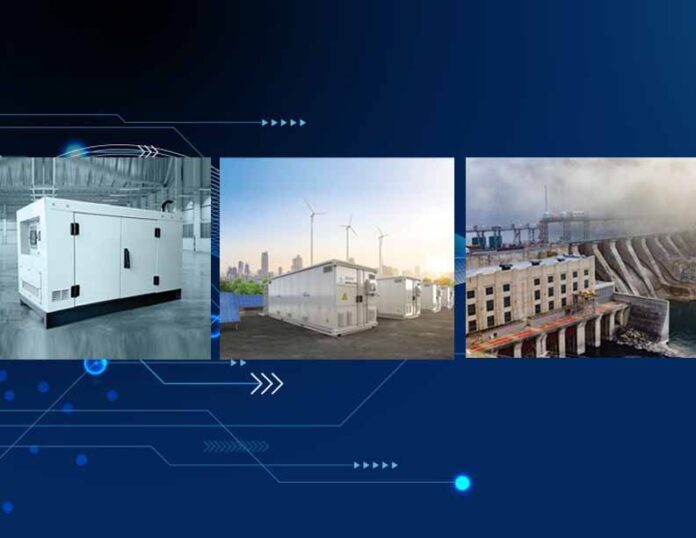
Generator sets, typically diesel or gas‑based, have long been used for backup and peaking. They offer quick start‑up and proven technology but rely on fossil fuels.
Key characteristics: Low initial capital cost – High operational cost due to fuel – High emissions and noise – Limited suitability for frequent cycling.
Battery Energy Storage Systems (BESSs)
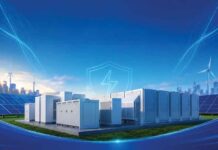
BESS, dominated today by lithium‑ion technology, stores electrical energy and delivers it rapidly when required.
Key characteristics: Very fast response (milliseconds) – Capable of both absorbing surplus RE and supplying deficits – Modular and scalable – Subject to degradation with cycling and time.
Pumped Storage Hydropower (PSH)
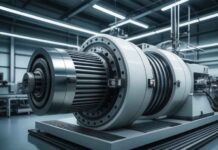
PSH stores energy by pumping water to an upper reservoir during surplus generation and releasing it through turbines during demand.
Key characteristics: Large power and long duration storage – Very long asset life – High site‑specific capital cost – Requires suitable topography and environmental clearance.
Life‑Cycle Cost Framework
Life‑cycle cost considers the total cost of ownership over the asset’s life, including: Capital Expenditure (CapEx) – Operation and Maintenance (O&M) – Fuel or energy input – Component replacement – End‑of‑life costs.
This approach is particularly important for storage technologies where upfront costs may be high but operating costs are low.
Comparative Life‑Cycle Cost Analysis
Capital Cost
Generator sets typically have the lowest upfront cost per kilowatt, followed by BESS. PSH has the highest capital cost due to civil works and long gestation periods. However, capital cost alone can be misleading without considering asset life.
Operating Cost
Generator sets incur high and volatile fuel costs, which dominate their life‑cycle cost. BESS and PSH do not require fuel; their operating costs are largely limited to maintenance and auxiliary power.
Asset Life and Replacement
- Generator sets generally have a life of 10–20 years with major overhauls.
- BESS typically requires battery replacement within 10–15 years.
- PSH assets can operate for 40–80 years with periodic refurbishment.
When costs are spread over useful life, PSH emerges as the most economical option for large‑scale, long‑duration storage.
Relevance to Renewable Energy Integration
Generator Sets and RE
While generator sets provide reliability, their frequent operation for RE balancing leads to high fuel consumption, emissions and cost escalation. They are increasingly viewed as a last‑resort or emergency solution.
BESS and RE
BESS is ideally suited for managing short‑term intermittency, frequency regulation, ramp support and peak shaving. It enables higher penetration of renewables and improves grid quality, especially in distribution networks and microgrids.
PSH and RE
PSH is the backbone solution for bulk energy shifting – storing daytime solar generation for evening peaks or balancing wind over longer periods. From a system perspective, PSH offers the lowest life‑cycle cost for large‑scale renewable integration.
Environmental and Policy Dimensions
From an environmental standpoint, storage solutions significantly outperform fossil‑fuel generator sets. Zero operational emissions, reduced noise and improved air quality align storage technologies with India’s climate and sustainability goals. Policy support, market mechanisms for ancillary services and long‑term planning are critical to unlocking their full potential.
Conclusion
A life‑cycle cost perspective clearly demonstrates that while generator sets may appear economical initially, they are ill‑suited for sustained management of renewable energy intermittency. Battery storage offers flexibility and fast response at competitive costs for short‑duration needs, whereas pumped storage hydropower provides the most cost‑effective solution for long‑duration, large‑scale energy balancing.
As India advances towards a renewable‑dominated grid, the strategic combination of BESS and PSH – supplemented by minimal fossil backup – will be central to achieving reliability, affordability and sustainability in the power sector.

Dr. Bibhu Prasad Rath is a senior power sector professional with over 36 years of experience at NTPC Limited, India’s largest power utility, where he superannuated as Additional General Manager. His expertise spans power generation, electrical systems, sustainability, project appraisal, procurement, and policy formulation. Dr. Rath holds an M.Tech from IIT Delhi and a Ph.D. in Business Administration, and works at the intersection of power engineering, digital technologies, and ESG-driven infrastructure planning. He actively contributes to industry discourse through research, teaching, and professional publications. https://www.linkedin.com/in/bibhu-rath-a1b52622/