
As the nation races toward its ambitious target of 500 GW of non-fossil fuel capacity by 2030, the renewable energy revolution has moved from the margins to the mainstream, fundamentally reshaping commercial strategies, regulatory frameworks, and operational paradigms across the entire value chain.
For energy regulators, power producers, distribution companies, and industry professionals, understanding this transformation is no longer optional. It’s the central narrative defining careers, investment decisions, and policy outcomes for the next decade.
The Regulatory Architecture: Evolution and Strategic Imperatives
Constitutional and Legislative Framework
India’s renewable energy regulatory framework operates within a complex constitutional structure where electricity is a concurrent subject under the Seventh Schedule. The Electricity Act, 2003 serves as the foundational legislation, establishing the Central Electricity Regulatory Commission (CERC) and State Electricity Regulatory Commissions (SERCs) as independent regulators with distinct yet overlapping jurisdictions.
The regulatory landscape has evolved significantly since the National Electricity Policy, 2005 first articulated renewable purchase obligations. The Tariff Policy, 2016 (as amended in 2016) mandated competitive bidding as the default mechanism for renewable energy procurement, fundamentally altering the commercial dynamics that had previously relied on feed-in tariffs determined by regulators.
Renewable Purchase Obligations: The Cornerstone Mechanism
RPOs represent the most consequential regulatory instrument driving renewable energy deployment in India. Under the Electricity Act’s Section 86(1)(e), SERCs are mandated to specify renewable energy purchase obligations for distribution licensees and open access consumers. The Ministry of Power’s RPO trajectory notified in June 2022 established targets rising to 43.33% by 2030, comprising solar, non-solar, and hydropower purchase obligations in specified ratios.
The RPO mechanism’s effectiveness hinges on three critical elements: ambitious targets, stringent enforcement, and functional renewable energy certificate markets. While targets have progressively increased, enforcement remains inconsistent across states. Several distribution companies have accumulated significant RPO deficits, undermining the policy’s credibility. The penalty for non-compliance varies across states, ranging from `0.50 to `2.00 per unit of shortfall, but actual collection of these penalties has been sporadic.
Critical Regulatory Challenges
The regulatory framework faces several structural challenges that require urgent attention. Retrospective changes to policies have created significant uncertainty for developers and investors. Tamil Nadu’s 2019 decision to renegotiate power purchase agreements signed through transparent competitive bidding processes sent shock waves through the investment community, demonstrating that regulatory certainty remains elusive despite two decades of reforms.
The treatment of renewable energy deviations presents another complex issue. Unlike conventional generators, renewable energy projects face inherent variability in output. The CERC’s Deviation Settlement Mechanism Regulations attempt to balance grid discipline with the recognition of renewable energy’s forecasting limitations. However, the commercial consequences of deviations, particularly for wind and solar projects without adequate forecasting tools, can significantly impact project economics.
Interstate transmission charges for renewable energy have witnessed policy oscillations that illustrate the tensions between promoting renewable energy and ensuring cost recovery for transmission infrastructure. The waiver of interstate transmission charges for solar and wind projects, initially provided until 2022 and subsequently extended, involves complex cross-subsidization issues that regulators continue to grapple with.
Techno-Commercial Dynamics: From Megawatts to Margins
The Tariff Discovery Revolution
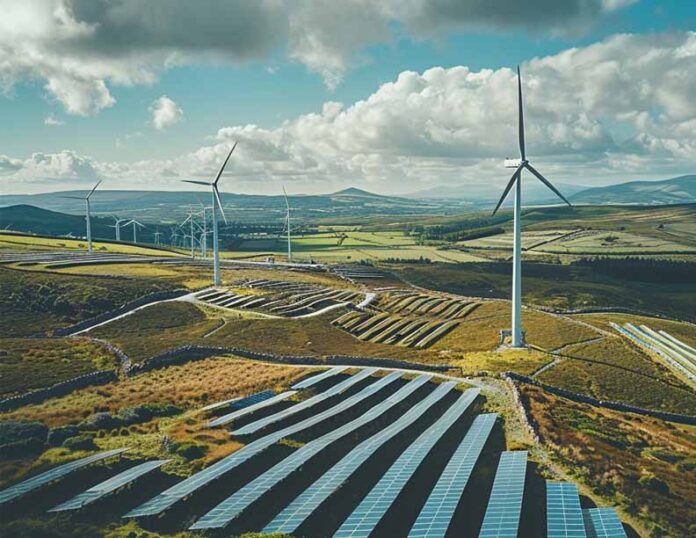
India’s renewable energy sector has witnessed one of the world’s most dramatic tariff declines over the past decade. Solar tariffs have plummeted from over `10 per kWh in 2010 to under `2 per kWh in recent auctions, while wind tariffs have declined from `4-5 per kWh to around `2.50-3.00 per kWh. This extraordinary cost reduction stems from multiple factors: technology improvements, economies of scale in manufacturing, enhanced developer experience, and aggressive competitive bidding.
However, this tariff compression has fundamentally altered commercial dynamics. Developers operate on razor-thin margins, making project execution efficiency and operational excellence non-negotiable. The weighted average cost of capital has become the single most important variable determining competitive positioning, advantaging large, well-capitalized players over smaller developers.
Power Purchase Agreement Structures and Risks
Contemporary PPAs in India’s renewable energy sector typically span 25 years, creating a complex matrix of long-term risks for both generators and distribution companies. The fixed tariff structure, while providing revenue certainty for developers, exposes distribution companies to potential mismatches if their own retail tariffs don’t keep pace with contracted obligations.
Payment security mechanisms have emerged as critical components of bankable PPAs. The payment security fund established by the Ministry of Power, initially with `6,000 crore and subsequently enhanced, provides a liquidity backstop for renewable energy generators facing payment delays from distribution companies. Letter of credit requirements, typically covering three months of billing, serve as the first line of payment protection, though their issuance depends on the financial health of procuring entities.
The “must-run” status granted to renewable energy projects under the Grid Code provides dispatch priority, but this designation creates operational complexities for system operators managing grid stability. During periods of high renewable generation and low demand, distribution companies sometimes resort to backing down renewable energy despite its must-run status, leading to commercial disputes over deemed generation payments.
The Working Capital Challenge
Renewable energy developers in India face a persistent working capital challenge stemming from delayed payments by distribution companies. The average delay period varies across states but can extend to 6-12 months in financially stressed utilities. This creates a fundamental mismatch between debt service obligations, which must be met monthly, and actual cash realization.
The issue is compounded by the change-in-law provisions in PPAs, which theoretically protect developers from adverse policy changes but often lead to protracted disputes over compensation. The introduction of goods and services tax in 2017, customs duty on solar modules, and basic customs duty imposition all triggered change-in-law claims that remain under adjudication years later, tying up developer capital.
Grid Integration: The Technical Frontier
Balancing Variable Renewable Energy
India’s power system, historically designed around dispatchable thermal generation, faces significant technical challenges in accommodating large-scale variable renewable energy. The Central Electricity Authority’s National Electricity Plan acknowledges that achieving 500 GW of renewable capacity will require transformative changes in grid planning and operations.
The concept of minimum technical load, the lowest level at which thermal generators can operate efficiently, becomes critical during high renewable generation periods. In states like Karnataka and Tamil Nadu, during peak solar generation hours combined with moderate demand, the system experiences over-generation conditions requiring thermal plants to back down, often inefficiently.
Grid frequency management, maintained within the narrow band of 49.90-50.05 Hz, becomes more complex with high renewable penetration. Unlike thermal generators that provide inherent inertia to the grid, solar and wind projects traditionally operated as grid-following resources without contributing to frequency stability. The recent CERC regulations mandating primary frequency response capability for renewable projects represent a significant technical advancement, requiring inverter-based resources to provide synthetic inertia.
Forecasting and Scheduling Requirements
The CERC’s forecasting and scheduling regulations mandate renewable energy generators to submit day-ahead generation schedules with progressively tightening accuracy requirements. Wind and solar generators above 10 MW capacity must maintain forecasting errors within specified bands, with commercial penalties for significant deviations.
This requirement has catalysed a specialized forecasting services industry in India. Advanced numerical weather prediction models, satellite imagery analysis, and machine learning algorithms have improved forecasting accuracy to 85-90% for day-ahead predictions. However, the inherent variability of weather patterns, particularly during monsoon transitions and cyclonic activity, continues to challenge even sophisticated forecasting systems.
Transmission Infrastructure: The Missing Link
India’s transmission network expansion has struggled to keep pace with renewable energy capacity additions. The green energy corridors initiative, envisaged to establish high-capacity transmission links from renewable-rich states to demand centers, has experienced implementation delays and cost overruns.
Rajasthan, Gujarat, Karnataka, and Tamil Nadu, states with abundant solar and wind resources, have witnessed grid congestion issues leading to renewable energy curtailment. While the magnitude of curtailment in India remains lower than levels experienced in countries like China during their renewable energy expansion phase, proactive transmission planning is essential to avoid future bottlenecks.
The inter-state transmission system, managed by Power Grid Corporation of India Limited, has incorporated renewable energy zones into its planning frameworks. However, the long gestation periods for transmission projects, typically 4-6 years from conception to commissioning, create timing mismatches with renewable energy projects that can be executed in 12-18 months.
Emerging Business Models and Market Mechanisms
Hybrid and Round-the-Clock Renewable Energy
Recognizing the limitations of standalone solar and wind projects, the market is gravitating toward hybrid configurations combining multiple generation sources with energy storage. The Solar Energy Corporation of India has conducted several auctions for solar-wind-battery hybrid projects, discovering tariffs around `3.50-4.00 per kWh for round-the-clock supply.
These projects fundamentally alter the value proposition of renewable energy. Instead of contributing to grid instability through variability, they provide firm, dispatchable power comparable to thermal generation. The commercial structures, however, are complex, with developers assuming significantly higher execution risks and capital requirements.
The emergence of pumped hydro storage projects, leveraging India’s hydropower potential, offers a complementary approach to battery storage. Projects like the Tehri Pumped Storage Project demonstrate how existing hydropower infrastructure can be retrofitted to provide large-scale grid balancing capabilities.
Green Hydrogen: The Next Frontier
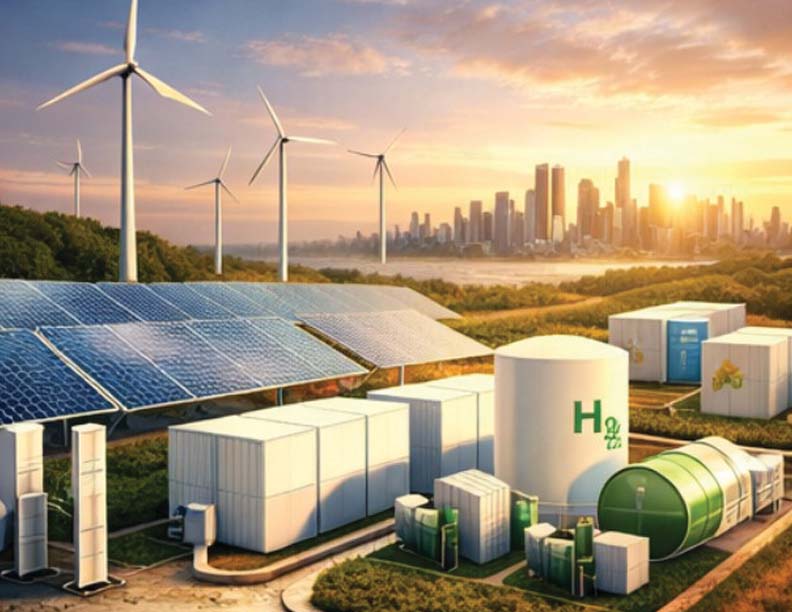
India’s National Green Hydrogen Mission, approved with an outlay of `19,744 crore, envisions producing 5 million tonnes of green hydrogen annually by 2030. This initiative creates a new demand vector for renewable energy, potentially absorbing surplus generation that might otherwise be curtailed.
The techno-commercial viability of green hydrogen depends critically on renewable energy tariffs, electrolyzer costs, and end-use applications. Current production costs of `350-400 per kg need to decline to `200-250 per kg to compete with grey hydrogen in industrial applications. Strategic Interventions for Green Hydrogen Transition (SIGHT) program subsidies aim to bridge this gap during the initial market development phase.
For renewable energy developers, green hydrogen presents both opportunity and complexity. Dedicated renewable energy projects for hydrogen production can be sized for higher capacity utilization compared to grid-connected projects, improving project economics. However, they require integration with electrolyzer facilities and hydrogen off-take arrangements, creating interdependencies across the value chain.
Energy Storage Mandates and Market Creation
The Ministry of Power’s 2023 notification mandating energy storage obligations parallel to renewable purchase obligations represents a watershed moment. Starting at modest levels and ramping up over time, these obligations will create a guaranteed market for energy storage, de-risking early investments in battery storage projects.
The viability gap between energy storage costs and the value it provides to the grid remains significant. While battery costs have declined substantially, project costs of `6-7 crore per MWh for 4-hour duration storage still exceed the commercial returns available through energy arbitrage alone. Stacking multiple revenue streams, capacity payments, ancillary services, and renewable energy firming, becomes essential for financial viability.
Looking Ahead: Strategic Imperatives for Stakeholders
For Regulators: Balancing Act in the Transition
Energy regulators occupy the pivotal position in India’s renewable energy transition, tasked with balancing multiple, sometimes competing objectives: ensuring affordable electricity supply, maintaining utility financial viability, attracting private investment, and advancing environmental sustainability.
Several policy interventions merit priority attention. First, rationalizing the multiplicity of renewable energy charges and exemptions would reduce transaction costs and improve market transparency. The current patchwork of banking charges, cross-subsidy surcharges, and wheeling charges varies dramatically across states, creating complexity that hinders the development of unified national markets for renewable energy.
Second, establishing consistent, predictable frameworks for distribution company resource planning would facilitate long-term contracting. Distribution companies currently face contradictory pressures: mandates to procure specific amounts of renewable energy on one hand, and financial stress limiting their ability to commit to long-term obligations on the other. Regulatory mechanisms that de-link distribution company financial health from renewable energy procurement decisions, such as central government backstopping or pass-through mechanisms for renewable energy costs, could accelerate deployment.
Third, modernizing tariff structures to reflect the changing cost structure of electricity supply will be essential. As renewable energy with low marginal costs becomes a larger portion of the supply mix, traditional tariff structures based on average cost recovery may require revision toward time-of-day pricing or dynamic tariffs that incentivize demand-side flexibility.
For Power Producers: Navigating the Margin Squeeze
Developers and power producers must recognize that the era of high returns from renewable energy projects in India has concluded. The sector has matured into a capital-intensive, low-margin business where competitive advantage stems from cost of capital, execution excellence, and portfolio optimization.
Vertical integration emerges as a strategic response to margin compression. Developers are increasingly moving into manufacturing solar modules and cells, owning wind turbine manufacturing facilities, and developing in-house engineering, procurement, and construction capabilities. This integration captures value that would otherwise accrue to equipment suppliers and contractors, though it requires substantial capital and expertise.
Technology diversification represents another strategic pathway. Companies that can develop expertise across solar, wind, hybrid configurations, and energy storage position themselves to participate in a broader range of opportunities. The ability to optimize hybrid configurations, determining the ideal solar-wind-battery mix for a specific location and off-taker requirement, becomes a source of competitive differentiation.
Data analytics and digital operations are transforming renewable energy asset management. Advanced monitoring systems, predictive maintenance algorithms, and performance optimization tools can extract additional value from assets, incrementally improving returns that matter significantly in a low-margin environment.
For Distribution Companies: From Obligation to Opportunity
Distribution companies often perceive renewable energy procurement as a regulatory obligation rather than a commercial opportunity. This mindset requires fundamental recalibration. As renewable energy costs have declined below thermal power tariffs in many contexts, strategic renewable energy procurement can actually reduce portfolio costs.
However, distribution companies face legitimate challenges in managing renewable energy variability. Investments in forecasting tools, demand-side management programs, and flexible resources become essential components of distribution company strategy in a high-renewable future. The pilot projects for time-of-day tariffs launched in several states demonstrate how distribution companies can begin reshaping load profiles to better align with renewable energy availability.
Participation in medium-term and short-term renewable energy markets allows distribution companies to fine-tune their renewable energy procurement to actual requirements, avoiding the commitment of signing long-term PPAs for uncertain future demand. The development of these markets remains nascent, but forward-thinking distribution companies are engaging with these mechanisms to improve portfolio management.
The aggregation of behind-the-meter resources, rooftop solar, electric vehicle charging infrastructure, and distributed storage, represents a longer-term strategic opportunity. Distribution companies that develop the capabilities to integrate and orchestrate these distributed resources can transform from passive purchasers of power to active managers of a complex, bidirectional energy system.
Addressing the Counterpoint: Skepticism on Renewable Energy Transition
Critics of aggressive renewable energy deployment raise several concerns that warrant serious engagement. The intermittency challenge is real, renewable energy’s variability does create operational complexities and may necessitate backup capacity. However, research from the National Renewable Energy Laboratory and Council on Energy, Environment and Water demonstrates that with adequate transmission infrastructure, geographic diversity of resources, and moderate amounts of storage, grids can reliably operate with renewable energy providing 70-80 percent of annual generation.
Concerns about land requirements deserve attention, particularly in densely populated regions. A 500 GW renewable energy target would require approximately 20,000-25,000 square kilometers, a significant but manageable area given India’s total land mass. Strategic site selection prioritizing wasteland, degraded land, and dual-use configurations like canal-top solar can minimize productive land diversion.
The water consumption argument that renewable energy manufacturing requires significant water must be contextualized against thermal power’s operational water consumption. Lifecycle water consumption analyses consistently demonstrate that solar and wind energy use substantially less water than coal or nuclear generation when accounting for fuel extraction, processing, and cooling requirements.
Conclusion: The Imperative of Informed Engagement
India’s renewable energy transformation represents not merely an energy transition but a fundamental restructuring of a trillion-dollar economic sector. The path forward will be neither smooth nor simple. Technical challenges in grid integration, commercial tensions around payment security and tariff sustainability, and regulatory complexities in federalist governance will continue to test the resilience and adaptability of all stakeholders.
Yet the transformation is inevitable and irreversible. Renewable energy has crossed the threshold from aspirational policy goal to economic imperative. The question confronting regulators, power producers, distribution companies, and industry professionals is not whether to engage with this transformation, but how to position themselves advantageously within it.
Success will require moving beyond narrow, siloed perspectives toward a systems view recognizing the interdependencies across the value chain. Regulators must craft policies that provide investment certainty while maintaining flexibility to adapt to technological change. Power producers must balance aggressive cost reduction with the long-term sustainability of the industry. Distribution companies must evolve from passive procurers to active orchestrators of complex energy systems.
For the ambitious professional, entrepreneur, or policymaker, India’s renewable energy sector offers the opportunity to participate in one of the defining transformations of the 21st century. The winners will be those who approach this transformation with clear-eyed realism about the challenges, genuine expertise in the technical and commercial details, and the courage to make bold bets on an uncertain but inevitable future.
The renewable energy revolution in India has begun. The question is: are you ready?

Karn Pallav is a qualified Mechanical Engineer and MBA (Power) graduate from NPTI Faridabad. He is currently working as Head (Regulatory Affairs) in a leading power DISCOM at New Delhi. He has around two decades of management experience in the entire value chain of the Power Sector. He has vast experience in power utilities dealing with competition issues, tariff determination, licensing and other techno-commercial matters. Being an engineer and Power Manager, he is also interested in technical issues related to Conventional and Renewable Generation, Open Access, parallel license regime, smart grid, AMI, smart meters, cyber-security issues and E-mobility. He has also written six books, namely –
1) The Power of Positive Thinking,
2) Customer Engagement Strategies in Retail Electricity Market,
3) 5 Rules For Life,
4) Whispers of the Heart,
5) Whispers of the Himalayas’,
6) Guardians of the Future: Human Values and Ethical AI.