
Although several global observers have recently stated in their reports that the growth of renewable energy worldwide seems to have slowed down or is slowing down in 2026, this view is not entirely applicable to India; in fact, due to several reasons, our focus has been compelled to shift – and give special importance to some other areas of the power sector.
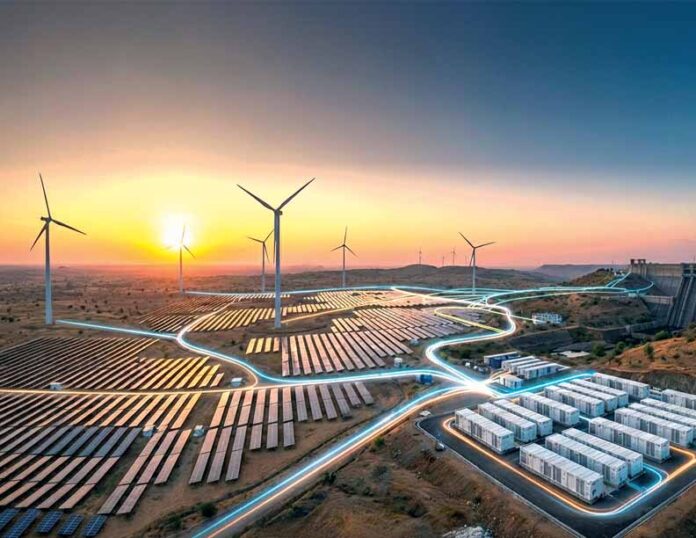
In reality, India is not slowing down in its adoption of renewable energy; it is shifting to a more sustainable, grid-compatible growth model by prioritising storage, addressing grid capacity, and focusing on quality over mere capacity volume.
Especially, as of early 2026, the focus has shifted intensely towards ensuring variable renewable energy sources (like solar and wind) are backed by storage to maintain grid stability, with 50% of installed capacity already sourced from non-fossil fuels by mid-2025.
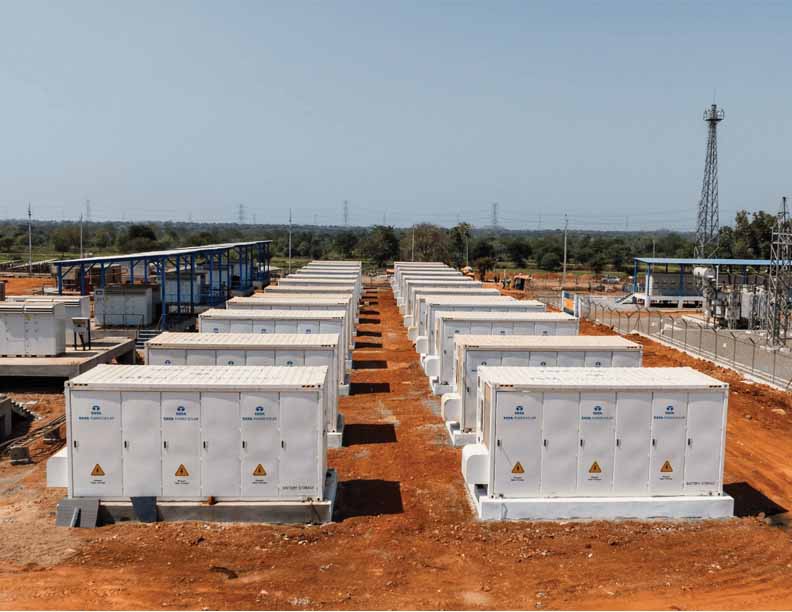
The current situation
Based on late 2025 and early 2026 data, India is not experiencing a total slowdown in installed capacity, but rather a strategic, temporary recalibration of its bidding process due to grid constraints and a shift towards more complex, ‘firmed’ power projects (solar/wind + storage) rather than just solar or wind or their combo projects.
While the pace of new tenders slowed in 2025–2026, our country has achieved record high-capacity additions – and in November 2025 reached 51.5% of its total electricity capacity from non-fossil sources, five years ahead of its 2030 goal.
Premier Renewable Energy Zones (REZs)
India’s Premier Renewable Energy Zones (REZs) are concentrated in the western and southern states, driven by high solar irradiance and wind potential. Key hubs include Rajasthan and Gujarat for solar, and Tamil Nadu and Karnataka for wind, contributing significantly to India’s 200+ GW installed capacity, with major offshore zones identified in Gujarat and Tamil Nadu. These zones have been identified based on multi-criteria analysis (MapRE) for cost-effective and environmentally sustainable development.
- Western Region (High Solar & Wind): Rajasthan and Gujarat dominate due to vast, arid land and high solar capacity factors.
- Southern Region (High Wind & Hybrid): Tamil Nadu, Karnataka, and Andhra Pradesh are critical, particularly for wind energy.
- Offshore Zones: The Ministry of New and Renewable Energy (MNRE) has identified 8 zones each in Gujarat and Tamil Nadu for offshore wind development, with potential in the Gigawatt (GW) scale.
- Key Solar Hubs: Major solar parks, such as Bhadla Solar Park (Rajasthan) and Pavagada Solar Park (Karnataka), constitute significant zones.
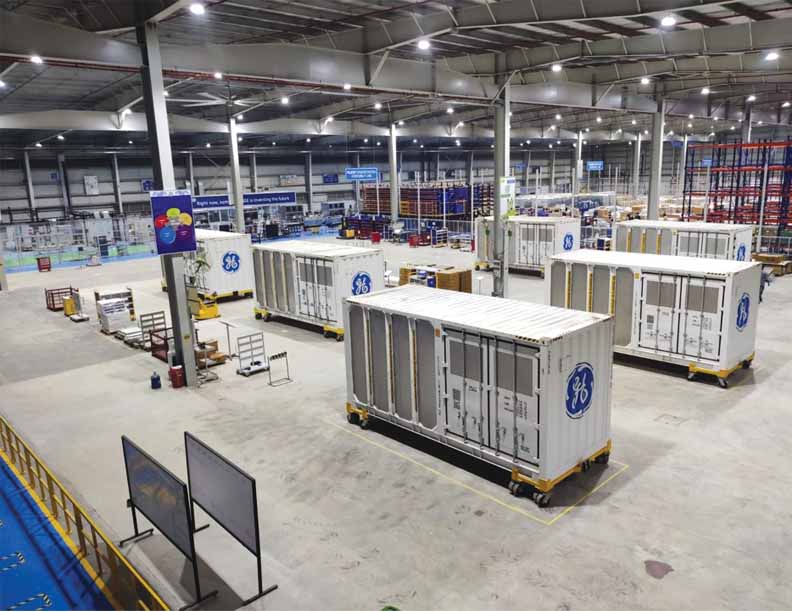
Image Courtesy: GE Renewable Energy
How is the transformation occurring now?
- Shift in Focus: The government has intentionally reduced the number of new renewable energy tenders from 55 GW+ in previous years to roughly 15-25 GW annually. This is due to a ‘demand-supply mismatch’, where generation capacity was outpacing the grid’s ability to absorb it.
- Grid and Infrastructure Constraints: A significant backlog of awarded projects without signed Power Purchase Agreements (PPAs) has led to a focus on strengthening transmission infrastructure.
- Record Growth in 2025: Despite the lower volume of new tenders, 2025 saw the highest-ever renewable capacity addition, with over 44 GW added by November 2025, nearly double the previous year.
- Shift to Storage: The focus has moved from pure solar or wind or solar-wind combo to ‘Round-The-Clock’ (RTC) power, driving high demand for storage-linked tenders.
Glimpses of storage-linked tenders
Recent energy storage-linked tenders in India, particularly from late 2025 through early 2026, show a strong trend toward combining solar projects with Battery Energy Storage Systems (BESSs) and Pumped Storage Projects (PSPs) to ensure on-demand power.
- Gujarat (GUVNL): They issued a tender for 670 MWh (335 MW x 2 hrs) of BESS to be set up on a Build-Own-Operate (BOO) model, reported in late December 2025.
- SECI 1000 MW FDRE Tender: Solar Energy Corporation of India (SECI) issued a tender for 1000 MW of Firm and Dispatchable Renewable Energy (FDRE) from existing projects, requiring storage to manage power supply.
- Odisha BESS Tender: SECI also issued a tender for 125 MW/500 MWh (4-hour) standalone BESS in Odisha with VGF (Viability Gap Funding) support.
- Rajasthan Solar + BESS: Rajasthan Solar Park Development Co. Ltd (RSDCL) launched a tender for 2,450 MW solar projects with 1,600 MW/6,400 MWh BESS at Pugal, Bikaner.
- SJVN 1200 MW Tender: SJVN invited quotations for 1200 MW ISTS-connected solar projects with 600 MW/2400 MWh ESS.
- Pumped Storage Project (PSP): SECI issued a tender for 1 GW/8 GWh of pumped storage capacity in December 2025.
India’s target for storage-linked RE development
India aims to achieve 500 GW of non-fossil fuel energy capacity by 2030, necessitating massive, storage-linked, and reliable renewable energy infrastructure. Our key targets include developing over 60 GW of energy storage capacity by 2030 (comprising BESS and pumped hydro), 100 GW of pumped storage by 2035-36, and 2,380 GWh of storage by 2047.
Glimpses of India’s key targets
- Capacity Target: 60.63 GW of total energy storage required by 2029-30.
- Components of Storage: The 2030 target includes 18.98 GW from Pumped Storage Projects (PSPs) and 41.65 GW from Battery Energy Storage Systems (BESSs).
- Long-Term Goal: A capacity of 2,380 GWh is projected by 2047 to support a net-zero grid.
- Pumped Hydro Focus: A, 2026 roadmap targets 100 GW of pumped storage by 2035–36 to ensure grid stability and provide long-duration storage.
Measures in force
- Mandatory Storage: The government has introduced an energy storage obligation for distribution utilities, starting at 1% in 2023-24 and rising to 4% by 2029-30.
- Hybrid Projects: Solar projects are increasingly required to include at least two-hour battery storage.
- Investment Focus: Significant investments are being aimed at integrating 66.5 GW of renewable generation, with 43.6 GW of BESS specifically planned in Renewable Energy Zones (REZs).
- Growth Path: Annual renewable capacity additions have been planned at 50 GW for the next 5 years to meet the 500 GW goal.
What are our Indian companies doing for energy storage?
Indian companies have been rapidly progressing to build their energy storage capacity to support renewable energy integration. Companies like Tata Power, Reliance Industries, and Adani Green Energy are leading with large-scale battery and pumped-hydro projects. Key players focusing on Battery Energy Storage Systems (BESSs) include Amara Raja Batteries, Exide Industries, Waaree Energies, and Cummins India.
Large scale or utility storage
- Tata Power: This company is investing in major pumped hydro projects (1800 MW in Shirawta, 1000 MW in Bhivpuri) and partnering with ONGC for BESS.
- Reliance Industries (RIL): This company is investing heavily in battery storage manufacturing.
- Adani Green Energy: This company is developing solar-plus-storage projects to manage renewable intermittency.
- Reliance Power: This company has won a 930 MW solar-plus-storage project.
- JSW Energy & NHPC: They are actively involved in large-scale storage projects.
Battery manufacturing & BESS solutions
- Amara Raja Batteries & Exide Industries: They are transitioning from traditional batteries to advanced Lithium-Ion (Li-ion) storage solutions.
- Waaree Energies: This company manufactures low-voltage and lithium-ion ESS for solar integration.
- Cummins India: Recently, this company launched BESS for clean energy applications.
- Tata AutoComp Gotion Green Energy Solutions: This company operates a 9 GWh BESS manufacturing plant in Pune.
- Luminous Power Technologies: This company provides lithium-ion-based ESS for home and small business applications.
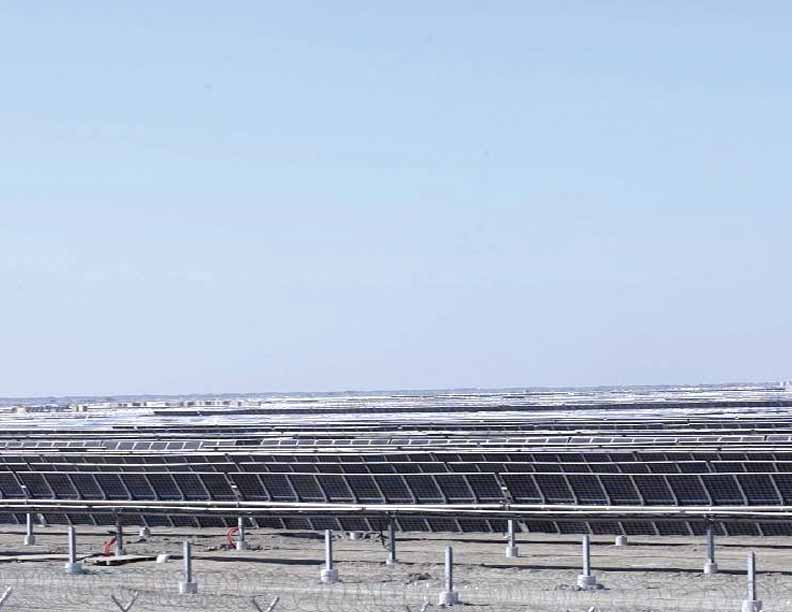
Image Courtesy: KP Group
Emerging players & technology providers
- Oriana Power & Gensol Engineering: They are scaling up BESS projects.
- KP Group & Invergy Power Supply: They are focused on specialised BESS solutions.
- Bharat Heavy Electricals Limited (BHEL): It is developing in-house BESS technology.
All these companies are heavily supported by government initiatives aimed at fostering local manufacturing of battery cells, modules, and full-stack energy storage systems to enhance grid stability.
Before I leave
Our Ministry of New and Renewable Energy (MNRE) has been relentlessly supporting the growth of the RE sector in the country. Last year, while inaugurating one of the India’s Largest Battery Energy Storage Systems (BESSs) Manufacturing Facilities in Bengaluru, Union Minister for MNRE, Pralhad Joshi said, “I believe that India can become a global manufacturing hub for BESS, from batteries and inverters to software and control systems. Between 2022 and 2032, India has plans to add over 47 GW of battery storage capacity, with a total investment of around `3.5 lakh crore.” This reflects our prudent government’s view on properly nourishing the RE sector.
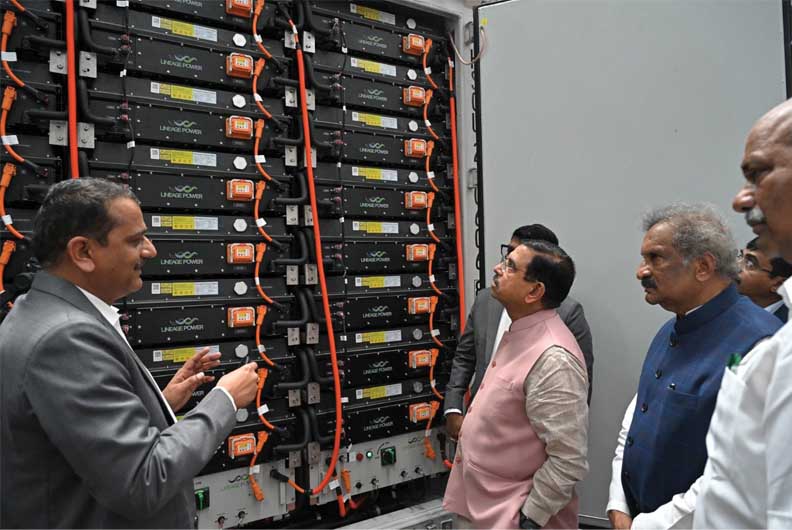
Image Courtesy: PIB
India’s rapid expansion of renewable energy, which reached over 253 GW by November 2025 and constitutes nearly 50% of installed capacity, has made the urgent deployment of Energy Storage Systems (ESSs) a critical, non-negotiable requirement for grid stability.
Thus, right at this moment, we must stringently focus on the Central Electricity Authority’s (CEA’s) projections, i.e., we should build up roughly 230 GWh to 411 GWh of energy storage capacity to manage the intermittency of solar and wind energy.
By P. K. Chatterjee (PK)