
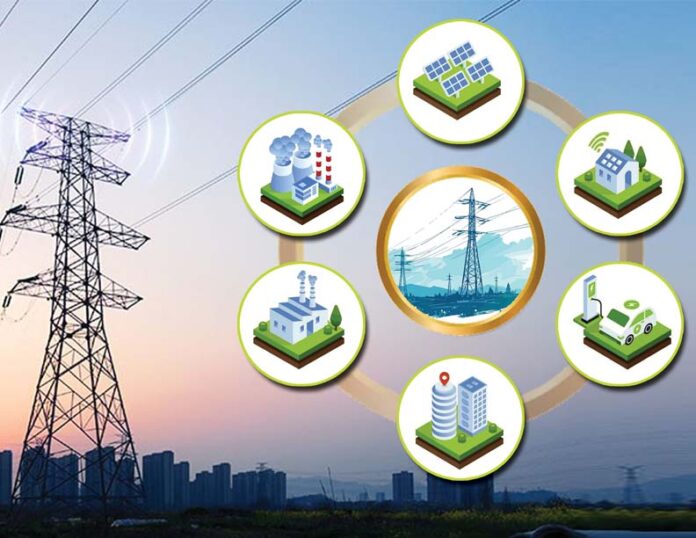
In the last twenty years, India has reached amazing success in the power system. Generation power plants have enhanced long life – and electricity is distributed to nearly all houses – and renewable energy has played the biggest role in the generation. In spite of these attainments, the quality and reliability of power supply become continuous issues. Domestic, commercial and industrial consumers are affected by repeated outages, unstable voltage, overtones, distribution system suffers these problems. Simultaneously, photovoltaic system, electric vehicle charging station, battery storage, power electronics launch bidirectional power flow, load behaves dynamically which makes the grid operation complex. Conventional grid is incapable of solving these problems.
A smart grid is an advanced network of transmission line which works together with digital technologies and power system to respond quickly to our 21st century demand for electricity. It plays crucial role in improving both reliability and power quality in our power system by converting conventional grid into flexible and smart grid.
Reliability problems in Our Power System
Reliability means to the capability of the power system to supply electricity continuously without disturbance. There are multiple factors for the reliability problems in our country, feeders and transformers are overloaded due to rapid growth of city and industry.
- Heavy fault occurs in overhead distribution lines.
- Faults are detected and resolved manually.
- There are some weather issues like cyclones, heatwave and monsoon issues.
- There is lack of practical clarity of distribution networks.
Reliability is commonly measured by using indices such as SAIDI (System Average Interruption Duration Index) and SAIFI (System Average Interruption Frequency Index). Conventional grids depend mostly on manual inspection and complaints of customers to detect faults, which results in long time to resolve. Smart grids resolve these in short time duration through self-monitoring and self-healing.
Technologies Used in Smart Grid for Enhancing Reliability
Advanced Metering Infrastructure (AMI)
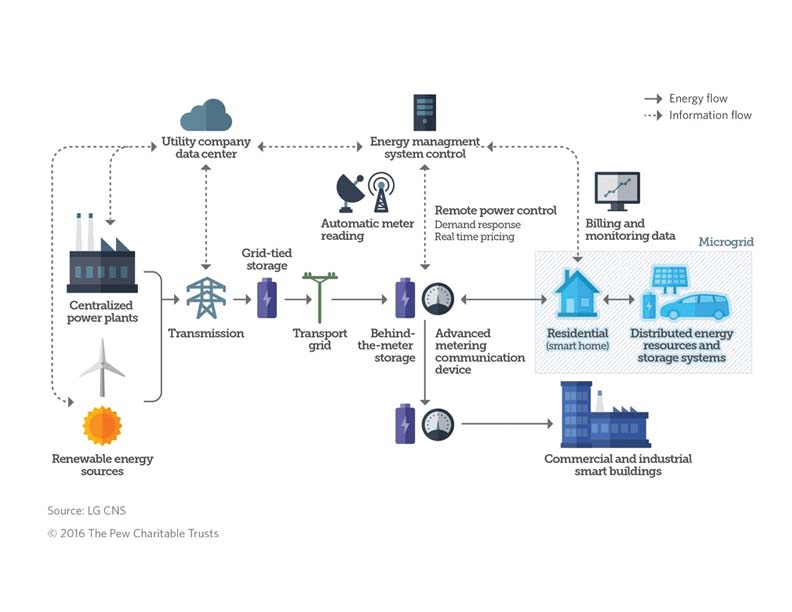
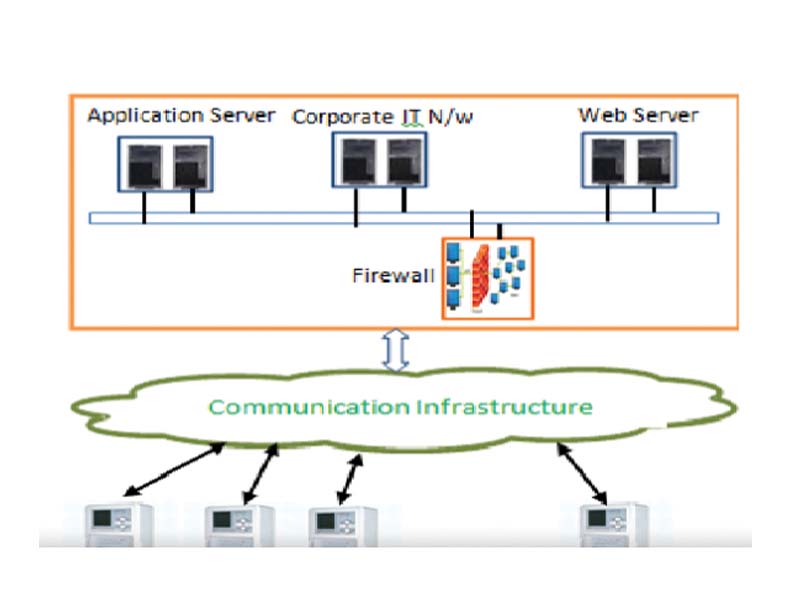
Advanced Metering Infrastructure makes the pillar of smart grids. Smart meters make two-way communication between usage and consumers, providing real-time data on energy consumption, voltage levels, and outages.
AMI makes:
- Quick detection of black out
- Analysing energy consumption accurately
- Restoration of the service faster
- Enhancing billing accurately
- Smart meters motivate energy alertness and to take part in demand response programs.
Distribution Automation
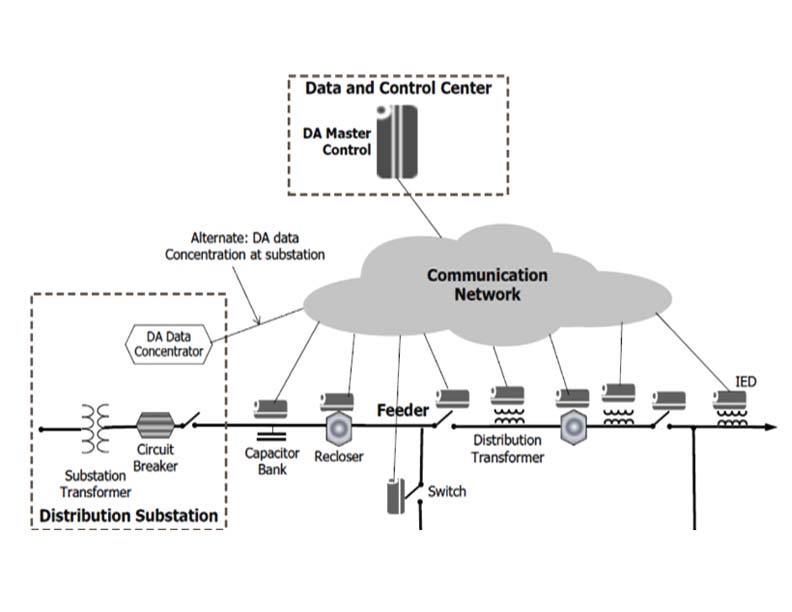
Distribution automation involves the deployment of automated switches, reclosers, and communication network along feeders. These devices coordinate with control systems to separate faulty parts and restore supply to healthy parts of the network automatically.
Advantages include:
- Reduced duration of black out
- Enhanced fault detection
- Improved reliability of feeder
Automated restoration mostly enhances reliability indices and reduces dependence on manual interruption.
SCADA (Supervisory Control and data acquisition) System
SCADA systems provide real-time clarity of grid parameters such as voltage, current, and breaker status. When integrated with sensors and Intelligent Electronic Devices (IEDs), SCADA makes dynamic grid operation. Early detection of abnormal conditions allows operators to take corrective actions before faults turn into big outages.
Self-Healing Grids
A self-healing grid can automatically detect faults, explain their effects, and take appropriate action without human interruption. This capability is particularly valuable in India’s large and complex distribution systems, where early and quick fault management can enhance supply reliability.
Power Quality Problems in Our Country
Power quality means to maintaining voltage, frequency, and waveform within specified limits. power quality problems occur in our country due to:
- Voltage drops due to long radial feeders.
- High penetration of nonlinear loads like inverters and variable-speed drives
- Demands are fluctuated due to variable loads
- Weak reactive power compensation, voltage sags and swells
- Harmonics and waveform distortion
- Flicker
- Low power factor
Role of Smart Grids in Power Quality Improvement Voltage
Regulation and Reactive Power Management
Smart grids apply smart voltage regulators, on-load tap changers, capacitor banks, and Flexible AC Transmission System (FACTS) devices to maintain voltage within permissible limits. Automated reactive power control improves voltage stability and reduces transmission and distribution losses.
Advanced Self-Monitoring using Sensors
The widespread use of power electronic devices, renewable energy inverters, and EV chargers has increased harmonic distortion in power systems. Smart grids do continuous self-monitoring using advanced sensors to reduce harmonic distortion. Depending upon real-time data, active filters and control strategies can be implemented to reduce harmonics and maintain waveform quality.
Co-Ordination with Distributed Energy Resources
Distributed Energy Resources (DERs) like rooftop solar PV, wind turbines, and battery storage can either support or degrade power quality, depending on their control. Smart grids ensure coordinated operation of DERs through advanced control algorithms, allowing them to improve voltage regulation, frequency and to mitigate peak loading.
Demand and Load Management
Demand responding programs makes utilities to influence consumer load patterns during peak hours. By reducing peak demand, smart grids prevent voltage dips and frequency deviations. In India, demand response is particularly useful for managing seasonal peaks caused by air-conditioning loads and agricultural pumping.
Smart Grids and India’s Energy Transition
India’s commitment to renewable energy and electric mobility makes smart grids essential. Renewable sources are variable in nature, while EV charging introduces new load dynamics. Smart grids provide the intelligence required to manage these changes while maintaining reliability and power quality. Government initiatives such as smart meter deployment and pilot smart grid projects across several states demonstrate a strong policy push toward grid modernization.
Challenges
- Insite of their advantages: smart grids face several challenges in India:
- Investment costs are high
- Risk of Cybersecurity and data privacy
- Combination of legacy infrastructure with modern technologies
- Skilled men power and proper training is required
Handling these challenges requires supportive policies, standardization, capacity building, and collaboration among utilities, regulators, and technology providers.
Future point of view
As digitalization accelerates, smart grids will evolve further with the integration of artificial intelligence, machine learning, and advanced analytics. Predictive maintenance, improved decision-making, and even more improvements in power quality and dependability will be made possible by these technologies. The future smart grid ecosystem will also mostly depend on microgrids, energy storage, and vehicle-to-grid technology.
Conclusion
Smart grids represent a pattern shift in the operation and management of power systems. They play a crucial role in enhancing power quality and reliability by mitigating and improving fault management, mean while ensuring better power quality through advanced monitoring and control in India. As India moves toward a sustainable, flexible, and consumer-friendly power sector, smart grids will be a centrepiece of future electricity architecture.

Manaswini Nahak is an Assistant Professor at the Department of Electrical Engineering in Roland Institute of Technology, Berhampur, Odisha.

Dr. Sarat Kumar Sahoo is a Professor at the Department of Electrical Engineering in Parala Maharaja Engineering College, Berhampur, Odisha.