
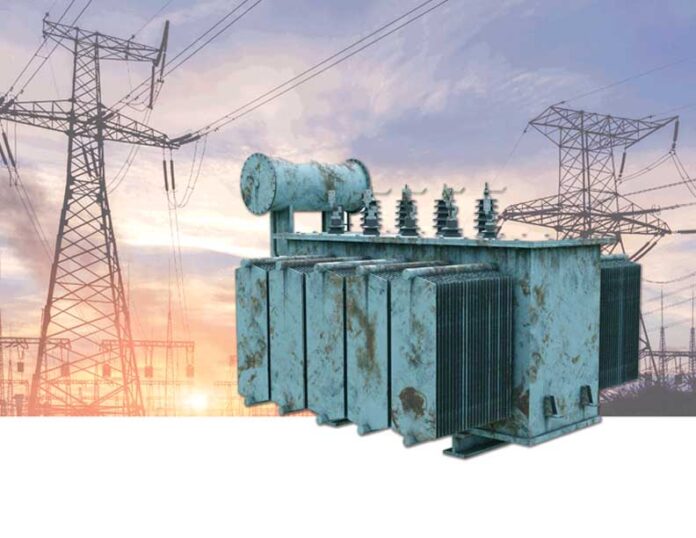
The life-expectancy of Power Transformers, is assumed to be 35-40 years. However, there is no literature expressively quantifying the same. Unforeseen failures of old transformers in the Grid-network result into system disturbance or cascade trippings. Therefore, it is of utmost importance to obviate such situations to safe-guard the grid-system from the aforesaid disturbances and losses.
M.P. Power Transmission Utility has guidelines for selection of all aging transformers for assessing the remaining life expectancy thereof.
In-view of above, it is essential to assess the remaining serviceable life of the transformers for rendering faithful service which have rendered continuous service over 20 years in a Grid system and to timely replace them with new ones, if found unserviceable.
Following criteria was adopted by the M.P. State Transmission Utility for selection of all such aging transformers for assessing the health-status thereof;
- Which had rendered continuous service for more than 20 years.
- Deterioration trend in IR and PI values, observed.
- DGA showed increasing trend in the key gases and also increasing trend in CO and CO2 gases with reference IEC 60599.
- Percentage of relative water saturation in the transformer oil: > 15 %,
- DP value <250.
This article is to narrate the methodology to assess the health-status of the aging transformers. While assessing the same, if health-status of any of them was found deteriorated and approaching towards end of its life, was recommended for removal from service and to be replaced with a healthy transformer.
Causes for deterioration of solid and liquid insulations
Deterioration in overall insulation is attributed to the following:
- Improper monitoring and maintenance of the breathing system.
- Increase in moisture contents in the oil above 20 ppm.
- Continuous over-loading of transformers, fall in DP value nearing 200.
- Sustaining many through faults conditions.
- Sustaining switching and lightening surges.
- Improper/irregular maintenance practices.
Percentage of water saturation in oil
The quantity of dissolved and dispersed water in mineral oil is significant for two reasons:
- Presence of polar water molecules in the mineral oil adversely affects the dielectric properties of the mineral oil.
- The amount of moisture in the oil can be reflective of amount of moisture in the paper insulation. The solubility in mineral oil is temperature-dependent. Therefore, a statement as mg/kg of water in the oil without temperature information would not be adequate.
The calculation of percentage of water saturation is [(mg/kg water in insulating liquid)/(mg/kg of water in insulating liquid at saturation)] × 100, in other words (ppm of water/So) has greater significance as it indicates the possibility of free water formation in the oil.
Free water in oil
- ‘Free water’ exists in the form of droplets if the water content in oil exceeds the saturation level. In cellulose materials, free water may exist in macropores. In addition, following are the basic reasons for increasing the water contents in oil:
- Residual moisture in the thick structural components not removed during factory drying-out or moistening of insulation surface during assembly.
- Inhaling atmospheric air through fused silica-gel while oil volume shrinks during cold and moist nights and during off-peak hours of the day, resulting into poor dielectric strength of oil.
- Aging (decomposition) of cellulose and oil.
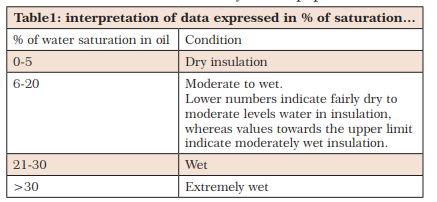
- Table 1 of IEEE Std 62-1995 gives general guidelines for interpretation of data expressed in % of water saturation in oil vis-à-vis condition of dryness of paper insulation.
Formula for solubility of water in oil and specimen calculation
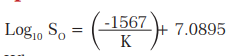
Where:
- SO is the solubility of water in mineral oil.
- K is the absolute temperature in Kelvins (OC+ 273).
- °C is the oil temperature in Celsius at the time of sampling

Specimen calculation for % saturation
Water content = 16 ppm,
Temperature of top oil = 30 deg. C
Temperature in Kelvin = 30 deg. C + 273 = 303 K,
Log10 So = (-1567/303)+7.0895 = -5.1716 +7.0895 = 1.9197.
So = 101.9197.
So = 82.775,
Therefore % saturation = (16/82.775) x 100 = 19.32%
Solid insulation in the transformers
The Kraft paper is a major solid dielectric material used for conductor wrappings, barrier boards, spacers and clamps (in compressed or resin-bonded forms). The major constituents of the soft wood craft paper are cellulose (80%), hemi cellulose (12%) lignin (about 8%) and some mineral substances. The structural formula of cellulose is as shown in the Fig. 1.
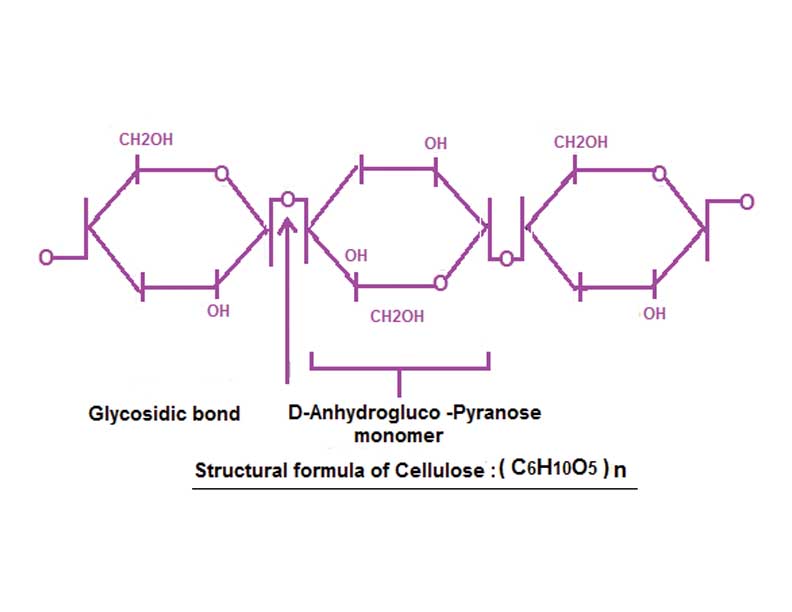
Three most common degradation factors for cellulose have been identified and they are thermal, oxidative, and hydrolytic. When cellulose is subjected to a temperature of 200°C, the beta linkages (glycosidic bonds) tend to break and open the glucose molecule rings and thereby lose mechanical strength. The by-products of this reaction are;
- Free glucose molecules
- Moisture
- CO & CO2
- Organic acids
Presence of oxygen promotes oxidation and cellulose molecules have a tendency to oxidise. The reaction of oxidation on the cellulose causes the glycosidic bond to weaken and it can cause scission of the cellulose molecule chain. The oxidation of hydroxyl produces carbonyl (aldehydic) and carboxyl (acidic) compounds. Moisture is also a by-product of this oxidative reaction.
The moisture produced as explained above is also transferred to the oil.
Furans
As stated earlier, the byproducts of paper insulation (cellulosic insulation) degradations are;
CO, CO2, moisture, organic acids, and free glucose molecules.
The free glucose molecules further degrade into aromatic components known as Furans.
Following are the Furans,
- 5H2F (5-Hydroxymethyl-furaldehyde) is an unstable compound and can decompose further into other furans as follows:
- 2-Furaldehyde (2FAL)
- 5 Methyl-2-Furaldehyde (5M2F)
- 2-Acetyl furan (2ACF)
- Furfuryl alcohol (2-FOL).
However, all the above components except 2 FAL are not very stable under operating conditions in the transformers. Their life-span is a few months only, thereafter they degrade into 2 FAL which remains stable for several years. The molecular structure of 2-Furaldehyde (2FAL).
Mechanical properties of insulating paper- evaluation thereof
The mechanical properties of insulating paper can be established by direct measurement of its tensile strength or Degree of Polymerization (DP). These properties are used to evaluate the Life expectancy of a Transformer. Direct measurement thereof is not practically possible for the in-service transformers as analysis of paper-insulation for its DP value requires removal of a few strips of paper from the aging Transformers.
To overcome the constraint mentioned earlier, the learned scientists of Transformer- Chemistry have innovated that “when cellulose molecules de-polymerise (break into smaller lengths or ring structures) the chemical compounds known as furans are formed” as stated earler.
Finally, all the other Furan components degrade to Furan:2-Furaldehyde (2FAL), which remains as stable DP for years together.
Formula-DP Vs. furan contents
Some Scientists of Transformer Chemistry had innovated equations to calculate DP value with the help of quantity of 2 FAL in ppm or ppb found in the mineral oil in the serving transformer. However, Chendong’s formula for evaluating DP with furan(2FAL) was found suitable.
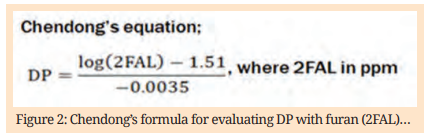
Note:
i. ppm = Parts per million = 1/106 ,
ii. ppb = Parts per billion =1/109,
iii. 1ppm =1000 ppb.
Out of graphical representation of furan Vs. DP of all the scientists. Chengdong’s curve was largely accepted.
Remnant-life expectancy of transformers in % with reference to furan (2 FAL) and DP value
Since, it is difficult to obtain paper samples for evaluation of the DP from in-service EHV Transformers, the method of estimation of the DP and the remaining/residual life of the Transformers is assessed, by measuring the Furan content 2 FAL (2-Furaldehyde) in ppm/ppb in the Transformer oil of the transformers.
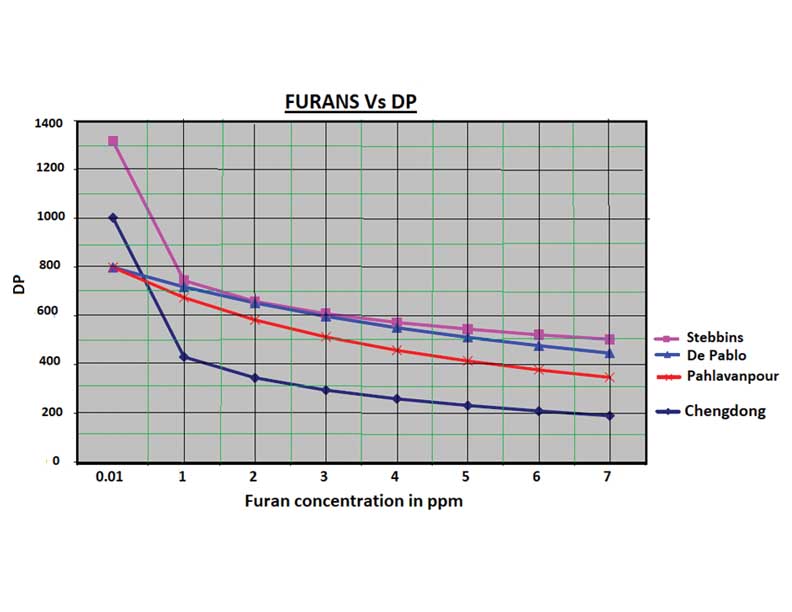
Percentage remnant life of the transformers with respect to DP value is as shown in the table 2, it is almost in line with the Chengdong’s model.


Criteria for selection of old transformers for evaluating % remanant life expectancy
- Transformers that have served for more than 20 years.
- Deterioration in IR and PI values.
- DGA showed increasing trend in the key gases and also increasing trend in CO and CO2 gases with reference IEC 60599.
- Water saturation in oil if found >*15 %.
- DP value <250.
*Note: this figure is selected looking at Table 1, indicating guidelines for interpretation of % saturation of water in oil.
Selection of transformers for evaluating % remnant life expectancy
A sample list of a few old transformers that have rendered continuous service for more than 20 years with the calculated % saturation of water in oil at sampling temperature is shown in Table 3.
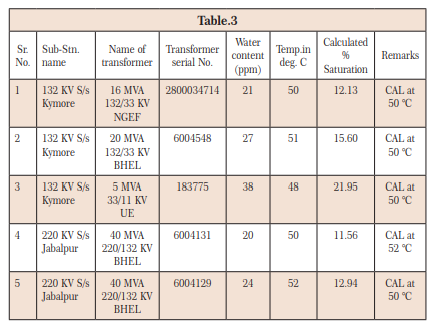
Case study 1; (Please refer Table: 3)
The transformer in Sr, no.2; 20 MVA 132/33 kV BHEL transformer bearing Sr. no.6004548 at 132 kV S/S, Kymore.
Calculation of % of solubility of water in oil:
Log10 So = (-1567/K) +7.0895,
Where;
- So is the solubility of water in mineral oil,
- K is the absolute temperature in Kelvins (°C + 273),
- °C is the oil temperature in Celsius at the time of sampling,
- % saturation = (ppm/So) x 100,
- Oil temperature = 50 °C and moisture content in the oil 27 ppm,
- K = 50 + 273 = 323 °K
Therefore, Log10 So = (-1567/323) +7.0895 = 2.2382
So = 102.2382 = 173.06135,
Therefore, % saturation = ppm/So x 100 = (27/173.06135) x 100 = 15.601 %
Since *15.601% > 15 %, this transformer is identified for removal from the system.
Furan Analysis Report
It’s 2 FAL was reported to be 3570 ppb, the DP is around 260 as per curve at figure 4 i.e., the % remnant life is 19%.
Recommendation
- Since % saturation of water in oil was 15.601%,
- % Remnant life found to be 19% in the range of high risk of failure.
Looking to above, this Transformer was strongly recommended for removal from the System.
Case study 2; (Please refer Table: 3)
Transformer at Sr.no.5; 40 MVA, 220/132 kV, BHEL Transformer bearing sr.no.6004129 at 220kV S/S Jabalpur.
Calculation of % of solubility of water in oil:
Log10 So =(-1567/K) +7.0895,
Where;
- So is the solubility of water in mineral oil,
- K is the absolute temperature in Kelvins (°C + 273),
- °C is the oil temperature in Celsius at the time of sampling,
- % saturation = (ppm/So) x 100,
- Oil temperature = 520C and moisture content in the oil 24 ppm,
- K = 52 + 273 = 325 0K
Therefore, Log10 So = (- 1567/325) + 7.0895 = 2.268
So = 102.268 = 185.353,
Therefore, % saturation = ppm/So x 100 = (24/185.353) X 100 = 12.94%
Therefore, % saturation is within the bench mark of 15%.
Furan Analysis Report
Its 2 FAL was reported to be 1520 ppb, the DP is around 380 as per curve at figure 4 i.e., the % remnant life is 46% indicating accelerated ageing.
Recommendation
- Since % saturation of water in oil was 112.94%,
- % Remnant life found to be 46 % in the range of accelerated ageing.
Looking to above, this Transformer was recommended for continuance in the circuit, however, monitoring of condition should be done every year.
Points of importance to be kept in mind
- The concentration of Furanic component 2 FAL (2 Furaldehyde) gives an indication of the condition of paper in terms of DP (Degree of Polymerisation), while rate of change of Furan concentration can indicate the rate of aging of paper.
- High concentration of 2 FAL (2 Furaldehyde) is an indication of aged cellulosic insulation.
- Average DP value of new kraft paper is 1,000 to 1,200. Breaking down of cellulose during manufacturing and transformer drying process brings down the DP value to 800.
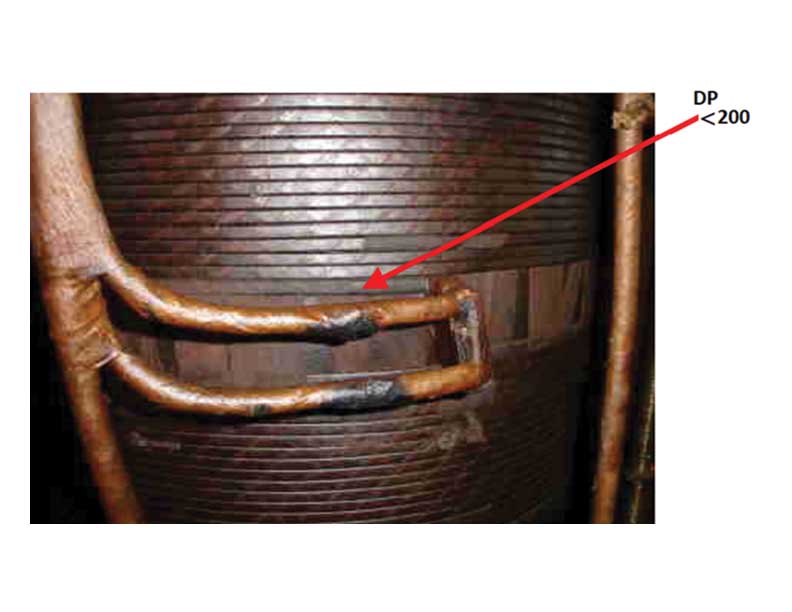
- DP value < 200 indicates extensive loss of paper degradation approaching the critical value i.e., threat of failure of the aged transformer.
- The main advantage of using this technique as a diagnostic tool is that these Furan compounds are degradation by-products specific to paper which are soluble in the Transformer Oil but cannot be produced by the oil itself. It can be used as complementary test in conjunction with % saturation of water in oil.
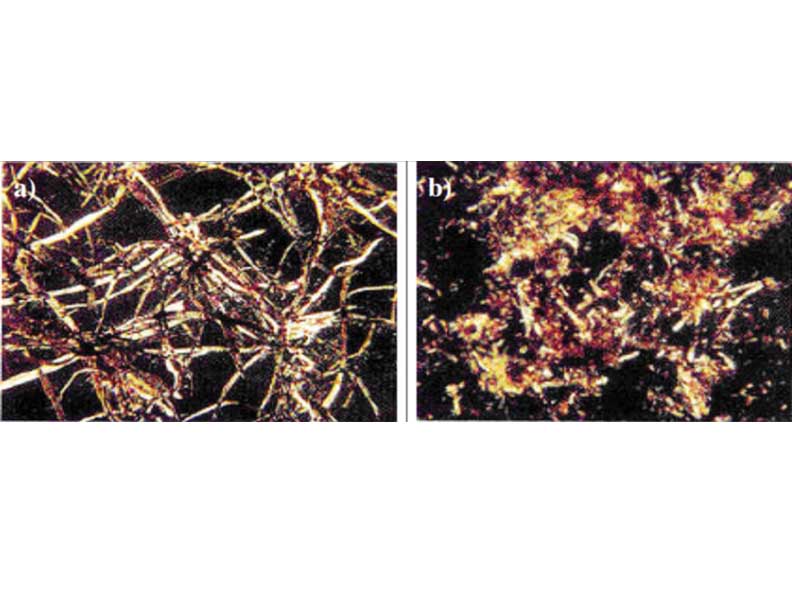
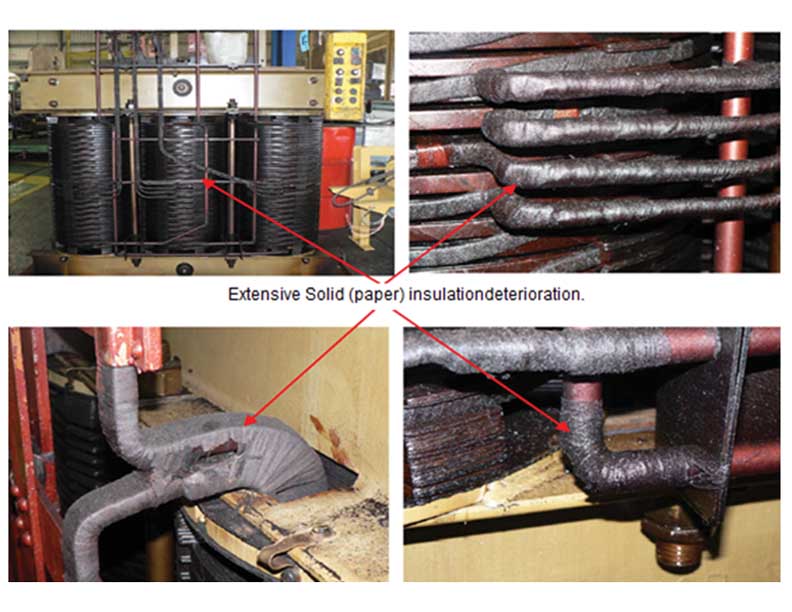
Some of the specimen pictures are depicted in the figures 5(a) & (b), 6, 7 and 8.

Conclusion and suggestions
This methodology is found to be effective in MPPTCL. It is suggested that the Power Utilities may follow suit.
Degree of Polymerization (DP) is used to evaluate the Life expectancy of a transformer through Furan analysis. Direct measurement of DP is practically not possible for the in-service transformers as analysis of paper insulation for evaluation of DP value requires removal of a few strips of paper from the aging Transformers. Therefore, the analysis of oil for furan contents is a ‘Non-invasive test’.
This test should be included in the transformer’s maintenance schedule at least once in 2-years of the transformers that have served >20 years and data should be reviewed in conjunction with DGA, fluid insulation tests and maintenance history.
The main advantage of using this technique as a diagnostic tool is that these Furan compounds are degradation by-products specific to paper only, which are soluble in the transformer oil but cannot be produced by the oil itself.

Er. K. K. Murty possesses B.E.(Hons) Elec. Engg., FIE, CE (India), Member-CGRE. He is a former Chief Engineer & HOD (Testing & Commun.), M.P. Power Transmission Co. Ltd. Jabalpur. He has served in MPSEB & MPPTCL, Jabalpur for 33 years at different levels from the Assistant Engineer to the Chief Engineer. Besides professional engagements, he has authored a book titled ‘Compendium of Articles on EHV Substations & Protections for Budding and Practicing Engineers of Transmission Utilities.’ Presently he is rendering services as Sr. Visiting /Guest Faculty, for the In-house Training Institutions of the MPPTCL, Jabalpur and the M.P. East Zone, DISCOM, Jabalpur.