
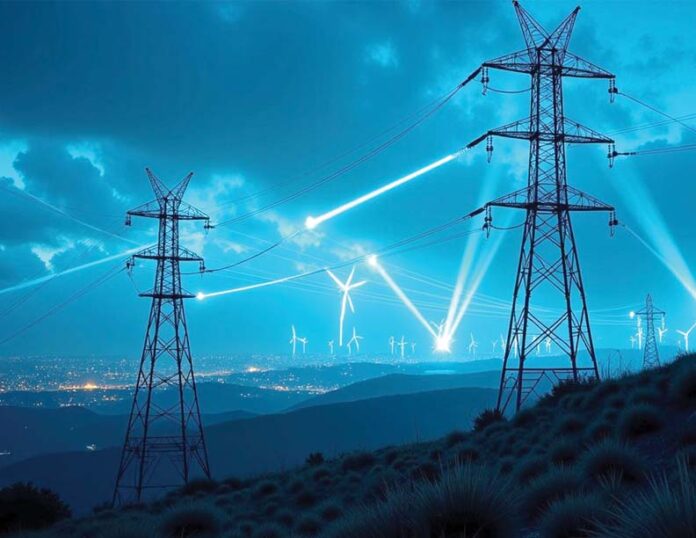
Electricity T&D systems were traditionally designed for predictable, centrally-generated and unidirectional power flows. Today, in India, the grid needs to accommodate growing number of Distributed Energy Resources (DERs) with bidirectional power flows in a volatile electricity market. Ambitious RE targets, inter-state power transfers and higher end-use electrification have put added pressure on the existing grid infrastructure.
Climate change has increased the frequency and severity of extreme weather events, exposing vulnerabilities in overhead lines, substations and control systems. Therefore, grid modernization has moved beyond incremental capacity additions to a more adaptive and resilient architecture that can anticipate, respond to, and recover from system disturbances while maintaining acceptable levels of service.
Power Systems Dynamics
Power systems need to adjust its configuration and operating parameters dynamically in response to increasing concentration of renewable energy sources, load growth, changing consumption patterns, bidirectional flows, market demands and evolving technologies. Modern adaptive and resilient grids have to be modular and scalable so that they can be upgraded or reconfigured, without additional costs or replacements. The focus of modern grids is not only on the reliability metrics (e.g. SAIDI, SAIFI), but also on the overall system performance and cost-effectiveness, under high-impact events to prevent cascading failures and ensure faster service restoration.
Grid Planning and Modernization
The primary objectives of grid modernization are to increase power transfer capability, reduce technical losses, ensure seamless DER integration, optimize asset utilization and improve reliability. To ensure proper and thorough grid planning, we must consider multiple constraints holistically like Right-of-Way (RoW) issues, land acquisition challenges, voltage level selection, corridor optimization, climate conditions, remaining useful life of existing assets, regulatory frameworks, workforce skills, and so on.
Digital Substations
Digital substations replace extensive copper wiring with fiber-optic communication and Intelligent Electronic Devices (IEDs) based on IEC 61850 standard data models. They integrate process bus and station bus for analog signal conversion, digital signal processing and applications, e.g., SCADA/ ADMS, EMS, OMS and EAM.
POWERGRID has demonstrated the feasibility of digital substations at extra-high voltage levels. The benefits included enhanced protection and control, faster deployment than traditional substations, and improved interoperability, diagnostic capability, condition monitoring and grid resilience.
Transmission Capacity and RoW Optimization
Multi-circuit and multi-voltage towers enable co-location of circuits (e.g., 400/220/132 kV) on a single structure, significantly reducing land footprint and environmental impact. Compact tower designs with insulated cross-arms further reduce corridor width and improve safety in urban and environmentally sensitive areas. HTLS conductors allow operation at higher temperatures with reduced sag, uprating of existing corridors, increased thermal capacity or ampacity and reduced technical (I²R) losses.
Advanced Surveying, Mapping and Monitoring
Geographic Information Systems (GIS) combined with LiDAR surveys and Digital Twin enable high-resolution 2D/ 3D corridor modeling, which helps in accurate RoW planning and estimation, optimum structural design, topography mapping, biodiversity clearance and vegetation management.
Unmanned Aerial Vehicles (UAV) or Drones equipped with visual and infrared cameras facilitate aerial surveys and condition-based maintenance by detecting hot spots, conductor damage, structural defects and vegetation overgrowth, preventing outages and maintenance costs.
Power Flow Optimization
Dynamic Line Rating (DLR) uses real-time weather data, conductor temperature and sag measurements to dynamically adjust line ampacity. Capacity enhancements of up to 30% can be achieved under favourable conditions, improving system flexibility and thermal limits, without compromising safety.
Phase-Shifting Transformers (PSTs) and Flexible AC Transmission System (FACTS) devices such as STATCOMs and SVCs provide dynamic control of power flows, reactive power compensation, congestion management, voltage regulations and transient stability in electricity systems.
Power Distribution System Studies
Load flow analysis, short-circuit studies, voltage stability and transient studies are essential for validating distribution grid designs and strategies during normal operations and contingencies. System studies help in identifying vulnerabilities in the distribution network and take suitable actions to build grid safety, reliability and resilience.
Distribution System Modernization
Advanced Distribution Management Systems (ADMSs) integrate asset/ outage management, Volt-VAR Optimization (VVO) and protection coordination. They also control on-load tap changers, capacitor banks, inverter-based resources and maintain voltage profiles under varying load and generation conditions.
As inverter-based resources replace synchronous machines, grid-forming inverters provide synthetic inertia, fast frequency response, and black-start capability, enabling stable operation under volatile RE penetration into the grid.
Cybersecurity
Digitalization of T&D systems also exposes them to cyber-attacks. Robust and comprehensive cybersecurity systems must be deployed with in-depth defense architectures, secure gateways, encrypted communication, role-based access control, continuous monitoring and incident response planning. Cyber resilience is now one of the important factors in building an adaptive and resilient grid in a digital world.
Conclusion
Strategic and coordinated deployment of the above enables improvements in capacity utilization, loss reduction, reliability and resilience. The transformation of electricity T&D system into an adaptive and resilient one is a technical and organizational challenge.
Enabling grid technologies described above have demonstrated tangible benefits in pilot and commercial deployments. A holistic, systems approach is the need of the hour to ensure that the grids are stable, reliable, flexible and resilient in the face of uncertainty.
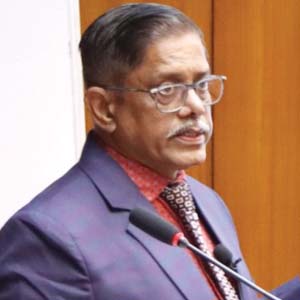
Jayant Sinha is a senior power sector consultant with over 36 years of experience in engineering, project management and implementation of Energy Transition, Digital Transformation and Sustainability projects. He specializes in Grid modernization, Industrial Automation, Smart Grids, SCADA/ EMS, AI/ ML & Industrial Cyber Security. An Accredited Management Teacher, Sinha is a Certified Clean Energy Professional and Sustainability Leader, and awarded for his work on Smart Utilities (Industry 4.0), Asset Lifecycle Improvement and Clean Technologies. He conducts foundational and advanced training programmes for reputed energy companies, and has published several papers in reputed international journals on Smart Metering, Smart Grids, SCADA/ EMS, IT-OT integration and AI/ ML in Power Systems.