

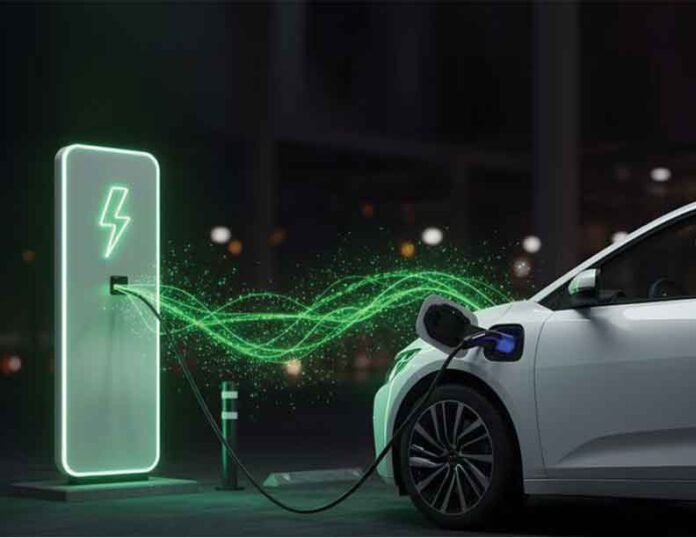
If EVs are the product, charging is the service experience. And service experiences, especially reliability, determine whether customers buy, hesitate, or churn. That makes public EV charging infrastructure one of India’s most important industrial and policy priorities.
But scaling charging is not just an engineering story. It is a finance story. A grid story. A regulation story. And ultimately, a consumer confidence story.
Below is my view of what’s happening in India’s EV charging ecosystem, and what must change to accelerate adoption without repeating the costly mistakes of early infrastructure rollouts.
The Technology Stack: Speed is Only One Variable
Charging is often marketed in terms of horsepower, how quickly a charger can fill a battery. But for serious operators, the competitive edge will increasingly come from what those units can ‘reliably deliver’ in the field.
The winning charging networks will optimize not just for peak charging speed, but for system reliability, including stable uptime and predictable performance under varying site and weather conditions.
They will also prioritize interoperability across hardware, payment rails, and charging standards, reducing operational friction and regulatory exposure.
Finally, ‘grid-friendly’ operation through demand response, load management, and compliant power behaviour will become a policy and licensing requirement, not an optional feature.
AC vs DC: Different Jobs, Different Economics
Public charging networks generally fall into two categories, each shaped by operating model and regulatory constraints:
- AC charging: lower-power systems suited to sites where vehicles can be parked for longer, workplaces, retail parks, and apartment-adjacent locations.
- DC fast charging: higher-power units designed for short dwell times, making them essential for highways, mobility corridors, and high-density urban routes.
While DC fast charging is more visible to consumers because it promises quick ‘on-the-go’ turnaround, it is also more demanding in ways regulators and investors cannot ignore. The higher power draw raises grid-impact and compliance requirements, increases the need for load studies and connection upgrades, and typically drives higher capex per site.
DC fast charging economics cannot be evaluated through a utilisation-only lens, yet that remains the dominant analytical framework among investors and operators. This is a dangerous oversimplification.
Permissioning complexity determines whether a commercially viable site ever reaches commissioning.
Power availability dictates whether installed hardware delivers its rated capacity or chronically underperforms against revenue projections.
Grid readiness governs both connection timelines and long-term operational reliability.
These three variables: permissioning, power availability, and grid readiness, are not peripheral considerations; they are foundational determinants of project viability.
Lenders, equity investors, and policymakers must embed these factors explicitly into underwriting frameworks, feasibility assessments, and regulatory reform agenda.
Smart Charging: The Invisible Competitive Edge
The future of charging will be defined less by charger cabinets and more by software-defined control and regulatory-grade compliance.
Operators increasingly rely on load management to avoid transformer stress and costly grid penalties, remote monitoring to reduce downtime and accelerate diagnostics, and robust payment/authentication to minimize failed sessions that directly erode throughput.
At the system level, real-time energy management will determine whether fleets can reliably deliver service under constrained capacity, an issue that regulators and grid operators are tightening.
For customers, the policy goal is straightforward: chargers must work on arrival. For operators, uptime is not a metric, it is revenue protection and legal risk mitigation.
Solar and Storage: Risk Reduction, Not Just Sustainability
Some charging operators are adding on-site solar and BESS not as a ‘nice-to-have’ decarbonization measure, but as an operational hedge against real-world grid risk. Strategically, behind-the-meter generation can reduce electricity cost exposure, while storage can smooth peak load demand, lowering the likelihood of demand charges and transformer stress.
Critically, BESS can also act as a buffer during commissioning delays, maintaining service levels when grid capacity, especially under constrained or slow-to-upgrade conditions, lags project timelines.
The key point for business leaders and regulators: this approach is not always the lowest upfront capital cost, but it can protect the investment by ensuring revenue continuity in markets where grid upgrades remain slow, including many projects in India.
The Finance Reality: Charging is an Asset-Heavy Business
Charging infrastructure is often funded like a retail product. It rarely behaves like one.
A charger network is capex-heavy, and early utilisation is uncertain. Revenue depends on real charging behaviour, not projections. That introduces a central tension: investors want stable returns, but markets often take time to develop.
The Cost Stack Goes Beyond the Charger Hardware
Understanding total project economics is foundational to building sustainable EV charging businesses, yet cost structures remain poorly understood across the investment community.
Site development, civil works, electrical infrastructure, hardware procurement, software integration, O&M provisioning, compliance, and insurance collectively define true project economics, not merely equipment expenditure.
Critically, grid connection and enabling works frequently dominate total capital deployment, particularly across Indian urban and corridor locations where distribution infrastructure requires significant augmentation. This fundamentally repositions ‘time-to-connect’ as a metric of equal strategic importance to ‘time-to-install’.
Prolonged grid connection timelines don’t merely delay revenue, they erode IRRs, strain working capital, trigger lender covenants, and systematically undermine the bankability of otherwise commercially viable projects.
Utilisation is the Make-Or-Break Metric
Utilisation is the definitive metric separating viable EV charging businesses from stranded asset portfolios.
The industry’s persistent temptation, measuring success by charger count rather than network performance, is strategically dangerous.
Overbuilding in low-demand locations triggers a destructive cycle: anaemic revenues struggle against fixed operational costs, while maintenance capacity deteriorates, compounding underperformance.
Conversely, underbuilding along high-demand corridors destroys user trust precisely where commercial momentum is most achievable.
The strategic imperative is unambiguous, infrastructure planning must shift from hardware-count logic to network-performance logic. Density, placement, power levels, and demand patterns must be modelled collectively.
Regulators evaluating subsidy programmes and investors underwriting expansion must demand network-level business cases, not installation tallies.
Regulations, and Policy: Targets are Not Enough
India’s EV charging policy architecture is directionally sound, but directional clarity alone does not build infrastructure.
The critical battleground is execution. Grid rules and power availability determine whether a charger operates profitably or sits stranded.
Safety standards govern installation integrity and operator liability exposure.
Metering, tariff, and payment standardisation directly impacts revenue predictability and consumer trust.
Interoperability mandates define competitive market structure.
Permitting timelines can make or break project IRRs.
Incentive design must address hard constraints such as grid capacity, approval bottlenecks, and maintenance ecosystems, not merely stimulate procurement.
Policymakers must recognise that a well-architected incentive collapsing against an unreformed
approval regime achieves nothing beyond misallocated public capital.
The Economics of Adoption: Consumers Buy Confidence
EV adoption is not solely a price question. It is a convenience question.
For new EV buyers, public charging plays a psychological role. If charging feels unreliable, EV purchase becomes risky, especially for households without home charging.
Public charging networks also influence fleet adoption. Fleets demand predictable charging schedules and minimal downtime. That makes reliability a commercial contract issue, not a technical one.
In short: charging infrastructure must be trusted enough to function as a daily utility.
What’s Going Wrong in India (and Why Promotion Stalls?)?
India’s EV charging expansion is accelerating impressively, yet structural vulnerabilities threaten long-term sustainability.
Uneven geographic coverage fractures user confidence; consumers don’t experience a national network, they experience dangerous gaps.
Grid delays systematically choke project timelines, forcing investors to either price uncertainty into returns or exit altogether.
Reliability failures compound reputationally, charger downtime and payment friction spread through consumer consciousness faster than any marketing campaign.
Opaque tariff structures introduce perceived pricing risk, suppressing utilisation even where infrastructure exists.
Ecosystem fragmentation such as multiple apps, authentication protocols, payment flows, transforms interoperability from technical consideration into strategic growth imperative.
Most critically, bankability remains structurally fragile: early-stage networks cannot absorb demand uncertainty without robust financing mechanisms that de-risk the utilisation gap between deployment and maturity.
Optimal Solutions: How India Can Scale Charging Faster (and Smarter)
The objective should be clear: scale charging infrastructure while improving reliability and financial sustainability.
Solution 1: Build for demand density, not for visibility
Indiscriminate EV charging infrastructure rollout is proving financially ruinous for many operators. The strategic calculus is unambiguous: location intelligence must precede capital deployment. Workplace campuses and commercial corridors guarantee captive, recurring demand.
Dense urban feeder routes serve predictable commuter flows. Transit hubs and logistics clusters attract high-frequency, high-duration charging cycles maximising asset utilisation.
Highway placements must mirror actual travel behaviour, not administrative convenience. Regulators and investors should scrutinise site-selection methodologies before approving subsidies or underwriting projects.
A disciplined portfolio of ten optimally-sited chargers will consistently outperform fifty poorly-placed ones, both commercially and in advancing genuine energy transition objectives.
Solution 2: Standardise “grid-ready” charging hubs
Grid connection uncertainty remains one of the most underappreciated killers of EV infrastructure investment. Today’s bespoke, negotiation-heavy interconnection process systematically destroys project economics, inflating timelines, escalating costs, and repelling institutional capital.
The remedy demands structural collaboration between policymakers, distribution utilities, and investors.
Pre-approved capacity pathways eliminate debilitating case-by-case studies. Standardised site design templates compress engineering and documentation cycles dramatically. Utility-led feeder planning along established EV corridors transforms reactive grid upgrades into proactive infrastructure strategy.
Critically, predictability is the prerequisite for bankability, when lenders can model connection timelines and costs with confidence, capital flows faster, cheaper, and at greater scale, accelerating deployment without compromising system reliability.
Solution 3: Make performance measurable and enforceable
India’s EV charging regulatory framework must evolve decisively from asset-counting to performance-accountability.
Installing hardware is necessary, but insufficient.
Regulators and industry bodies possess the institutional authority to fundamentally reframe market discipline around continuous service delivery obligations.
Mandating standardised, auditable uptime reporting transforms reliability from aspiration into measurable commitment.
Publishing transparent KPIs, session success rates, fault resolution timelines, average charging speeds, creates competitive accountability while empowering consumers and counterparties with genuine comparative intelligence.
Crucially, chronic underperformance must trigger structured escalation protocols with defined consequences, preventing operators from indefinitely reclassifying systemic failures as transitional teething problems.
This regulatory shift carries profound investment implications: when reliability becomes a regulated performance obligation, it simultaneously becomes an investment-grade expectation attracting institutional capital that currently discounts EV infrastructure on serviceability uncertainty.
Solution 4: Mandate interoperability as a baseline expectation
Interoperability’s true definition extends far beyond hardware compatibility, yet the industry persistently underestimates its commercial significance.
For users, interoperability is experienced entirely through journey quality: seamless authentication, accurate billing, and confusion-free session completion.
Fragmented payment workflows, re-authentication burdens across networks, and inconsistent user interfaces collectively manufacture friction that directly suppresses utilisation.
Roaming frameworks allowing cross-network access without repeated onboarding, are not convenience features; they are network growth multipliers.
Critically, reduced friction translates mathematically into higher session completion rates, greater throughput per charger, and materially improved unit economics.
Regulators designing interoperability mandates and operators negotiating roaming agreements must recognise this commercial reality: seamless user experience is simultaneously the strongest competitive differentiator and the most powerful utilisation-enhancement strategy available.
Solution 5: Design tariffs for clarity and grid fairness
Tariffs must be transparent before charging begins to protect consumer trust and reduce “dispute risk” that can escalate into regulatory scrutiny. From a policy and compliance perspective, clear published rates, plus straightforward session-level charges also improve auditability for regulators and grid stakeholders.
Where technically and commercially feasible, pricing can incorporate time-of-day differentials to support load management. That alignment helps operators flatten peaks, reduce grid stress, and potentially avoid penalties, while steering users toward lower-impact charging windows. Strategically, the business case is stronger when dynamic pricing is predictable, communicated early, and linked to reliability outcomes rather than surprise surcharges.
Solution 6: Use blended finance to reduce early utilisation risk
Charging rollouts must address the ‘early adoption gap’, where demand is present but not yet steady enough for lenders, grid planners, and infrastructure investors to price risk rationally. That gap calls for policy and market mechanisms that actively bridge uncertainty.
First, performance-linked support tied to real utilisation, uptime, and service delivery aligns incentives with outcomes regulators and investors can verify.
Second, risk guarantees for both grid readiness and early revenue reduce the probability of financing failures driven by interconnection delays or underperformance.
Third, fleet aggregation contracts can secure baseline volumes through institutional demand, providing predictable cashflows while the broader public market ramps up. Once early demand is locked in, lenders can recalibrate, and price, risk with far greater confidence.
Solution 7: Professionalise operations and maintenance
Most users never see the backend; they only experience the service outcome, whether the charger works when they need it.
That simple test places a heavy, policy-relevant and commercial burden on operators’ operational resilience. In practice, it demands reliable spare parts supply chains, so failures don’t become long outages. It requires clear service-response SLAs that are enforceable, not aspirational. It also depends on trained technicians and, critically, on vendor accountability especially where equipment is sourced through subcontracted service models.
Finally, it hinges on monitoring systems that detect issues early and trigger faster repair cycles, reducing both downtime and reputational risk. In this market, maintenance excellence can be the line between brand trust and a customer ‘regret story’.
Conclusion: Charging Infrastructure is the Market Infrastructure
In India, EV charging is not a simple technical rollout; it is an ecosystem build where trust, financing credibility, and regulatory certainty determine whether projects survive beyond pilot stages.
Hardware deployment matters, but so do the operating assurances that allow lenders to underwrite cashflows and regulators to manage grid impacts responsibly.
The next phase of growth will be won by networks that combine smart, reliable technology with bankable unit economics, backed by predictable grid enablement timelines and solutions that reduce connection risk.
Just as importantly, they must deliver an interoperable user experience across brands, apps, and payment flows – so charging is frictionless at the point of demand.
Finally, regulatory accountability should be performance-linked, rewarding uptime and compliance rather than outputs that disappear after commissioning. If India aligns these fundamentals, EVs will stop feeling like a future decision and become an everyday convenience.

Karn Pallav is a qualified Mechanical Engineer and MBA (Power) graduate from NPTI Faridabad. He is currently working as Head (Regulatory Affairs) in a leading power DISCOM at New Delhi. He has around two decades of management experience in the entire value chain of the Power Sector. He has vast experience in power utilities dealing with competition issues, tariff determination, licensing and other techno-commercial matters. Being an engineer and Power Manager, he is also interested in technical issues related to Conventional and Renewable Generation, Open Access, parallel license regime, smart grid, AMI, smart meters, cyber-security issues and E-mobility. He has also written six books, namely – 1) The Power of Positive Thinking, 2) Customer Engagement Strategies in Retail Electricity Market, 3) 5 Rules For Life, 4) Whispers of the Heart, 5) Whispers of the Himalayas’, and 6) Guardians of the Future: Human Values and Ethical AI.